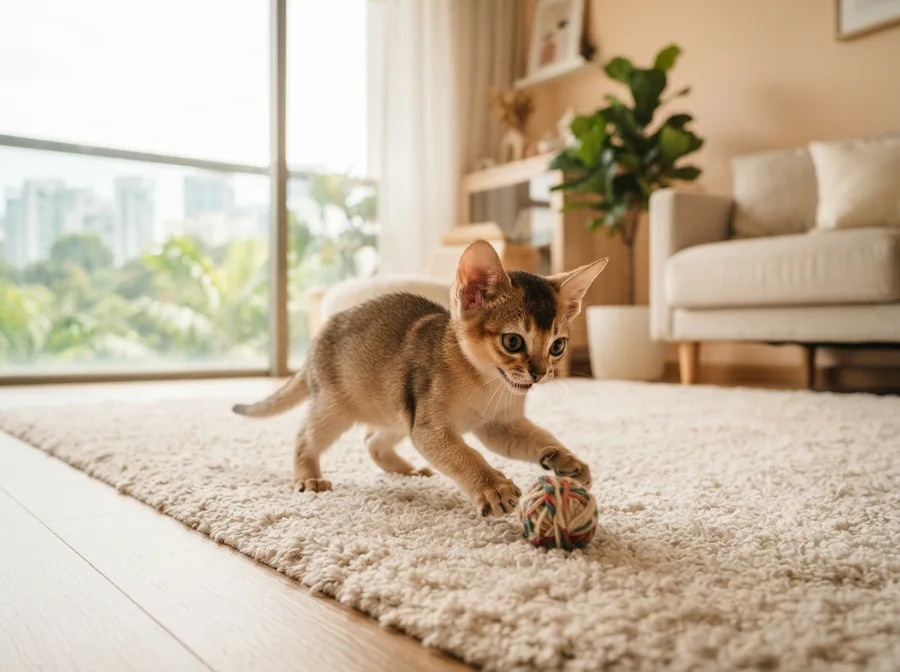
How long you will wait for a Singapura kitten
Rarely offered for sale in Singapore, which surprises people given the name. There is no queue to join for most of the year — there is simply very little breeding activity locally, and the realistic paths are a small number of overseas catteries or, occasionally, a rescue.
The Singapura is a small breed with a famously narrow gene pool, and although it is Singapore’s national cat, most of the world’s breeding programmes sit elsewhere. Local demand is driven largely by curiosity about the national-cat story rather than by buyers actively acquiring one, so almost nothing is produced here to meet it.
The biggest time-saver: Ask rescues and welfare groups as well as catteries, and consider that a small brown-ticked domestic shorthair — of which Singapore has many, some descended from the same street population the breed came from — may be exactly the cat you wanted.
Nothing above is an offer: we hold no Singapura kittens and publish no stock list. For the same picture across every breed, see how findable each breed is.
What a Singapura kitten is actually like
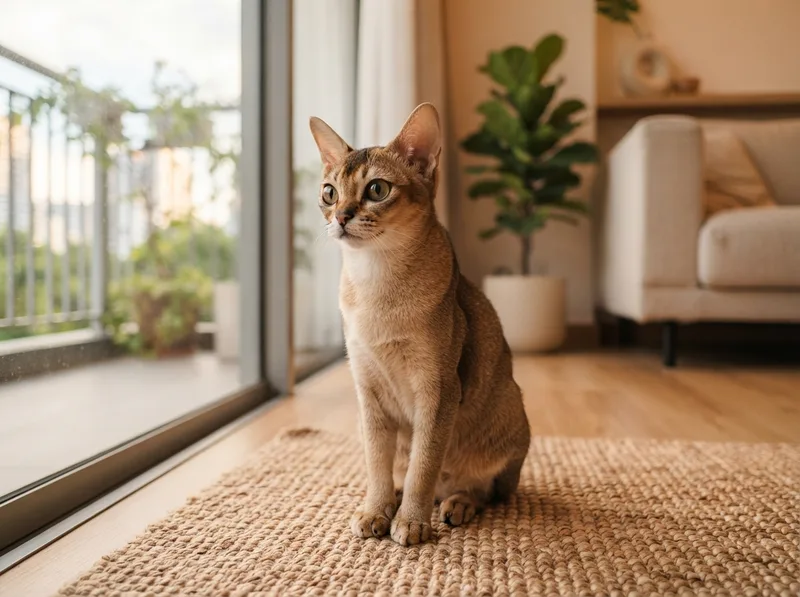
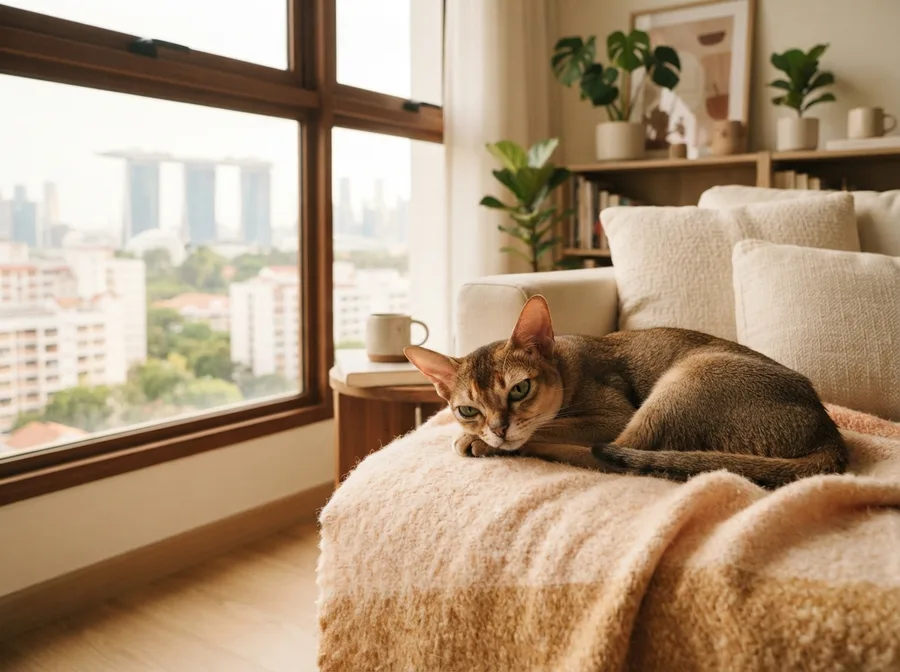
Tiny, and slower to finish than its size suggests: Singapuras are among the smallest cat breeds and typically take around two years to reach a modest adult weight. Kittens are correspondingly small, which makes them look fragile and makes early handling important. The ticked coat pattern — each hair banded with dark and light — develops definition over the first months, and the characteristic blunt-tipped tail and large ears are visible from early on. Because the gene pool is narrow, the questions to ask are about lineage and any screening the cattery does, rather than about which colour is coming.
Those three are Singapura-specific. For the checks that apply to any cattery, see choosing who to buy from.
Checklist
- Any small brown ticked cat sold as a Singapura at a pedigree price without paperwork. The look is common in Singapore’s street cat population and the breed is not.
- A seller who leans on the national-cat story and cannot discuss lineage or the gene pool. The story is real; it is not provenance.
- No named testing for PRA or PK-Deficiency in a breed with a documented narrow base.
Grooming and daily life with a Singapura in Singapore
The lightest routine on the site. A very short, fine, close-lying coat that needs a weekly wipe at most, sheds minimally and never mats. There is no professional grooming, no undercoat, no seasonal drama. Dental care and nail trims are the whole of it. The one physical consideration is not grooming but warmth: a small cat with almost no coat mass is more sensitive to cold than most, which in Singapore means noticing when the air conditioning is set low and providing somewhere warm to sleep.
Active, curious, sociable and considerably more busy than its size implies — this is not a decorative lap cat. Singapuras climb, investigate, follow people from room to room and involve themselves in whatever is happening. In a flat that is an advantage, because a small athletic cat gets its exercise in less space than a Bengal does, but it still needs height and play. They are people-oriented and dislike long solitude. The small frame also means a genuine practical note: gaps, balconies and window grilles that would stop a larger cat will not stop this one, so mesh spacing matters more than usual.
What a Singapura costs to keep
Low on almost every line — a small cat eats little, needs no grooming and wears out less furniture. The consideration is genetic rather than financial in the ordinary sense: a narrow gene pool means inherited conditions concentrate more readily, and progressive retinal atrophy and pyruvate kinase deficiency have both been reported in the breed with testing available. That makes parental screening a purchase question and a relationship with a vet who knows the breed worth having. Insurance is inexpensive for a small cat and worth reading for hereditary exclusions.
For Singapura figures set against other breeds, with every source named and dated, see why two kittens of one breed differ in price; for the month-by-month picture, what a cat costs over its life.
Also worth reading: the British Shorthair
The Persian is the least similar cat we could put beside it, and that is deliberate — the Singapura is what you choose if you want a small, busy, short-coated cat that involves itself in everything, and the Persian is what you choose if you want the opposite. If the appeal is the Singapore heritage rather than the cat, the honest recommendation is a community-cat adoption.