Before the kitten arrives
Homecoming goes well or badly based almost entirely on what you did the week before.
One item on this list is not like the others. Meshing every window in the flat is not a nice-to-have and it is not a next-weekend job. Singapore vets see high-rise falls constantly, and they happen to careful owners with cats that had ignored that window for months.
Checklist
- Mesh every window and opening — including bathroom, kitchen and service yard
- Choose the safe room: quiet, small, with a door that closes and no gaps behind appliances
- Litter tray in the safe room, away from the food
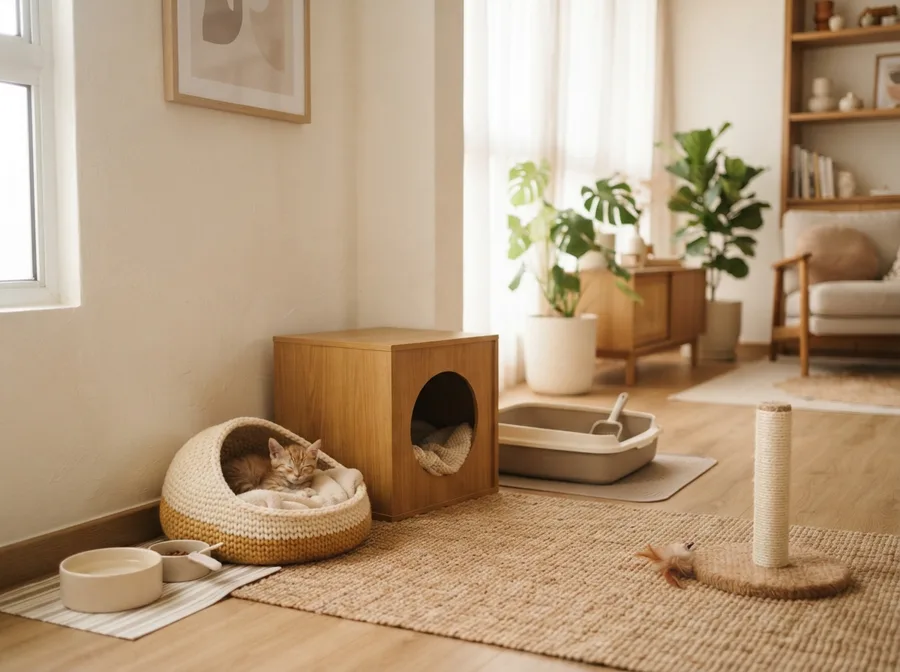
- Food, water, a bed and at least one hiding spot (a box on its side is perfect)
- A small bag of the food the kitten is currently eating
- Toxic plants out of the flat entirely — lilies especially
- Cables sleeved, small swallowable objects put away
- Vet appointment booked for the first few days
Day one: less is more
The instinct on homecoming day is to show the kitten its new life — every room, every family member, the other cat, the dog, the neighbours. Almost every difficult first fortnight starts there.
From the kitten's side, the day looks different. It has been removed from its mother, its littermates and the only environment it has known, put in a box, driven through a city, and released into a space that smells of nothing familiar. A ten-week-old animal does not have the emotional range to enjoy that.
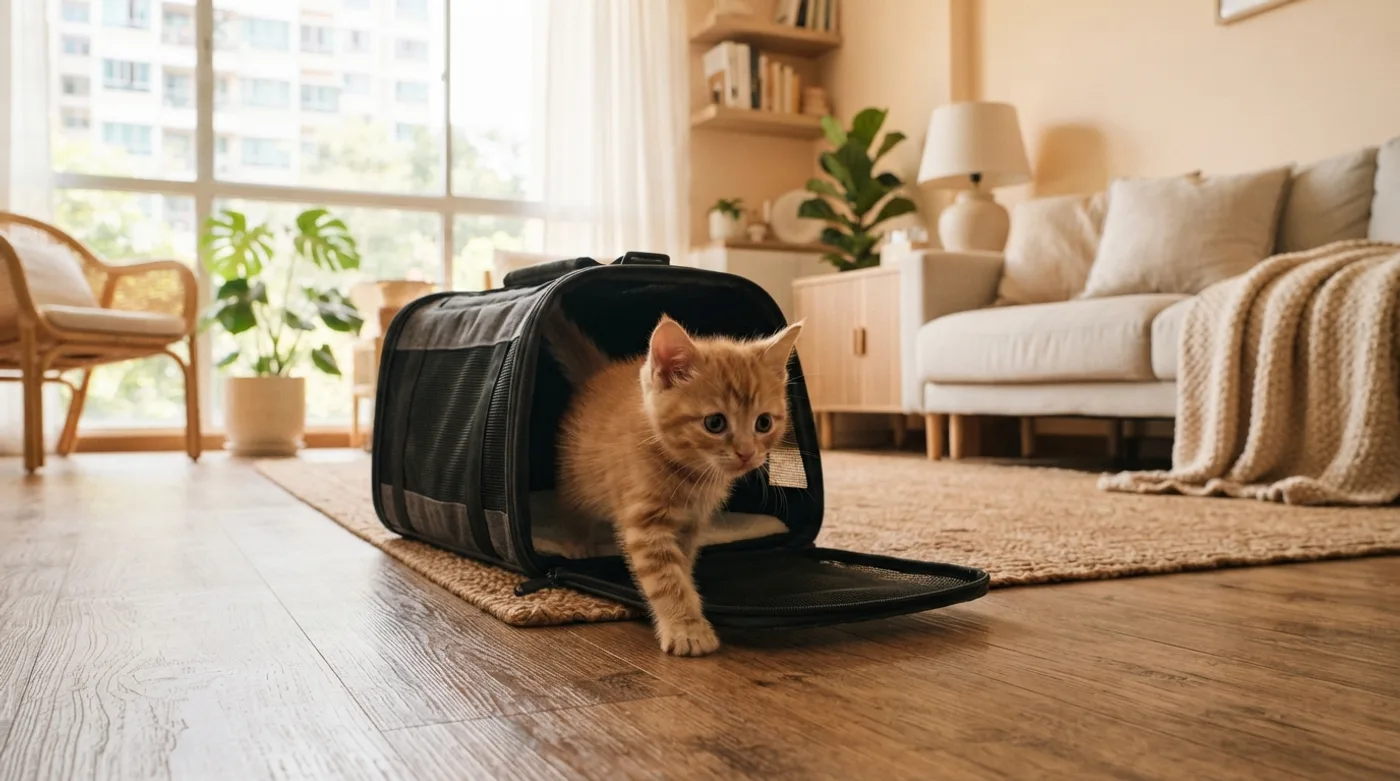
So: carrier into the safe room, door of the carrier open, door of the room closed, and then leave. Sit on the floor a while later with a book and say nothing. Let the kitten come out on its own timeline. It may take twenty minutes or it may take four hours, and either is normal.
The measure of a good first day is not how much the kitten was held. It is whether it ate, drank and used the tray.
Tell the children the rule in advance
One person at a time, sitting on the floor, no picking the kitten up on the first day. Agreeing this before the kitten arrives is much easier than negotiating it while an excited six-year-old is already in the room.
The first 72 hours, hour by hour
A rough schedule that works for most kittens in most flats.
- 1Hours 0–2: arrivalCarrier into the safe room, door open, room door shut. Show the kitten the litter tray once, then step back and leave it alone.
- 2Hours 2–12: settlingQuiet visits, sitting on the floor, no grabbing. Offer the same food it was eating. Expect hiding; do not extract the kitten from behind the sofa.
- 3Night oneLeave it in the safe room with a warm bed. Crying is normal. Going in each time it cries trains it to cry, so decide your policy before bedtime.
- 4Day two: eating and trayThe two things that matter. Confident eating and correct tray use mean the kitten is coping. Neither by the end of day two means call the vet.
- 5Day two or three: first vet visitBaseline health check, weight, confirm the vaccination schedule and set the sterilisation conversation for later.
- 6Days three to five: opening upOne room at a time, supervised, with the safe room still available as a retreat. Only once every window is meshed.

Introducing other pets
The rule with an existing cat is that they do not meet. Not on day one, not through a briefly opened door, not "just to see how it goes". They live separately, they smell each other for days, they eat on opposite sides of a closed door, and only then do they see each other briefly under supervision.
This takes days to weeks and it is boring. It is also the difference between two cats who tolerate each other for fifteen years and two cats who do not. The full sequence is in our two-cat guide.
With a dog, the additional requirement is control: the dog on a lead, the kitten with a guaranteed escape route to somewhere elevated, and sessions that end while everything is still calm. Never leave them alone together until you would happily bet money on the outcome.
The pattern to avoid
Rushing the introduction, seeing a hiss, panicking, separating them completely, then rushing again a week later. Cats read that as an unresolved threat that keeps reappearing. Slow and boring beats fast and dramatic every time.
Litter, food and the two things that go wrong
Nearly every first-fortnight problem is one of these two, and both are usually your setup rather than the kitten.
More detail in litter training a kitten and choosing cat food in Singapore.
Litter-tray accidents
Usually the tray is too far away, too covered, too clean-smelling, or next to the food. Move it closer, uncover it, use unscented litter, and confine the kitten to a smaller area until the habit is solid.
Digestive upset
Almost always a food change made too fast. Go back to the original food, then transition over seven to ten days. If there is blood, or it lasts beyond a couple of days, that is a vet visit.
Night crying
Normal for a few nights. A warm bed, a covered hiding spot and a consistent policy fix it faster than attention does.
Not eating
The one symptom never to wait on. A kitten that has not eaten for a day needs a vet, not another twelve hours of observation.
Week one admin
While the kitten is settling, three pieces of paperwork want doing, and doing them in week one is far easier than doing them in month eight.
Transfer the microchip registration into your name, with your current phone number. A chip registered to the breeder is a chip that returns your escaped cat to the breeder.
Apply for the cat licence through PALS. Free until 31 August 2026 — see the licensing guide.
Price insurance now, while the kitten is young and has no history. Anything that appears later is excluded, so this is genuinely a first-month decision — see cat insurance in Singapore.
Collection day and the starter room
The first forty-eight hours decide how the next month goes, and almost all of the work happens before the kitten arrives.
- 1Kitten-proof before collection, not afterWindow mesh on every openable window, cords sleeved or clipped up, toxic plants out of the flat, gaps behind appliances blocked. A kitten finds the one thing you missed within an hour.
- 2Set up a starter roomOne room with the litter tray, food, water, a bed and somewhere to hide. Not the whole flat. A kitten given ninety square metres on day one spends three days behind the washing machine and learns nothing about where the tray is.
- 3Check the paperwork at collectionThe vaccination record with dates and product names, the deworming record, the microchip number in writing, and any screening results on the parents. A kitten should not leave its mother before eight weeks, and most breeds go home between nine and twelve.
- 4Take the seller’s food with youAsk what the kitten has been eating and buy the same thing. A food transition is done over a week or so by mixing increasing proportions of the new food — changing it abruptly on the day it also changed homes produces the diarrhoea people then blame on the breeder.
- 5Get the air conditioning rightA kitten in a Singapore flat needs somewhere neither hot nor directly under a cold draught. If the room is air-conditioned, give it a bed away from the unit and a warm alternative outside the airflow.
- 6Expand the territory slowlyOnce the kitten is eating, using the tray and coming out to meet you, open one more room. Settling in is measured in days for a confident kitten and a fortnight for a shy one, and rushing it costs more time than it saves.
If you already have a resident cat, do not let them meet on day one. Keep the starter room closed, swap bedding between the two so each learns the other’s scent, then feed them on either side of the closed door before any visual introduction. A week of that is normal and it is far cheaper than repairing a bad first meeting.
Two administrative things belong in the first week rather than the first month. Book your own vet, so a health baseline exists while anything found is still a conversation you can have with the seller. And start the licence: transfer the microchip registration into your name and apply through PALS — free until 31 August 2026, and required once the cat reaches three months of age.