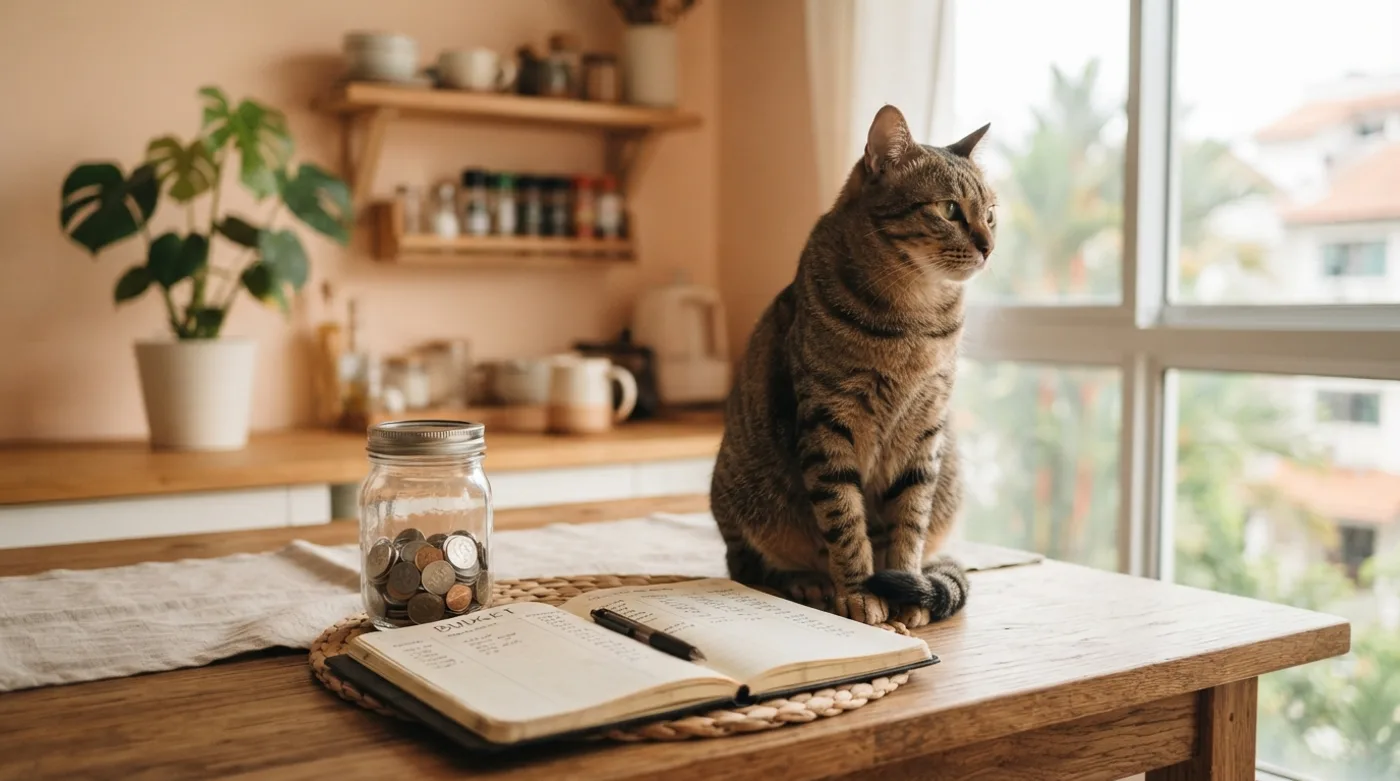
The shape of the budget
Cat ownership in Singapore has three cost layers, and people almost always budget for the first while being surprised by the third.
The one-off layer is the kitten itself plus setup: carrier, litter trays, scratching posts or a cat tree, bowls, and mesh for every window in the flat. This is the layer that feels expensive and is actually the smallest over a cat's life.
The recurring layer is food, litter, parasite preventatives and an annual vet visit with boosters. Individually modest, relentlessly monthly, and over fifteen years the largest single line in the whole budget.
The event layer is where households actually get caught: an emergency vet visit, a dental extraction at eight years old, a urinary blockage at three in the morning, a prescription diet for the rest of the cat's life. These are not exotic scenarios. They are ordinary cat outcomes, and they arrive without warning.
For the decision that comes before the budget — whether to buy or to adopt, and what each route actually involves — see the two routes, compared.
The number that matters
Not "can I afford the kitten" but "can I afford an unplanned four-figure vet bill without delaying treatment". A delayed decision is how a treatable problem becomes an untreatable one.
Before the cat arrives
The setup list, in the order of how much it matters.
Some of this can wait a month. The mesh cannot — it needs to be in place before a cat is in the flat, not after the first time it sits on a ledge and you realise how quick they are.
Checklist
- Window mesh, whole flat — the single most important purchase you will make
- Litter tray (one per cat, plus one if space allows) and litter
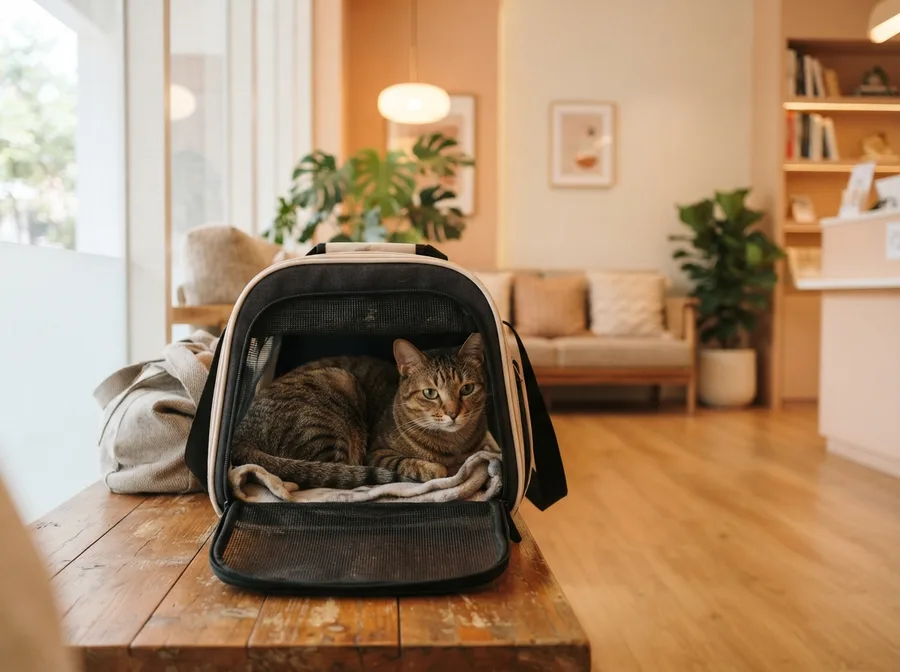
- Carrier — a hard-sided one that opens from the top, which the vet will thank you for
- Scratching posts tall enough for a full stretch
- Vertical space — a cat tree or shelf run
- Bowls — shallow and wide, plus a separate water source away from the food
- The kitten's current food, so you can transition gradually rather than overnight
The monthly running costs
Modest individually. This is the line that compounds over fifteen years.
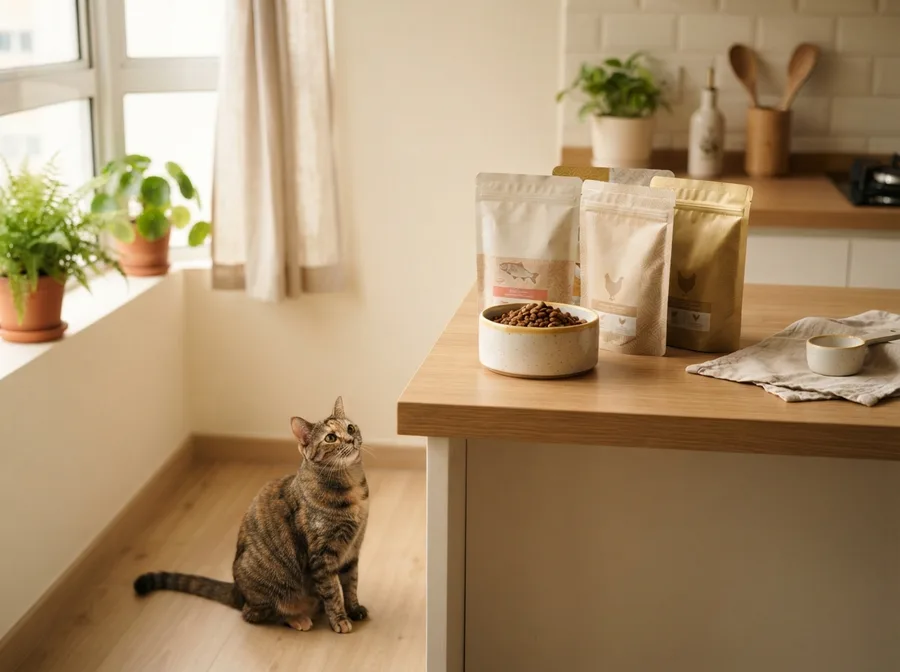
Food is where the biggest voluntary spread sits — a premium wet-food diet and a basic dry-food diet differ substantially per month, and the gap over a cat's life is genuinely large. Our guides to cat food and cat litter cover what actually changes outcomes versus what is packaging.
Key numbers
- Food
- The largest recurring item
- Litter
- Varies sharply by type
- Parasite preventatives
- Monthly or quarterly
- Treats and toys
- Small, constant
- Replacement scratchers
- Every few months
- Cat sitter or boarding
- Whenever you travel
Veterinary costs across a cat's life
Predictable at each stage, and worth planning for stage by stage.
- 1First monthsCompleting the vaccination course, deworming, and a health check to establish a baseline. See kitten vaccinations.
- 2Around five to six monthsSterilisation — a one-off cost that also lowers the licence fee later. See cat sterilisation.
- 3Adult yearsAn annual check with boosters, plus parasite prevention. The cheapest and most valuable veterinary spending you will do.
- 4Around seven yearsDental disease becomes common, and extractions under anaesthetic are a normal mid-life expense rather than a disaster.
- 5Senior yearsKidney and thyroid monitoring, more frequent checks, and often a prescription diet for the remainder of the cat's life.
- 6At any pointThe emergency: a blockage, a foreign body, a fall. This is the scenario the emergency fund or insurance exists for.
Insurance versus an emergency fund
There are two defensible strategies for the event layer, and one indefensible one. The indefensible one is having neither and hoping.
Insurance converts an unpredictable large cost into a predictable small one. Its value is highest for exactly the scenario that ruins households — a young cat with a sudden, expensive, treatable problem. Its weakness is pre-existing conditions: anything that has appeared before you take out the policy is excluded, which is why the time to price it is when the cat is young and boringly healthy.
A dedicated emergency fund is the alternative, and it works if you actually maintain it and do not spend it. Its advantage is total flexibility: no exclusions, no claims process, no waiting periods. Its weakness is human.
For most Singapore households the practical answer is one or the other, decided in the first year rather than in a waiting room at midnight. We cover the comparison properly in the cat insurance guide.
The costs people genuinely forget
None of these appear in a budget written the week before a kitten arrives.
Travel
Boarding or a cat sitter every time you leave Singapore. For frequent travellers this is one of the largest annual lines.
Furniture
Sofas, curtains and rugs during the first two years. Scratching posts reduce this; they do not eliminate it.
Dental work
Extractions under general anaesthetic in mid-life are common and are rarely budgeted for.
Prescription diets
Urinary and kidney diets cost substantially more than standard food, and are usually permanent once started.
Replacing the mesh
A move to a new flat means meshing the new flat. This is not optional and not cheap.
The second cat
Many households add one within two years. Everything doubles except the mesh.
Where the purchase price fits
Against this whole picture, the difference between a S$2,500 kitten and a S$4,000 kitten is real but not decisive. What is decisive is whether the cat arrives healthy, correctly vaccinated and from a breeder who screened its parents — because the alternative shows up in the event layer, repeatedly, for years.
That is the honest argument against a suspiciously cheap kitten, and it is a financial argument as much as an ethical one. The how kitten prices work in Singapore covers the ranges by breed; choosing a breeder covers how to avoid buying a problem.
How much does a cat cost, layer by layer
Four layers, and people plan for the first one and get surprised by the other three.
The acquisition layer is the one with the widest spread and the least bearing on the total. An adoption fee from a welfare group is a partial recovery of veterinary work already done — tens to low hundreds of dollars — and it usually includes vaccination, sterilisation and the microchip. A pedigree kitten from a licensed cattery runs into the thousands, with one Singapore cattery publishing a floor of S$7,800 on its own site. Neither figure tells you what the next fifteen years cost.
The upfront cost is genuinely unavoidable and consistently underestimated. Window mesh for a whole flat, one litter tray per cat plus one, a carrier, scratching posts tall enough to matter, something to climb, and the first veterinary visit. If the cat came from a cattery the microchip is normally already done; if you adopted, it almost always is.
The monthly cost is food, litter and parasite preventatives, and it is the layer you can actually control — by buying litter in bulk rather than in convenience-store quantities, and by not free-feeding a cat that will get fat on it. Grooming sits here too, and it is where breed choice shows up in the budget: a Persian needs professional sessions and a British Shorthair needs a comb you bought once.
Then the annual layer — a check-up, boosters, and from 1 September 2026 the licence itself — and the event layer, which is the one that decides whether cat ownership is comfortable. An after-hours emergency in Singapore runs into hundreds before anyone has treated anything, and that is the number worth having a plan for, whether the plan is insurance or a dedicated buffer.
Key numbers
- Acquisition
- Adoption fee, or a pedigree purchase
- Upfront cost
- Mesh, trays, carrier, tree, first vet
- Monthly cost
- Food, litter, preventatives
- Annual
- Check-up, boosters, licence
- Event
- The emergency visit
- Lifetime cost
- Fifteen years of all of the above