Kitten.sgFind my kitten

Singapore breed guide

Russian Blue Cats in Singapore

Russian Blues are the introverts of the pedigree world: elegant, gentle and devoted to their family but shy around new people. They are quiet, clean and long-lived, and one of the easier breeds to keep healthy.

MediumsizeShort, densecoatWeeklygroomingExcellentHDB fitQuiet, loyaltemperament15–20 yearslifespan

Is the Russian Blue a good cat for Singapore, and what does one cost?

The Russian Blue is a quiet, elegant, reserved cat with a dense silver-blue double coat. It is gentle and loyal but shy with strangers, low-shedding, and generally healthy — an easy, calm choice for HDB flats. Indicative local prices typically run from around S$2,000 to S$4,500.

By the Kitten.sg editorial teamResearched in SingaporeUpdated 25 July 2026

At a glance

Indicative price
Indicative S$2,000–S$4,500 (pedigree and lineage affect price)
Good for
Quiet households wanting a gentle, loyal, low-shedding and healthy cat.
Think twice if
You want an outgoing cat that greets guests — Russian Blues are shy.

Indicative Russian Blue ranges observed in the Singapore market — what a specific kitten costs depends on its litter, its colour and its lineage. We sell nothing and set no prices.

What the Russian Blue is really like

Russian Blues are reserved and sensitive. They bond deeply with their owners but often hide from visitors, and they dislike loud, chaotic households.

The short, dense double coat has a distinctive silver sheen, sheds little and needs only weekly brushing. Many allergy sufferers find them easier, though no cat is truly hypoallergenic.

They are creatures of habit who thrive on routine and calm. They are also among the longer-lived breeds, often reaching their late teens.

Comparing options? Many Singapore buyers also look at the Siamese. If you have not settled on buying at all yet, start with how people actually get a kitten here.

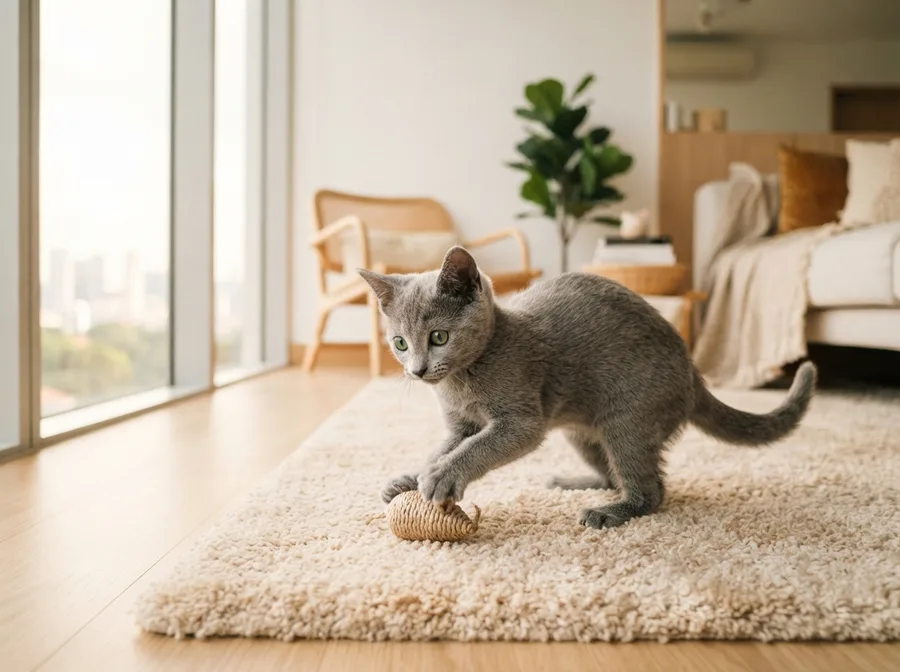
A Russian Blue kitten playing on a rug

Honest pricing

Russian Blue price in Singapore

Indicative S$2,000–S$4,500 (pedigree and lineage affect price).

The Russian Blue is priced on coat and eye colour, and the band is narrower than most breeds because the breed standard permits only one colour. What buyers pay more for is the silver-tipped sheen on a dense double coat and a genuinely vivid green eye — young kittens often have yellow eyes that green over the first year, so a breeder pricing on eye colour is pricing a prediction. Lineage from established European lines carries a premium.

Every figure we could attribute to a named, dated source sits on the price evidence we could verify.

Buying a Russian Blue: the check that matters most

Grey domestic shorthairs are routinely sold as Russian Blues in this market, and at a glance the difference is not obvious to a first-time buyer. Look for the double coat that stands out from the body, the silver tipping that catches light, and the characteristic reserved temperament — a Russian Blue kitten is typically shy with strangers rather than boisterous. Registration papers and a visit to see the parents settle it.

Living with a Russian Blue in an HDB flat

Excellent HDB cat: quiet, clean, low-shedding and content in a calm flat. Ideal for owners who want an undemanding, gentle companion.

Framework rules — two cats per flat, microchip then licence — are set out in the framework, in plain terms.

Russian Blue health to watch for

  • Generally very healthy and long-lived.
  • Prone to weight gain — measure food carefully.
  • Sensitive to stress and change in routine.

Ask for screening results on both parents by name, not a verbal assurance — checking a cattery before you visit lists the wording to use.

How long you will wait for a Russian Blue kitten

Modest demand and a modest number of litters, so a Russian Blue is usually a short wait rather than no wait. Because the breed comes in essentially one colour, there is no pattern queue to join — the only real variables are gender and which litter is next.

A small but steady breeding presence in the region, with some import. Nothing about the breed is difficult to produce, so supply tracks demand fairly closely rather than being structurally scarce.

The biggest time-saver: Be open on gender and take the next litter. There is very little else to be flexible about in a single-colour breed, which is one of the quiet advantages of choosing it.

Nothing above is an offer: we hold no Russian Blue kittens and publish no stock list. For the same picture across every breed, see how supply works for each breed.
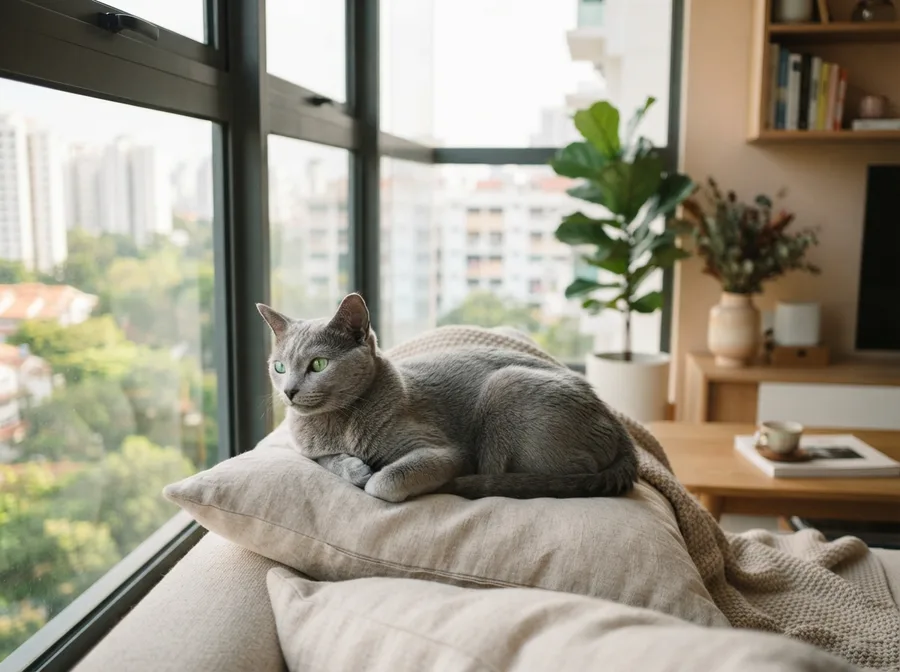
An adult Russian Blue resting on a sofa by a window

What a Russian Blue kitten is actually like

Russian Blue kittens are often born with faint ghost tabby markings that fade as the adult coat comes in, so a young kitten with a hint of stripe is not mismarked. Eye colour is the slower change: the vivid green the breed is known for develops over months from the kitten blue-grey, and a four-month kitten with yellow-green eyes is on track. Temperament is the thing to watch at the viewing. Russian Blues are naturally reserved, and a kitten that hides is behaving normally — but there is a difference between reserve and fear, and a well-socialised kitten will re-emerge and investigate you within a few minutes rather than staying gone.

Those three are Russian Blue-specific. For the checks that apply to any cattery, see the seller checks that matter.

Checklist

  • Any grey shorthair sold as a Russian Blue. This is the single most impersonated breed after the British Shorthair, and the tell is coat texture and eye colour rather than colour alone.
  • A kitten that stays hidden and does not re-engage at all. Reserve is the breed; fear is poor socialisation.
  • “Russian Blue mix” at a pedigree price. It is a moggie, and often a lovely one, priced as something it is not.

Grooming and daily life with a Russian Blue in Singapore

A weekly comb, and one of the tidiest coats you can own. The double coat is short, dense and plush, standing slightly away from the body, and it sheds modestly and unobtrusively. In this climate the practical note is the same as for other double-coated shorthairs: expect low-level year-round shedding rather than seasonal moults, and a comb rather than a brush, because a slicker skims a coat this dense. Nails and teeth are the rest of it. There is no professional grooming requirement for this breed at any point in its life.

The quietest well-adjusted cat on this list, and the most sensitive to disruption. Russian Blues attach strongly to their own household and are genuinely shy of strangers, visitors and noise — which makes them excellent neighbours in an HDB block and slightly awkward hosts. They dislike change: rearranged furniture, new routines, a stream of guests. Give them a predictable environment, a high place to retreat to, and litter and feeding arrangements that stay where they are, and this is an easy, affectionate, undemanding cat. They tolerate a working day well provided the evening is reliable.

An adult Russian Blue resting on a sofa by a window

What a Russian Blue costs to keep

One of the least expensive pedigrees here to run. Grooming is a comb; food volume is moderate for a medium cat; the coat needs no professional attention. The breed is not associated with a signature hereditary condition in the way the cardiac and renal breeds are, which keeps the health line closer to ordinary — annual checks, dental attention, boosters. The two things worth spending on are enrichment that suits a cautious cat (height, hiding places, window access) and, if the household is noisy or busy, whatever it takes to give the cat somewhere genuinely quiet to be.

For Russian Blue figures set against other breeds, with every source named and dated, see published prices and who published them; for the month-by-month picture, budgeting for a cat in Singapore.

Also worth reading: the Siamese

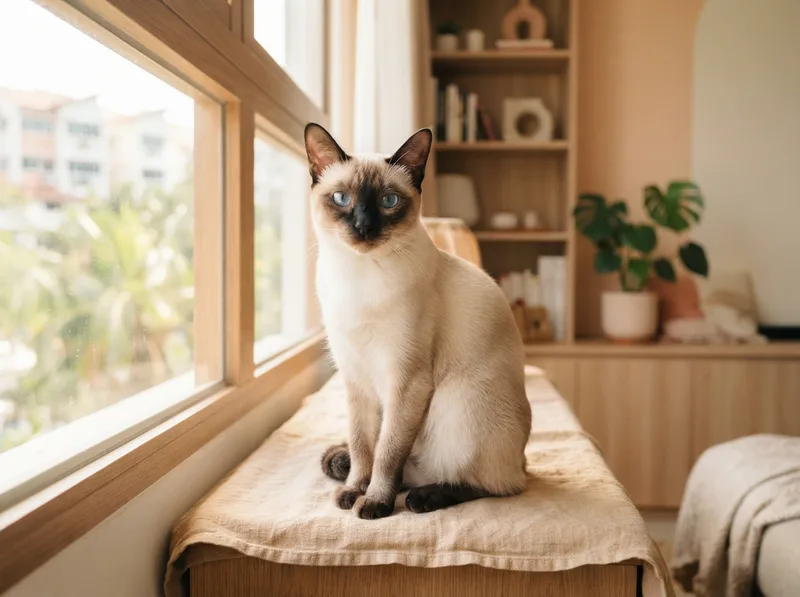
The Siamese is the deliberate contrast: the same fine-boned elegance and the same attachment to its people, delivered at ten times the volume. Buyers usually know within one honest conversation which of those two households they are, and it is the most useful fork in this whole set.
Other breeds Singapore buyers compare

Your kitten search

Looking for a Russian Blue kitten?

Tell us the colour, gender and timing you'd like and we'll search Singapore's licensed breeders and catteries for a Russian Blue that matches — then arrange a viewing.

Free, and there is no obligation to buy anything. We use your details only to search for your kitten and to reply to you.

Russian Blue FAQs

How much is a Russian Blue in Singapore?

Indicative local prices typically run S$2,000–S$4,500, depending on pedigree and lineage. They are less common than British Shorthairs, so availability varies.

Are Russian Blues good for allergy sufferers?

Many allergy sufferers tolerate them better because of their coat and lower dander, but no cat is truly hypoallergenic. Meet the cat before deciding.

Are Russian Blues good HDB cats?

Excellent — they are quiet, clean, low-shedding and calm, which suits flat living. They do best in a settled, low-noise home.

Your kitten search

Ready to meet a Russian Blue?

Tell us what you want in a Russian Blue — colour, gender, when you'd like it home — and we'll go and find it.

Tell us what you want

Compare first?

See how the Russian Blue stacks up against every other breed available in Singapore.

a breed-by-breed comparison
how supply works for each breed
Tell us the kitten you want