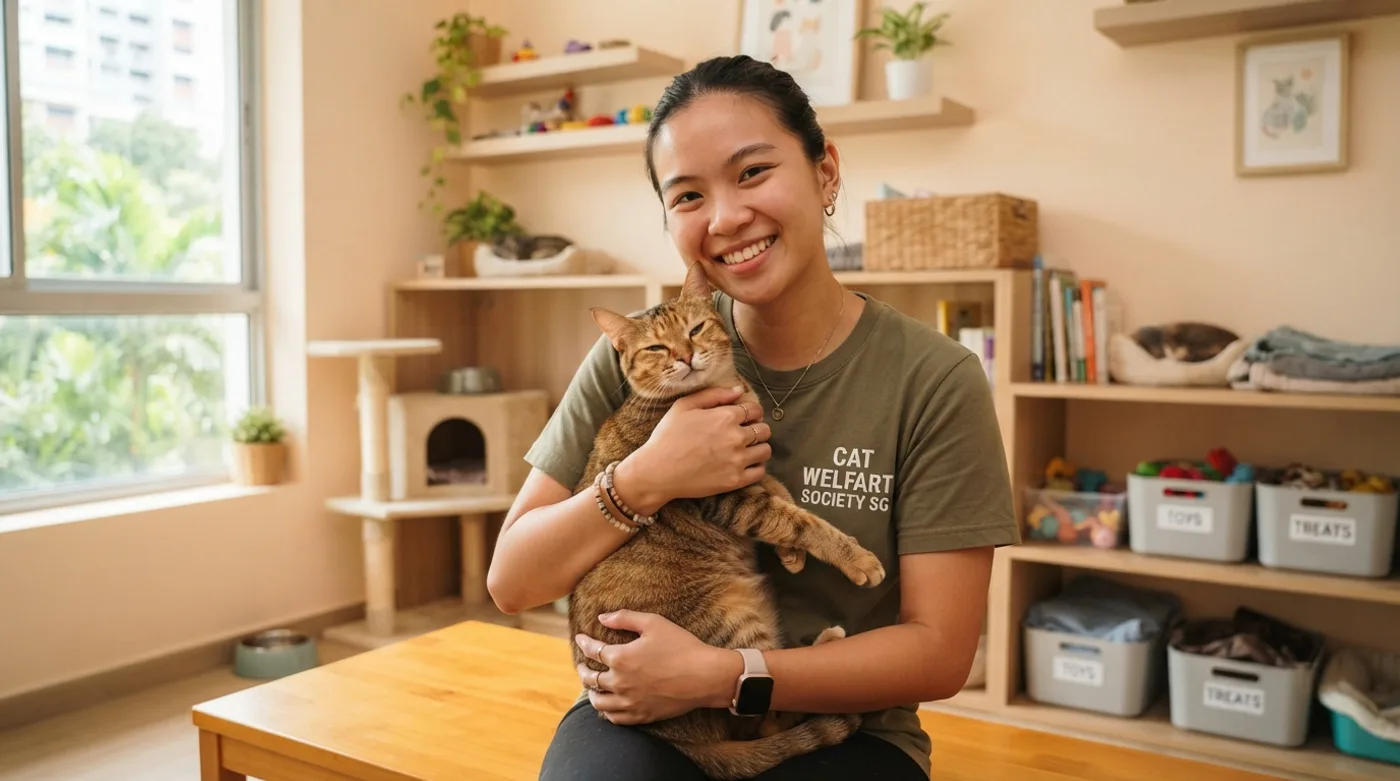
Why adoption is the default answer here
Singapore has far more cats needing homes than homes looking for cats. Community cats, unplanned litters, and cats surrendered when families move or circumstances change all feed a supply that consistently exceeds demand. That imbalance is the single most important fact on this page.
It also happens to be the cheaper and better-informed route for most people. A fostered adult cat arrives with weeks of observed behaviour — how it is with children, with other cats, with the vacuum cleaner, whether it hides from visitors — which no ten-week-old kitten of any breed can offer, because its personality is not finished yet.
We match kittens from licensed breeders, so this page is not written to bring us business. It exists because "where do I get a kitten in Singapore" has two honest answers, and a site that only gives one of them is not being straight with you.
When adoption is clearly right
If your requirement is "a cat" rather than "a Ragdoll", adoption gets you there faster, cheaper and with more information about the animal. Buying makes sense when you have a genuine requirement for predictable size, coat or temperament — see the full comparison.
Where to adopt in Singapore
Four channels, each with a different rhythm and a different kind of cat.
Kittens specifically move fast through all four channels. Getting on a fosterer's list is usually more effective than refreshing listings, because most kittens are spoken for before they are ever posted.
SPCA and established shelters
The most structured route. Cats are sterilised, vaccinated and microchipped, with a proper adoption process and post-adoption support. Best if you want the process to be clear and documented.
Rescue groups and fosterers
Cats live in real homes before adoption, which produces the best behavioural information available anywhere. Best if temperament matters more to you than speed.
Adoption drives
Weekend events where you can meet several cats in one place. Far better than choosing from photographs, and the volunteers there know each cat individually.
Community-cat networks
Sterilised, ear-tipped community cats sometimes move indoors successfully. Slower and the most rewarding when the temperament fits. Start with the feeders in your own block.
What the process actually involves
Days to a few weeks, depending on the group and on how flexible you are.
- 1ApplicationA form covering your household, your home, whether you rent, other pets, and who is home during the day. Answer it honestly — a mismatch found now is far better than one found in six weeks.
- 2Matching conversationA volunteer suggests cats that suit your situation. This is the most valuable part of the process and the part people most often try to skip.
- 3Home checkUsually in person or by video. They are checking meshed windows, household agreement and realistic expectations. Mesh before this, not after.
- 4Meeting the catSometimes more than once. Sit on the floor, let the cat come to you, and pay attention to what it does rather than to how it looks.
- 5Adoption agreement and feeA written agreement, usually including a clause that the cat comes back to them if it does not work out. Take that clause seriously — it is there for the cat.
- 6Homecoming, then licensingSame safe-room method as any cat — see bringing a kitten home — then microchip transfer and the PALS licence in week one.
What adoption costs, honestly
The fee is small and it is not the whole picture — in a good way.
The fee typically covers work a private buyer pays for separately, so the first-year gap between adopting and buying is wider than the headline difference suggests. The full lifetime picture is in the cost of owning a cat.
Key numbers
- Adoption fee
- A small fraction of pedigree prices
- Usually included
- Sterilisation, vaccination, microchip
- Cat licence
- Free until 31 Aug 2026
- Setup
- Mesh, trays, carrier, cat tree
- Ongoing
- Food, litter, annual vet care
- A "free" kitten
- Costs the same to keep, plus the vet work
The "free kitten" question
Free kittens are genuinely available in Singapore, usually from unplanned litters or from someone feeding a community cat that gave birth. There is nothing wrong with taking one, and thousands of good homes start exactly that way.
What is worth being clear about is the arithmetic. A free kitten is typically unsterilised, unvaccinated and unchipped, so you pay for the vaccination course, the sterilisation and the microchip that a shelter would have covered. The kitten costs nothing; the first year costs roughly what any first year costs, plus that veterinary work.
The second thing to check is age. Kittens separated from their mother before eight weeks commonly develop litter-tray problems, food guarding and anxiety that surface weeks later. If a kitten is being offered at five or six weeks, the kind thing is to ask whether it can stay with its mother longer.
If you take a free kitten
Book a vet visit in the first few days, start the vaccination course, and licence it once it is chipped. Free at the point of handover does not mean free of the obligations that come with a cat.
Adopting versus buying, side by side
The same comparison as our full guide, condensed.
| Adopting | Buying from a licensed breeder | |
|---|---|---|
| Upfront cost | A small fraction of pedigree prices | S$2,000–S$6,000+ |
| Usually included | Sterilisation, vaccination, microchip | Vaccinations to date, deworming, microchip |
| Breed certainty | Usually a domestic shorthair | Known breed, size and coat |
| Temperament known | Often very well, from fostering | Breed-typical; individual still developing |
| Age available | Kittens through to seniors | Almost always 9–12 weeks |
| Process | Application, home check, matching | Enquiry, viewing, deposit, collection |
| Best when | You want a cat and are flexible on breed | You need a specific size, coat or temperament |
The full version, including the cases where each is clearly right, is in adopt or buy a kitten in Singapore.
What applies either way
Adopted or bought, these six are identical and none of them are optional.
Checklist
- Up to two cats per HDB flat — see what the Cat Management Framework requires
- Written landlord permission before you commit, if you rent
- Mesh every window before the cat arrives — the fall risk belongs to the building
- Microchip and licence through PALS, free until 31 August 2026
- A vet visit in the first few days, to set a baseline
- A budget for the emergency, not just the arrival
What the adoption process actually involves
Adopters are frequently surprised by how much is asked of them. Here is the shape of it, and why each step exists.
- 1Find the catRegistered animal welfare groups list adoptable cats on their own sites. Independent rescuers and fosterers post to Facebook and Instagram adoption boards, which move far more cats than the formal listings do and turn over daily during kitten season.
- 2Enquire, and expect questions backWho lives in the flat, how many hours it is empty, whether you rent, whether you have other animals, and what your plan is for the next fifteen years. A rescuer asking all of this is not being difficult.
- 3Screening and a home visitMany groups and most independent fosterers ask to see the flat, and meshed windows are commonly a condition of adoption rather than a suggestion. Mesh before the visit, not after it.
- 4A trial periodTwo weeks is common, sometimes longer. It exists so that a mismatch ends with the cat going back to a fosterer who knows it, rather than being passed on to a stranger a year later.
- 5Fee, agreement, and the paperworkYou pay the adoption fee, sign an agreement that typically asks you to return the cat rather than rehome it, and receive the vaccination and sterilisation records and the microchip number. Then transfer the chip registration and license the cat.
The screening reads as obstruction when you are the applicant. It looks different from the fosterer’s side: they have taken cats back from people who did not think it through, and the questions are what stops that happening a third time. If a group turns you down, ask why — the answer is often a fixable condition rather than a judgement.
One thing worth knowing about the fee: it is cost recovery, not a price. It offsets veterinary work already done on the cat, which is why it varies between organisations and why a kitten and an adult can be priced differently by the same group.