How long you will wait for a Siamese kitten
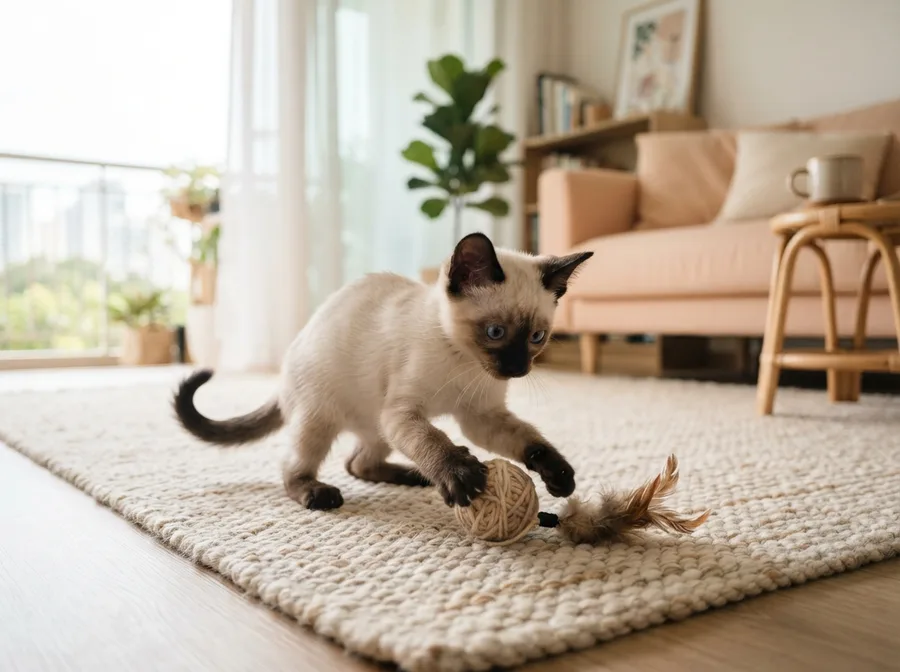
Generally easy to find and among the least contested pedigrees here. The live question is type rather than timing: the modern show Siamese with its extreme wedge head and the traditional or “applehead” Siamese are quite different-looking animals, and knowing which you want narrows the search more than any colour preference will.
The breed has been established in the region for a long time and is not in short supply. Because demand in Singapore sits well below the British Shorthair or Ragdoll level, catteries are not working through queues for it.
The biggest time-saver: Decide between modern and traditional type before you start enquiring. Buyers who leave it open end up comparing cats that are not really comparable, and take longer for no benefit.
Nothing above is an offer: we hold no Siamese kittens and publish no stock list. For the same picture across every breed, see kitten availability, breed by breed.
What a Siamese kitten is actually like
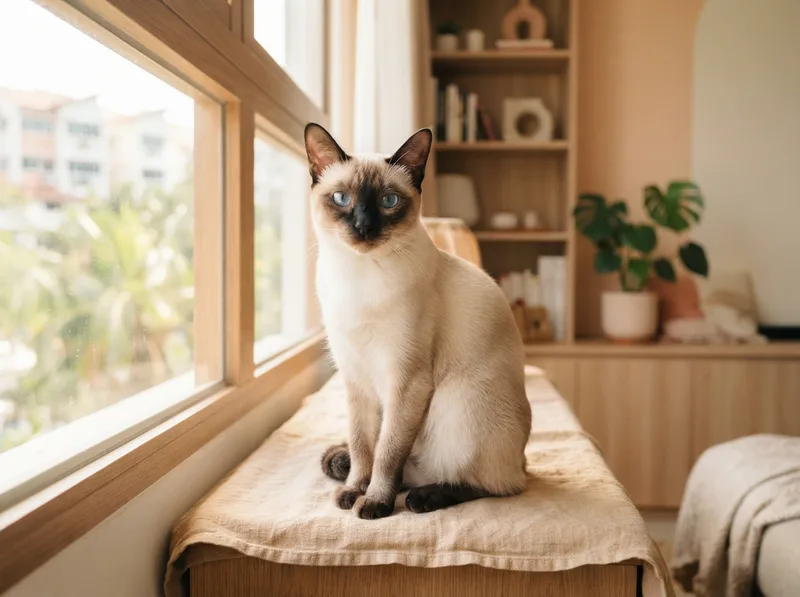
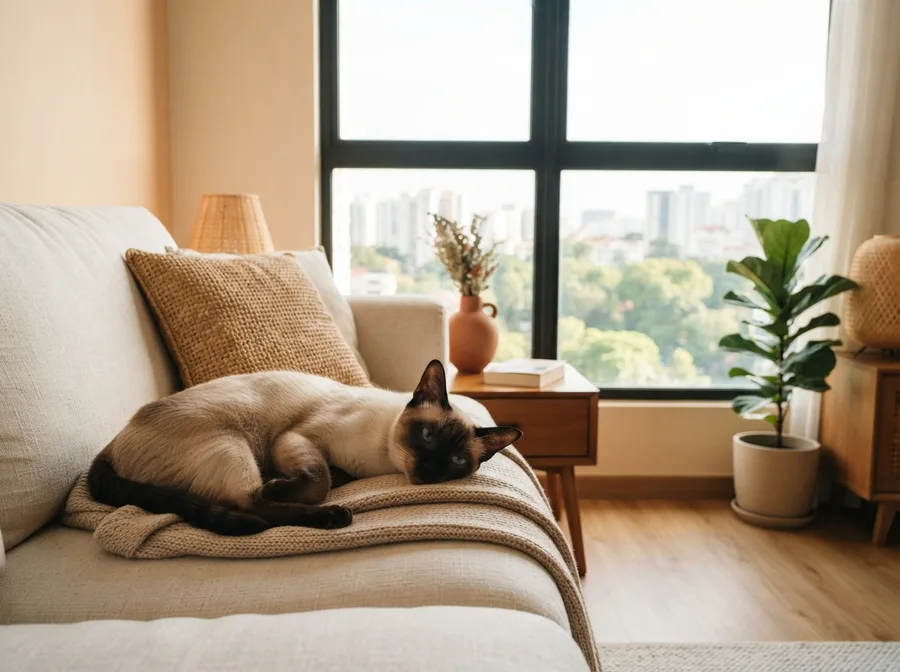
Siamese kittens are born pale and develop their points in the weeks after birth, so early colour tells you less than you would think — and the points continue to darken across the cat’s life, which is why an elderly Siamese is often much darker than the kitten was. There is a Singapore wrinkle: point colour is temperature-sensitive, so a cat living permanently in a warm flat tends to hold a lighter coat than the same cat would in a cold climate. The other early signal is the voice. Siamese kittens are vocal from the start, and a quiet Siamese kitten is not a promise of a quiet Siamese cat. If the noise would be a problem, hear the parents first.
Those three are Siamese-specific. For the checks that apply to any cattery, see how to vet a breeder.
Checklist
- Any “colourpoint kitten” described as Siamese without paperwork. Several breeds and many mixes are colourpointed, and points alone identify nothing.
- A seller who cannot tell you whether the line is modern show type or traditional, or who uses the two terms interchangeably.
- “Quiet Siamese” as a selling point. Meet the parents and listen — a breed trait is not a per-kitten feature.
Grooming and daily life with a Siamese in Singapore
Among the lightest routines of any breed on this site: the coat is short, fine and close-lying, and a weekly wipe with a rubber mitt or a quick comb is genuinely sufficient. Shedding is low and, because the coat is thin, what does shed is less visible on furniture than a plush or semi-long coat. What does need attention is dental care. Siamese and Oriental lines are prone to periodontal disease and gingivitis, so tooth brushing is the grooming habit that matters for this breed — established in kittenhood, while the cat will tolerate it, rather than attempted at five years old.
The most demanding cat here in terms of attention, and the loudest. A Siamese talks, follows, involves itself, opens things and objects audibly to being ignored — delightful in a household that wants a cat in the conversation, and genuinely difficult in a flat with thin walls and a neighbour who works nights. This is the breed where the corridor-noise question is real. They are highly intelligent and easily bored, which means puzzle feeders, real play sessions and preferably a second cat, because a bored Siamese invents projects. Athletic, so vertical space gets used rather than admired.
What a Siamese costs to keep
Low grooming spend, low food volume for a slender cat, and two lines that need money. Dental care is the first: expect periodic scaling under anaesthetic across the cat’s life, and treat home brushing as the thing that reduces the frequency. The second is inherited disease — progressive retinal atrophy and, in some lines, amyloidosis are documented in the breed, and Siamese are over-represented for asthma, which in a flat means paying attention to dust, litter type and aerosols. Enrichment is a real budget line too; toys, puzzle feeders and cat furniture get properly used by this breed.
For Siamese figures set against other breeds, with every source named and dated, see what moves a kitten between price bands; for the month-by-month picture, what ownership actually costs.
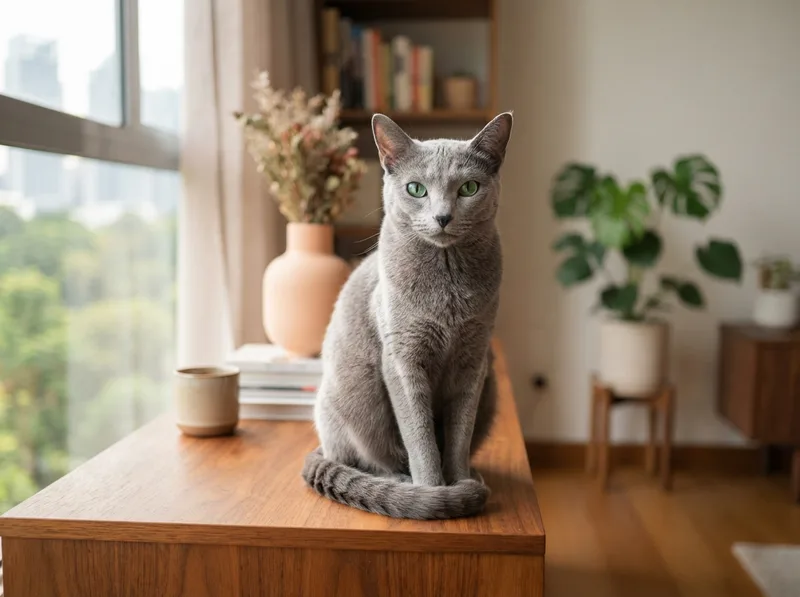
Also worth reading: the Russian Blue
The Russian Blue is the useful counterpoint: comparably elegant and fine-boned, similarly attached to its people, and dramatically quieter and more reserved. Buyers drawn to the Siamese silhouette who would struggle with the volume usually find the Russian Blue answers what they actually wanted.