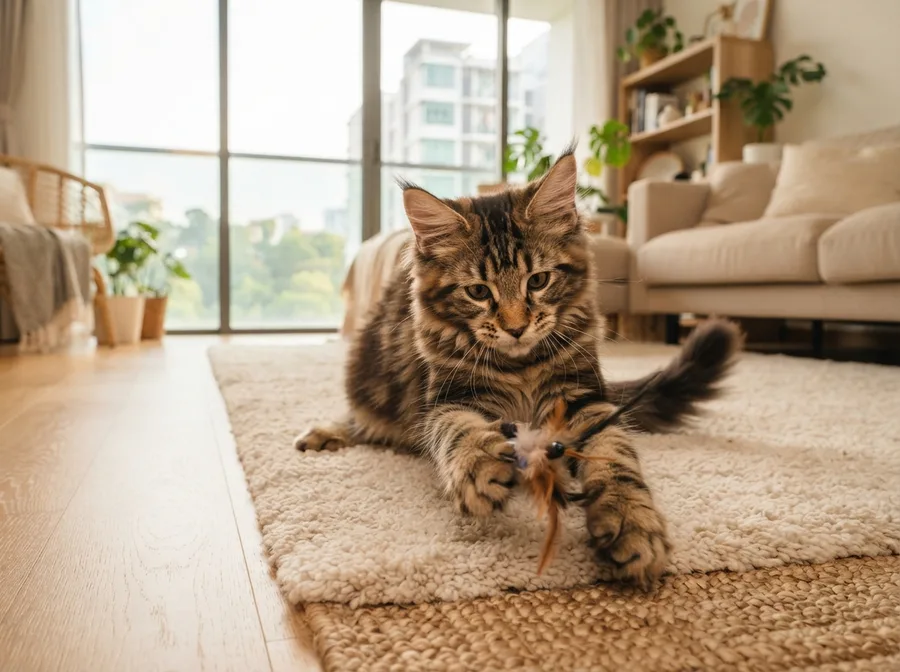
How long you will wait for a Maine Coon kitten
Expect to wait, and expect to be asked questions before you are offered anything. Maine Coon litters in Singapore are announced rather than stocked, and the good ones are frequently committed before they are born. Wanting a particular colour on top of that — silver, smoke, a specific tabby pattern — stacks a second constraint onto an already thin supply.
Very few catteries anywhere breed Maine Coons at volume, because the queens are large, the litters are demanding and the cats mature slowly. A large share of what reaches Singapore descends from overseas lines, and import adds its own paperwork and transport-age constraints to the timeline.
The biggest time-saver: Be flexible on colour and pattern, and be willing to take a kitten from a later litter. Registering an interest early with a cattery that screens for HCM beats chasing whatever happens to be offered this month.
Nothing above is an offer: we hold no Maine Coon kittens and publish no stock list. For the same picture across every breed, see which kitten breeds are findable here.
What a Maine Coon kitten is actually like
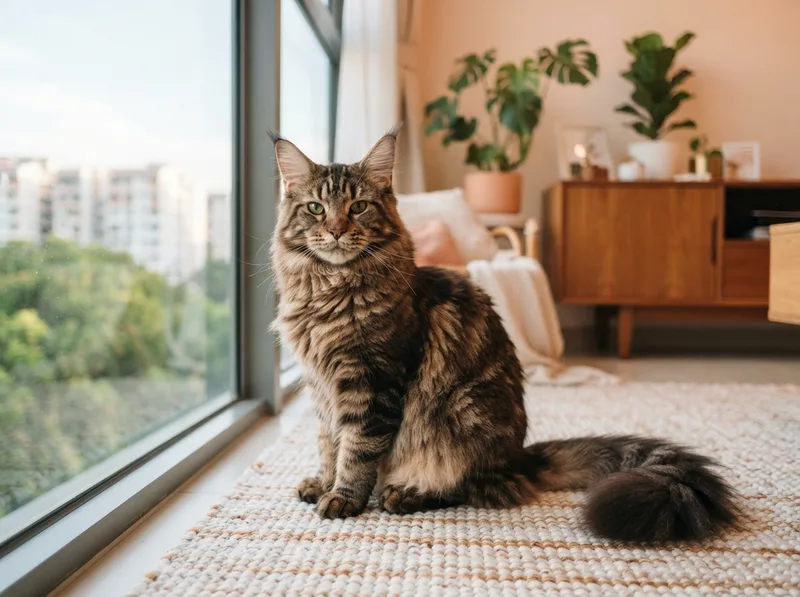
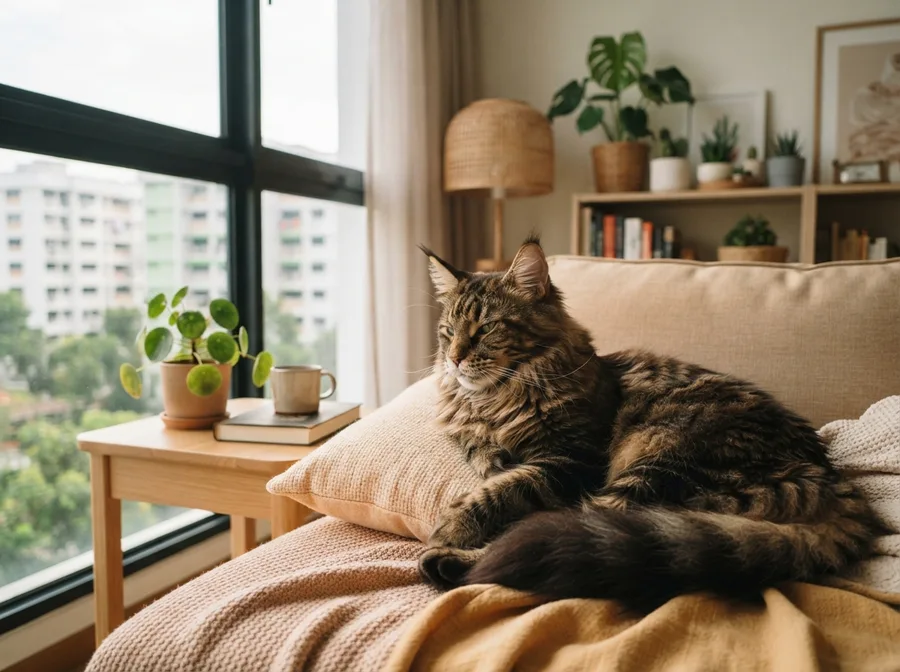
Maine Coon kittens are the least representative kittens of any breed on this site, because the breed grows for years rather than months. A twelve-week Maine Coon is a normal-looking kitten; the size, the ruff, the ear tufts and the tail arrive gradually, and the cat is generally not physically finished until somewhere in its third or fourth year. That has a practical consequence: you cannot judge adult size from the kitten in front of you, and anyone promising a specific adult weight is guessing. What you can judge is the parents, which is exactly why meeting them matters more for this breed than for most. Ask what both parents weigh, and look at the ears and the boning rather than the fluff.
Those three are Maine Coon-specific. For the checks that apply to any cattery, see the questions worth asking a breeder.
Checklist
- A large fluffy kitten with no pedigree paperwork, sold as a Maine Coon. Size and a plumed tail are not breed identification, and semi-longhaired mixes are common.
- No answer on HCM screening for either parent, or an answer that stops at “the vet said the heart sounds fine” — auscultation is neither a scan nor a genetic test.
- A promised adult weight. Nobody can promise it, and a seller who does is telling you how they sell.
Grooming and daily life with a Maine Coon in Singapore
Two to three sessions a week, and a real routine rather than a token brush. The coat is long, uneven in length and prone to matting behind the ears, in the armpits and along the britches — the three places owners consistently miss. Work with a wide-tooth comb, finish with a slicker, and check the mat-prone areas by hand every time. Singapore’s humidity does not make the coat grow, but it does make an unbrushed coat mat faster and makes the cat considerably less tolerant of the process, so short frequent sessions beat one long weekly fight. Many owners here add a sanitary trim; a full clip is rarely needed and takes months to grow back evenly.
A gentle, sociable and unusually interactive cat, and one that takes up more space than people plan for. In a flat the constraint is rarely floor area — it is height and furniture. A Maine Coon wants to be up somewhere, and a cat tree rated for a small dog is a better purchase than a standard one. Litter trays need to be genuinely oversized; a standard tray produces a cat that hangs over the edge and then stops using it. The breed is talkative in a chirping, trilling register rather than a Siamese yowl, which is charming in a flat and rarely a neighbour problem, and it tolerates company — other cats, children — better than most pedigrees.
What a Maine Coon costs to keep
This is the most expensive breed on the site to keep, and food is only part of it. A large cat eats proportionally more, needs a bigger tray and more litter, and gets through scratching posts and beds faster because everything is load-bearing. Grooming is the second line: even doing it yourself, budget for tools and for the occasional professional session when a mat gets ahead of you. And the health line is cardiac. Hypertrophic cardiomyopathy and hip dysplasia are both documented in the breed, which makes periodic screening a sensible ongoing cost rather than a one-off, and makes insurance exclusions worth reading closely before you commit.
For Maine Coon figures set against other breeds, with every source named and dated, see the sourced price picture; for the month-by-month picture, what a cat costs per month here.
Also worth reading: the Ragdoll
The honest alternative is the Siberian: another large, semi-longhaired, sociable cat with comparable presence and a coat that is generally less mat-prone. If the appeal of a Maine Coon is the size and the personality rather than the specific look, the Siberian answers the same brief with slightly less grooming.