What actually changed in 2024
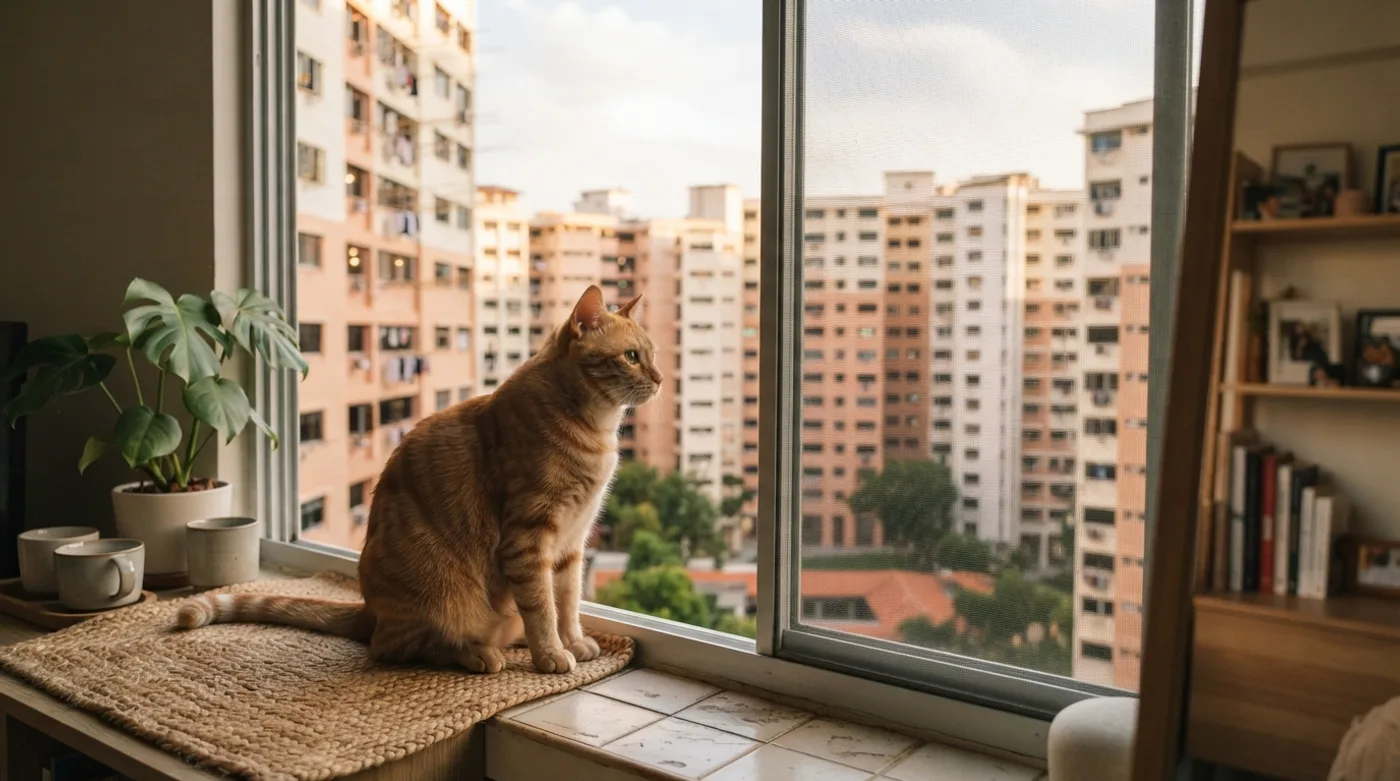
For decades, keeping a cat in an HDB flat was against the rules. Enforcement was inconsistent — an estimated tens of thousands of cats lived in flats regardless — but the rule stood, and it left owners in a permanently precarious position: no licence, no legal footing, and a genuine risk of being told to remove a family pet after a complaint.
The Cat Management Framework ended that. The Pet Cat Licensing Scheme began on 1 September 2024, and for the first time HDB residents can legally keep cats, provided they license and microchip them and follow the responsible-ownership conditions attached to the scheme.
This is the single biggest change to pet ownership rules Singapore has seen in a generation, and it is still new. The practical consequence for anyone reading this in 2026 is that a great deal of the advice you will find online — including older forum threads that still rank well — predates the framework and is simply wrong. Work from the primary sources, and check dates on anything you read.
If you are reading this before you have chosen a cat at all, the two ways to get one here — an AVS-licensed seller, or adoption — are laid out in our guide to kittens for sale in Singapore.
Two dates worth writing down
1 September 2024 — the licensing scheme started and the free transition period opened. 31 August 2026 — the free period ends and existing owners must be licensed by then. Confirm both at AVS.
How many cats you can keep, and why the cap exists
HDB flats are allowed up to two cats per flat under the framework. Private premises are allowed three cats and/or dogs in total — a combined cap, not three cats on top of a dog. The cap is about density rather than about cats being difficult neighbours: flats share walls, corridors and refuse chutes, and the framework is designed to keep cat ownership sustainable in that environment.
Two is a genuinely workable number, and for many households it is better than one. Cats left alone through a full working day do better with company, and a bonded pair will sleep, play and groom together instead of redirecting that energy at your furniture. The catch is that two cats need two litter trays, separate feeding stations and enough vertical space to avoid each other when they want to.
If you already have two cats and are considering a third, the honest answer is that you cannot, in an HDB flat, under the current framework. Because caps and conditions can be updated, confirm the current number before making plans — we cover the detail in our how many cats can you keep guide.
Licensing and microchipping, step by step
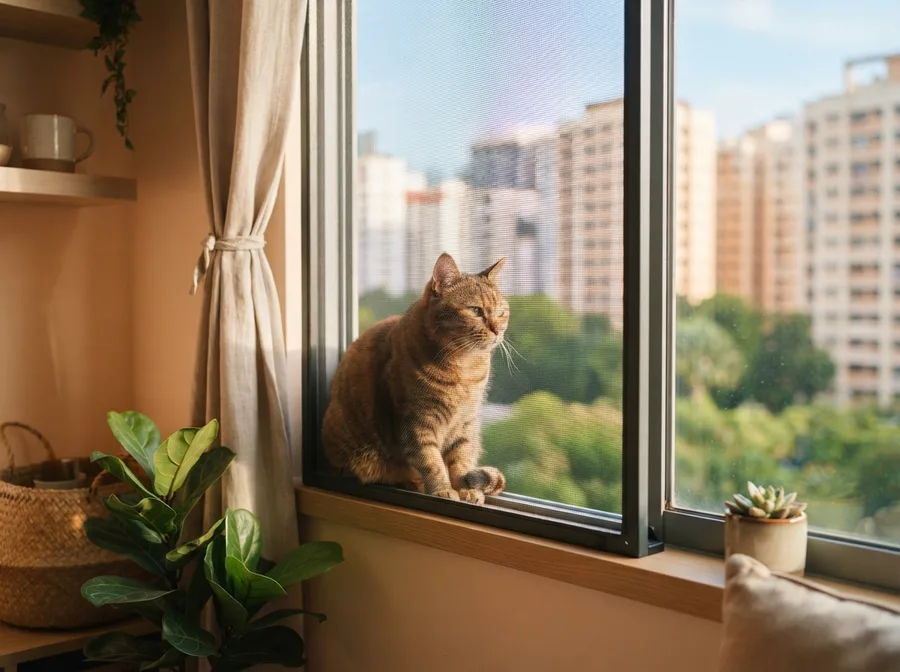
Every pet cat must be microchipped and licensed through the Pet Animal Licensing System. The process is short, and during the transition period it is free.
- 1Microchip the cat firstA vet implants a rice-grain-sized chip between the shoulder blades. It takes seconds, and the chip number is what the licence is tied to. A kitten from a licensed breeder should already be chipped — ask for the number and check it scans.
- 2Complete the Pet Ownership CourseFirst-time applicants complete a one-time, free online course covering responsible ownership. It is short, and you only ever do it once.
- 3Apply through PALSSubmit the licence application at pals.avs.gov.sg with the microchip number and your details.
- 4Renew on scheduleLicences run for a fixed term and need renewing. Set a calendar reminder the day you are approved — this is the step people forget two years later.
Licensing is free until 31 August 2026, and for a sterilised cat the free licence issued during the transition carries lifetime validity — it never needs renewing. Re-checked against AVS on 17 August 2026, with two weeks of that window left. Existing owners should simply do it now rather than wait for the deadline. The full steps and the fee schedule that applies afterwards are in our cat licensing guide, and the conditions attached to it are unpacked clause by clause in the HDB cat rules, explained line by line.
Making a flat genuinely safe for a cat
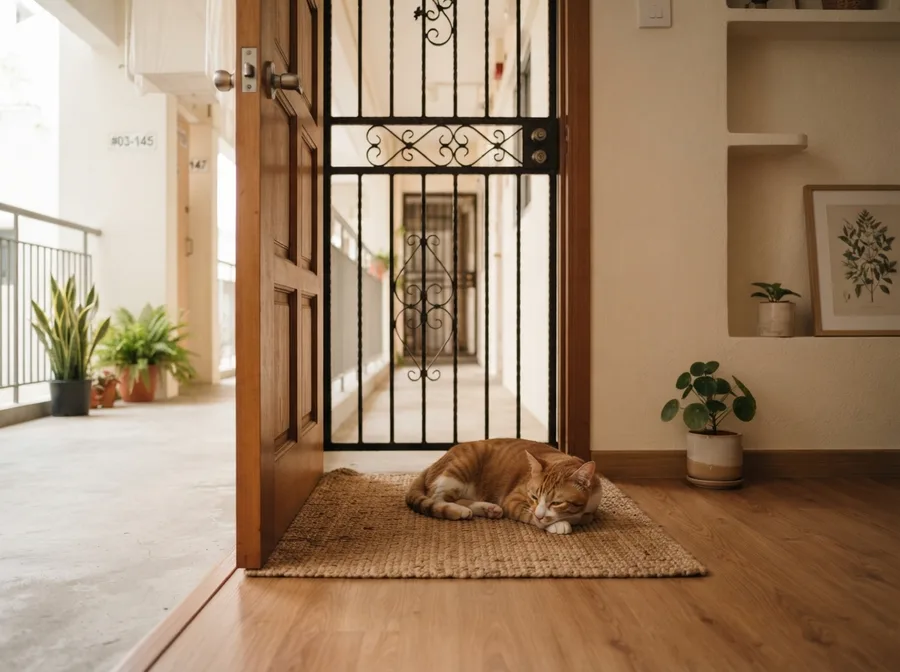
Responsible ownership is the backbone of the framework, and in a high-rise flat that mostly means one thing: the cat must not be able to fall.
Singapore vets see high-rise fall injuries constantly, and they are not limited to careless owners. A cat that has ignored an open window for two years will go through it the first time a bird lands on the ledge. Mesh is not optional in a flat, and it needs to cover every window, the kitchen and bathroom openings, and any gap in a service yard grille that a cat can compress itself through.
The rest is about giving an indoor cat somewhere to be a cat. Height matters more than floor area: a cat with three or four levels to move between behaves better in 90 square metres than a cat with none does in 140. Our cat-proofing guide covers the setup room by room.
Checklist
- Sturdy mesh on every window, including bathroom and kitchen openings
- Service yard and bomb shelter openings closed or meshed
- A litter tray per cat, plus one, sited away from food and away from the door
- Scratching posts tall enough for a full stretch — otherwise the sofa becomes one
- Vertical space: a cat tree, a shelf run, or a cleared wardrobe top
- Cables sleeved, and toxic plants (lilies especially) removed entirely
- Windows and doors treated as an airlock when guests or delivery riders arrive
Choosing a cat that suits flat life
Almost every cat in Singapore is an indoor cat, so temperament and energy matter more here than they would in a house with a garden.
We rank every breed for HDB fit in the best cat breeds for HDB flats guide, and each of our breed guides gives a straight verdict on flat living rather than a brochure description.
Calm and quiet
British Shorthair, Ragdoll, Russian Blue and Persian are all content to sleep through a working day and rarely make noise — the safest choices where walls are shared.
Needs a job
Bengals and other high-drive breeds are wonderful cats and a poor fit for a small flat with no climbing height. If you want one, build the enrichment first.
Coat versus climate
Heavy-coated breeds are keepable in air-conditioned homes but the grooming becomes a daily commitment. Short coats are the low-friction option in this climate.
Neighbours, corridors and the social side of the rules
The framework is as much about neighbours as about cats. The complaints that generate enforcement interest are almost always the same three: a cat roaming the common corridor, litter smell reaching the corridor or the flat next door, and noise from an unsterilised cat calling at night.
All three are solvable before they happen. Keep the cat indoors — a corridor is not an enrichment strategy and a cat in a lift lobby is a cat one open door away from the ground floor. Site the litter tray away from your own front door and scoop daily, which fixes the smell problem almost entirely. And sterilise, which removes the calling behaviour and lowers your future licence fee at the same time.
If you rent, add one more step: written permission from your landlord, obtained before you pay any deposit on a kitten. The framework makes cats legal in HDB flats; it does not override a tenancy agreement, and "the rules changed" is not a defence against a clause you signed.
The one that catches renters out
Get landlord permission in writing before you commit to a kitten. We have seen deposits paid and kittens reserved before this conversation happened, and it does not end well for anyone — least of all the cat.
What it costs to keep a cat legally in a flat
The regulatory cost is small. The real budget is everything around it.
Licensing is the cheapest part of cat ownership in Singapore and the part people most often delay. The costs that actually shape the decision are food, litter, annual vet care and the occasional emergency — laid out in full in our cost of owning a cat guide, and worth reading before you fall in love with a photograph.
Key numbers
- Licence (to 31 Aug 2026)
- Free
- Microchip
- Usually included with a pedigree kitten
- Pet Ownership Course
- Free, one-time
- Sterilisation
- One-off vet cost; lowers future licence fee
- Window mesh
- One-off, whole-flat
- Ongoing
- Food, litter, vet, insurance
Your first week, in order
If you are starting from nothing, this is the sequence that avoids the expensive mistakes.
- 1Confirm you canHDB flat, two cats maximum. Renting? Written landlord permission first.
- 2Mesh the flatEvery window and opening, before the cat arrives. This is the step that cannot wait.
- 3Choose a breed honestlyMatch the cat to your space, your climate control and how much grooming you will genuinely do — not to a photo.
- 4Buy or adopt from a legitimate sourceOnly AVS-licensed sellers may sell pets. Vet the breeder or go through a shelter.
- 5Microchip, then license through PALSFree until 31 August 2026. Do it in the first week, not the first year.
- 6Book the first vet visitWithin days of homecoming, so vaccinations and a health baseline are established early.