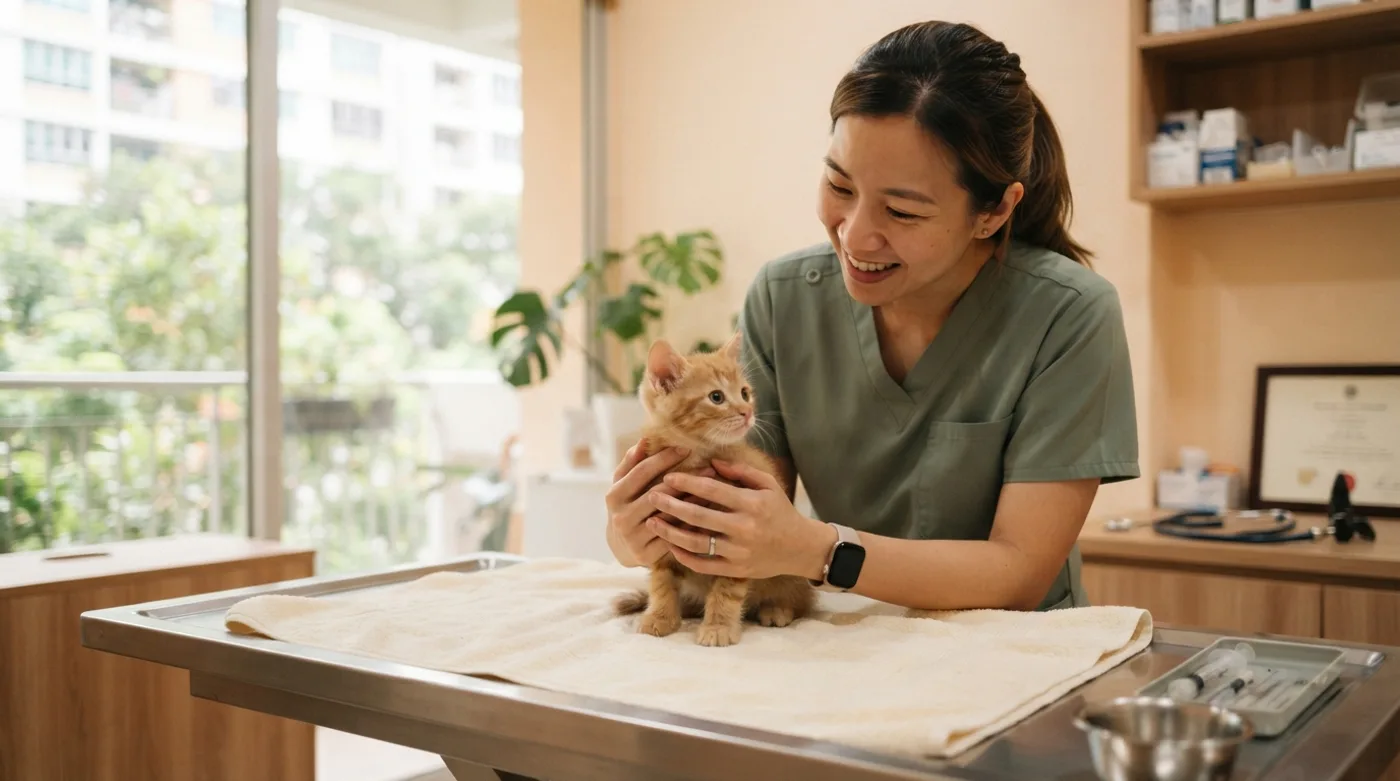
What the core course actually covers
The feline core vaccination in Singapore is usually described as an F3 or F4. The number is simply how many diseases the combined vaccine covers, and the core three are consistent: feline panleukopenia, feline herpesvirus and feline calicivirus. An F4 adds chlamydia.
Panleukopenia is the serious one. It is a parvovirus, it is highly contagious, it survives in the environment for a long time, and in unvaccinated kittens it is frequently fatal. This single disease is most of the argument for vaccinating.
Herpesvirus and calicivirus together account for the large majority of feline upper respiratory infections — the sneezing, runny eyes and mouth ulcers commonly called cat flu. Vaccination does not always prevent infection outright, but it substantially reduces severity, which in a young kitten is the difference that matters.
This page is general guidance, not a veterinary schedule. Vaccine choice and timing are clinical decisions — confirm the exact plan for your kitten with your Singapore vet.
Why rabies is different here
Singapore is rabies-free, so cat rabies vaccination is not routine for cats staying in the country. It becomes relevant if you export or travel with a cat. This is one of the clearest places where overseas advice does not transfer.
The typical schedule
A common shape for the course. Your vet may adjust it — that is normal, and it is their call rather than a website's.
- 1Around 8–9 weeks: first core vaccinationUsually given by the breeder before the kitten goes home. Ask for the record showing the date and product used.
- 2A few weeks later: second doseNormally your responsibility after homecoming. This is why the vaccination card matters — it tells your vet where to pick up.
- 3Possible third doseDepending on the protocol and the kitten's age at the first dose, a third may be advised to complete the primary course.
- 4Around one year: first boosterConsolidates the primary course.
- 5Thereafter: periodic boostersAt intervals your vet advises, for the rest of the cat's life — including for indoor cats.
- 6Alongside: dewormingOn a repeating schedule from a young age, with product and interval set by the vet.

What a breeder should hand over
The vaccination record is one of the few genuinely verifiable things you receive with a kitten. Treat it as a document, not a formality.
A record that is complete and specific tells you the kitten has seen an actual vet. A record that is vague, handwritten without a clinic stamp, or simply absent tells you something different.
Checklist
- The date of each vaccination given
- The product or vaccine type used, not just "vaccinated"
- The clinic that administered it
- What is due next, and when
- The deworming dates and product
- The microchip number — and check it matches the actual scan
The first vet visit after homecoming
Book a vet appointment within the first few days of the kitten coming home, before anything is wrong. There are three reasons and all of them pay off later.
The first is verification: an independent professional confirms the kitten is in the condition you were told it was, at a point where you still have recourse with the seller. The second is continuity: your vet reads the breeder's record and takes over the schedule, so nothing is missed in the handover. The third is simply that you now have a clinic — a relationship, a file, a known number — before the first genuine emergency at eleven at night.
Bring the vaccination card, the microchip certificate and a sample of the current food. Ask about the remaining course, the deworming schedule, and roughly when sterilisation should be discussed. The visit itself is covered step by step in a kitten's first vet visit.
The one symptom not to wait on
A kitten that has not eaten for a day needs a vet, not another twelve hours of watching. Kittens have almost no reserves, and appetite is the earliest reliable signal that something is wrong.
Vaccination, licensing and the rest of the admin
Three separate things people often conflate. They are related, but they are not the same.
The licence needs the microchip, not the vaccination record. The vaccination record is for your vet and for your own protection as a buyer. Both matter, for different reasons — see the cat licensing in Singapore and cat sterilisation.
Key numbers
- Vaccination
- Clinical, ongoing, your vet
- Microchip
- Required before licensing
- Cat licence
- PALS; free until 31 Aug 2026
- Sterilisation
- Encouraged; lowers licence fee
- Rabies
- Not routine — SG is rabies-free
- Boosters
- Indoor cats included