Why licensing exists at all
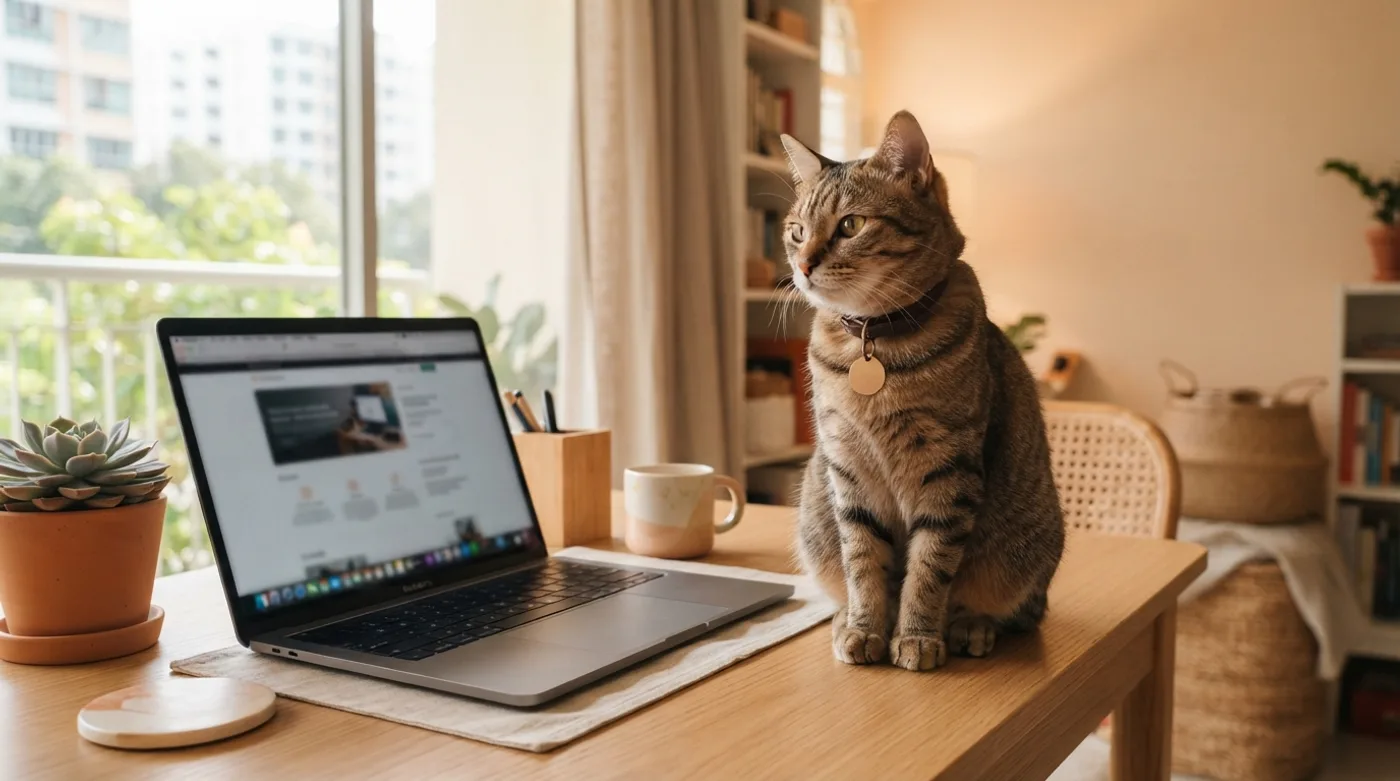
Cat licensing arrived in Singapore alongside the decision to allow cats in HDB flats. The two are a package: the framework legalised something tens of thousands of households were already doing, and licensing is the mechanism that makes it accountable.
In practice a licence does three things. It creates a register linking a cat to an owner, so a found cat can be returned rather than becoming a shelter statistic. It attaches responsible-ownership conditions to keeping a cat in a dense residential environment. And it gives owners a legal footing they simply did not have before — which is worth more than the paperwork costs.
The scheme opened on 1 September 2024 with a free transition period running to 31 August 2026. If you own a cat in Singapore and have not licensed it, that window is the entire reason to act now rather than later.
And there is a detail inside that window worth more than the deadline itself. During the transition, a sterilised cat is issued a free one-time licence with lifetime validity — not a free year, a licence that does not expire. Licensing a sterilised cat before 31 August 2026 therefore costs nothing and never needs renewing; the same licence bought on 1 September 2026 costs S$35. An unsterilised cat gets a free licence covering the transition only, issued on a renewal basis.
The short version
Microchip → free Pet Ownership Course (first time only) → apply on PALS. Free until 31 August 2026 — and for a sterilised cat that free licence is a lifetime one.
How to license your cat, step by step
The whole process is short. Most of the effort is in the microchip step, which a breeder has usually already done for you.
- 1Microchip the catA vet implants a chip between the shoulder blades in seconds. The licence is tied to this number, so it must exist first. Confirm the chip scans and that the number matches the paperwork you were given.
- 2Register the microchip detailsA chip only helps if the registered contact details are yours and current. This is the step people skip, and it is the step that decides whether an escaped cat comes home.
- 3Complete the Pet Ownership CourseFree, online, one-time, for first-time applicants only. Short enough to do in a sitting.
- 4Apply through PALSSubmit at pals.avs.gov.sg with the microchip number and your details. Free until 31 August 2026.
- 5Diarise the renewalLicences run for a fixed term. Put the renewal date in your calendar the day approval comes through — future-you will not remember otherwise.
What licensing costs, now and later
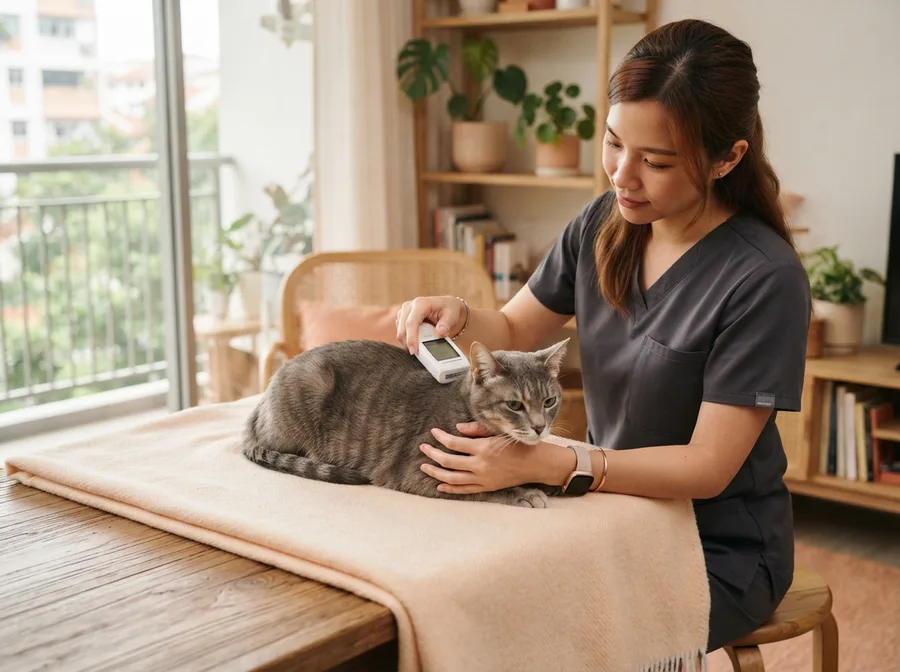
The current answer is nothing. The later answer depends on one decision you make about your cat.
Because the fee schedule can be updated, confirm the current figures on the AVS licensing requirements page before you plan around them. The structural point is stable, though: sterilised cats are cheaper to license, permanently.
Key numbers
- Now (to 31 Aug 2026)
- Free
- Fees begin
- 1 September 2026
- Sterilised cat
- S$15/yr or S$35 one-time
- Unsterilised cat
- S$90/yr
- Pet Ownership Course
- Free, one-time
- Microchip
- Vet cost; usually included with a pedigree kitten
The mistakes that cause problems later
None of these are dramatic. All of them are annoying to fix a year after the fact.
Licensing itself is straightforward. What goes wrong is almost always adjacent to it — a chip registered to the breeder, a number that does not match, a renewal that lapses quietly. Check these once and you will not have to think about it again.
Checklist
- Microchip registered to the breeder, not to you — transfer it at homecoming
- Contact details on the chip registry out of date after a move or a new number
- Microchip number on the vaccination card not matching the actual scan
- Licence renewal lapsing because nobody diarised it
- A second cat added to the household and never licensed
- Ownership changing hands without the registration being updated
Licensing when you buy a kitten
If you are buying rather than adopting, licensing should be part of the handover conversation, not an afterthought two months later. A legitimate licensed breeder will hand over a microchipped kitten with a vaccination card and a chip certificate, and will not be surprised to be asked about transferring the chip registration.
Ask three questions at collection: is the kitten microchipped, what is the number, and how do I move the registration to my name. If any of those produce hesitation, that tells you more about the seller than any photograph on their website will.
Only AVS-licensed sellers may sell pets in Singapore, which is a useful filter in its own right. Our guide to choosing a breeder covers how to verify that and what else to check before you pay anything.
Do it in week one
Licensing is free until 31 August 2026 and takes minutes. Doing it in the first week, while the paperwork is on your kitchen table, is far easier than doing it in month eight when the card is in a drawer somewhere.
Licensing and the HDB rules together
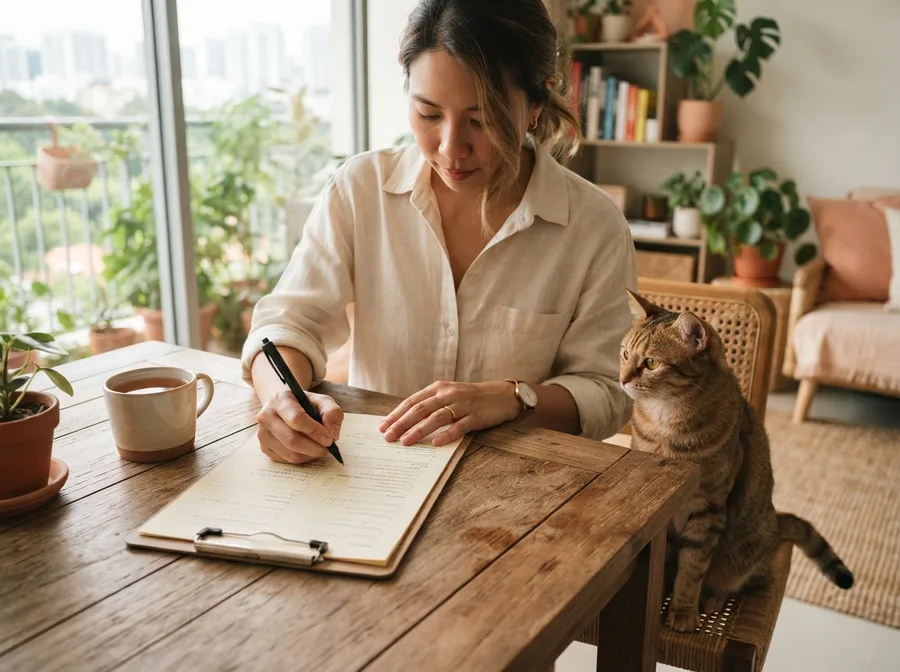
Licensing is one half of the framework; the HDB conditions are the other. Up to two cats per flat, microchipped and licensed, kept indoors and kept safe — that is the whole shape of it.
The conditions are not onerous, but they are not optional either, and the one with real consequences is safety. Meshing every window in a high-rise flat is the single most important thing an owner does, and it is worth doing before the cat arrives rather than after the first time it sits on a ledge.
The full picture is in our cats in HDB flats guide, and the numbers question specifically in how many cats you can keep.
The fee schedule from 1 September 2026, in full
Re-verified against the AVS licence-fee table on 17 August 2026, two weeks before the transition period closes. No competing Singapore page we could find publishes the two-year tier, the reduced fourth-cat rate or the payment rebate — all three change what licensing actually costs a household.
| Sterilised | Not sterilised | |
|---|---|---|
| One-year licence | S$15 | S$90 |
| Two-year licence | S$25 | S$165 |
| Three-year licence | Not offered — take the one-time licence below | S$230 |
| One-time, for the cat’s life | S$35 | Not available |
| Cat under five months | S$15 (one-year) | S$15 (one-year) |
| Fourth and subsequent cat/dog | S$180 one-year · S$325 two-year · S$460 three-year | S$180 one-year · S$325 two-year · S$460 three-year |
Three things in that table are worth acting on. The one-time sterilised licence at S$35 covers the rest of the cat’s life, which makes it cheaper than three one-year renewals and removes the renewal you would otherwise forget. Sterilisation is the single biggest lever: S$15 against S$90 for the same year, on the same cat.
And the fourth-animal rate has an exception most people never hear about. The standard fourth-and-subsequent rate is S$180 for a year, but a reduced rate of S$15, S$25 or S$35 applies to a sterilised animal adopted from a welfare rehoming partner — for cats, that is the whole condition. In other words, adopting a fourth cat from a welfare group costs the same to license as the first.
Payment method matters slightly too: AVS extends a 10% rebate to licensees paying by GIRO, online or via AXS. It is a small number on a small fee, but it is free.
The caps sit outside this table and are not fees: two cats in an HDB flat, three cats and/or dogs in private premises. And the deadline is not a fee either — licensing is free until 31 August 2026, and from 1 September 2026 it becomes an offence to keep an unlicensed pet cat.
Where this table comes from
Reproduced from AVS: dog and cat licence fees, read on 27 July 2026, with the caps from AVS: Cat Management Framework. First read 27 July 2026 and re-checked on 17 August 2026 — the re-check corrected two rows: AVS publishes no three-year rate for a sterilised cat (the one-time lifetime licence is the S$35 option), and the S$460 fourth-animal figure is a three-year fee rather than a one-time one. Fee tables get revised. Check the source before you budget from ours.