Start with the licence, not the photographs
In Singapore, selling live animals is a licensed activity. Only AVS-licensed sellers may sell pets, which means the first question is not "how much" or "when can I collect" — it is whether the person selling you a kitten is permitted to.
This matters more than it sounds. An unlicensed seller is outside the system entirely: no oversight of conditions, no accountability if a kitten arrives sick, and no recourse for you. The kitten in the photograph may be perfectly healthy. You have no way of knowing, and no way of doing anything about it if it is not.
Ask directly for the licence and check it. A legitimate breeder answers this question every week and will not be offended by it. Anyone who is offended by it has told you something useful.
Vetting a seller only matters if buying is the right route for you in the first place — buying and adopting, side by side weighs that question before this one.
The first question
"Are you AVS-licensed, and can I see the licence?" Ask it before you ask about colours, prices or availability. It takes ten seconds and it filters out the entire category of problem this page exists to prevent.
Visit, and know what you are looking at
A visit is the highest-signal thing a buyer can do, and it is the thing most often skipped because it is inconvenient. What you are assessing is not decor — it is whether these kittens have been raised in a way that produces a stable adult cat.
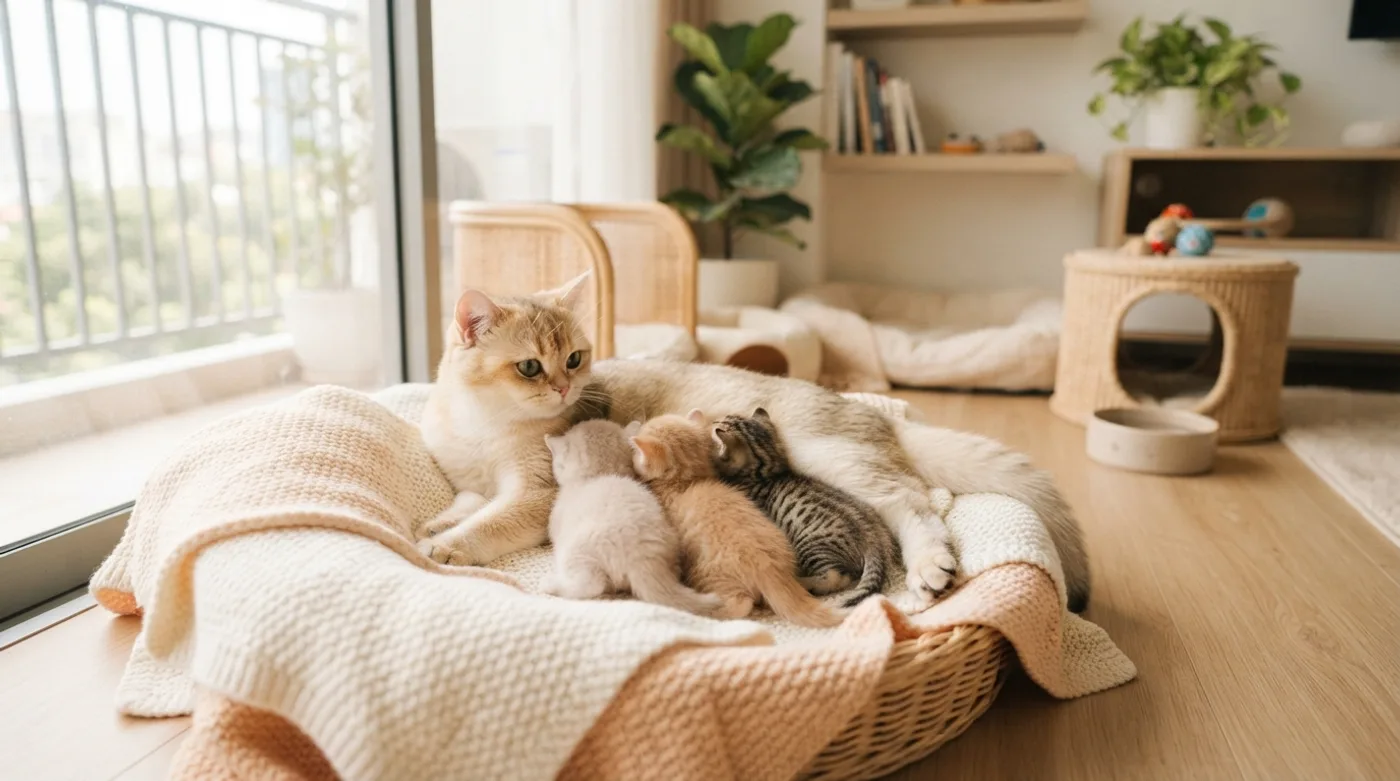
Look at the mother first. She should be present, in reasonable condition, and relaxed around the kittens and around people. A mother who is absent, thin, or clearly stressed is the clearest single indicator you will get, and no explanation for her absence should fully satisfy you.
Then look at the kittens as a group. Clean coats, clear eyes and noses, no evidence of diarrhoea around the tray, and behaviour that is curious rather than cowering. A kitten that approaches a stranger at ten weeks has been handled properly. A litter that scatters and hides has not.
Finally, look at the space itself. It does not need to be a showroom. It needs to be clean, ventilated, and obviously somewhere cats actually live rather than somewhere kittens have been placed for a viewing.
A car park is not a viewing
If a seller wants to meet somewhere other than where the kitten was raised, decline. There is exactly one reason to hide the environment, and it is never a good one.
The questions worth asking
Ten questions, in the order that matters. A good breeder answers all of them without hesitation.
You are not interrogating anyone. You are doing what any careful buyer does before a four-figure purchase that will live in your home for fifteen years. Breeders who care about where their kittens go find this reassuring, not annoying.
Checklist
- Are you AVS-licensed, and may I see the licence?
- May I visit and meet the kitten's mother?
- How old is the kitten, and at what age do you home them?
- What vaccinations has it had, and what is still due?
- Is it microchipped, and what is the number?
- What health screening has been done on the parents for this breed?
- What exactly is included in the price — in writing?
- What happens if my vet finds a problem in the first weeks?
- What is the kitten eating now, and how do I transition it?
- Can I contact you after homecoming if I have questions?
Red flags that should end the conversation
Any one of these is a reason to walk. Two of them together is not a coincidence.
No visit allowed
Every explanation for this sounds plausible and none of them are. If you cannot see where the kitten was raised, you are buying blind.
No mother present
The mother is the single best indicator of how a litter has been raised. An absent, thin or stressed mother is a hard stop.
Pressure and urgency
"Three other buyers are interested" is a sales technique, not information. Real breeders do not need to rush you into a deposit.
Price far below market
A pedigree kitten at half price is not a discount. It is a missing health screening, a missing licence, or a kitten taken from its mother far too early.
No microchip, no records
Licensing requires a chip. No chip and no vaccination card means either an unlicensed seller or one who has cut every corner available.
Vague on health screening
Every breed on our list has known conditions worth screening for. A breeder who cannot discuss them has not done it.
What to do on collection day
The last thirty minutes are where the paperwork either happens or quietly does not.
- 1Check the kitten overClear eyes and nose, clean rear, no obvious limping, alert and responsive. If anything looks off, say so before you hand over money.
- 2Scan the microchipConfirm the number on the certificate matches the number that scans. Mismatches happen, and they are far harder to fix afterwards.
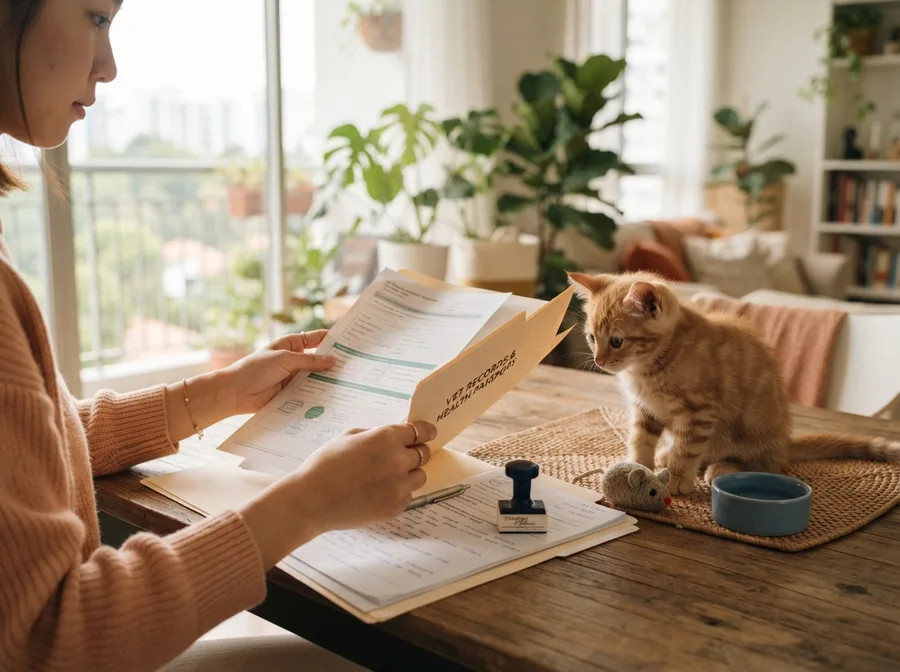
- 3Take every documentVaccination record, microchip certificate, pedigree papers if registered, and the written inclusions you agreed earlier.
- 4Get the current foodA small bag of exactly what the kitten is eating now. Changing food and home on the same day is how you get a week of digestive upset.
- 5Confirm the aftercare positionWho you contact, and what happens if your vet finds something in the first fortnight.
- 6Book the vet, then licenseA check-up within days, and the PALS licence in week one while it is free.
The homecoming itself — the safe room, the first night, the introductions — is covered in bringing your kitten home. If a seller you have been dealing with does not match anything described here, tell our editorial inbox about it — we would rather hear it than have the next reader walk into it.
Where we fit in
Doing all of the above yourself means messaging a dozen catteries, waiting on replies, arranging viewings around your working week, and discovering that the kitten in the photograph went last Tuesday. That is the part we take off you.
You tell us the breed, colour, sex and timing. We search Singapore's licensed breeders and catteries, come back with what genuinely exists, and arrange the viewing. You still do the important part — meeting the kitten, seeing the environment, making the decision — because nobody should buy a cat they have not met.
What we will not do is tell you a kitten is available when it is not, or push you towards a breed that does not fit the flat you have described. If the honest answer is "wait three weeks for the next litter", that is the answer you will get.