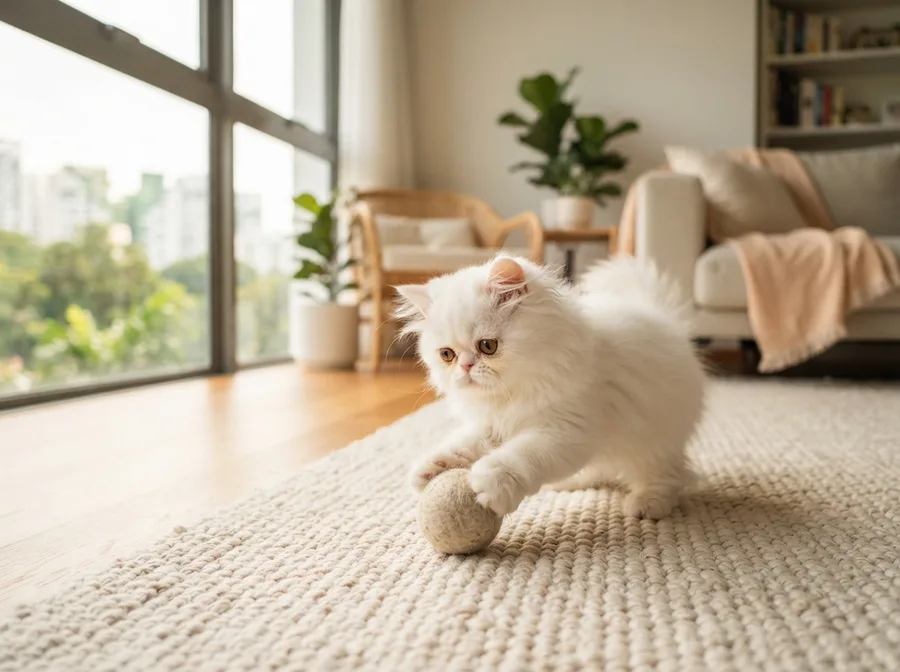
How long you will wait for a Persian kitten
Obtainable without much waiting, and worth slowing down over anyway. Persians are bred widely across the region, which makes a kitten easy to find and makes the quality range unusually wide — the difference between a well-bred Persian with an open face and a poorly bred one with a compromised airway is the most consequential choice in this breed.
Supply is broad rather than scarce: the Persian and its shorthaired relative the Exotic have been bred in and around Southeast Asia for decades. That is why the constraint here is not availability but discrimination, and why the extreme flat-faced “peke-face” type circulates so freely.
The biggest time-saver: Nothing about a Persian search needs speeding up. Spend the time you would have spent waiting on assessing nostril width, tear staining, and how the kitten breathes at rest.
Nothing above is an offer: we hold no Persian kittens and publish no stock list. For the same picture across every breed, see how long each breed takes to find.
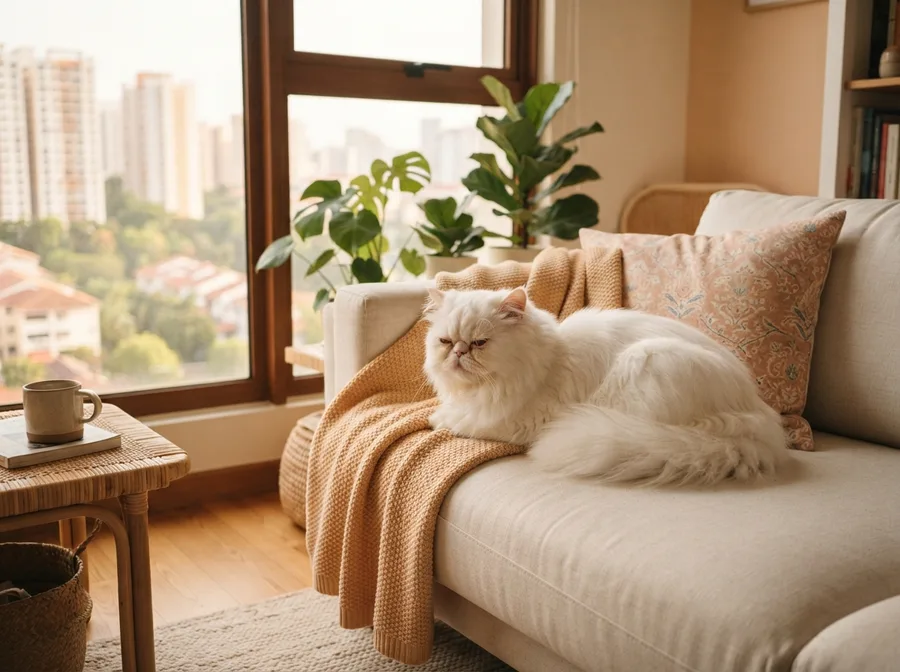
What a Persian kitten is actually like
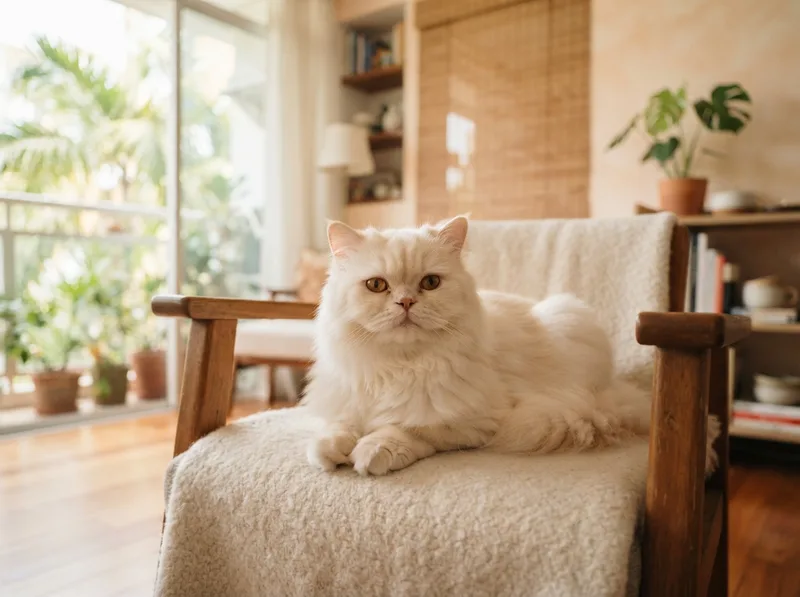
Persian kittens are round, slow-moving and remarkably undemanding, and the coat they arrive with bears little relation to the adult one — full length and density build over the first year and beyond. Two things are worth watching from the first viewing rather than later. Breathing: a kitten that snuffles, snores audibly at rest or has visibly pinched nostrils is a kitten whose airway will not improve with age. And tear drainage: staining at eight weeks tends to mean staining for life, because it follows from facial structure rather than from hygiene. Both are visible before you commit and neither is fixable afterwards. Otherwise expect a gentle, quiet, low-energy kitten that will happily be handled.
Those three are Persian-specific. For the checks that apply to any cattery, see what a legitimate cattery does differently.
Checklist
- Pinched nostrils, audible breathing at rest, or a face so flat the nose sits between the eyes. This is the extreme type, and it is a welfare problem sold as a look.
- No PKD genetic testing named for the parents. It is a well-established test, and a breeder who does not run it has decided not to.
- A spotless white kitten whose tear staining was wiped away just before you arrived. Ask to see the cat again the following day.
Grooming and daily life with a Persian in Singapore
Daily, without exception, and this is the breed where people underestimate it most. A Persian coat mats within days if left, and a matted Persian ends up shaved under sedation — an outcome that is common, expensive and entirely preventable. Budget ten minutes a day with a wide-tooth comb, plus a wipe of the eye corners to manage tear staining and attention to the sanitary area, which this coat does not keep clean by itself. In Singapore’s humidity the coat also holds moisture, so a damp cat needs drying properly rather than being left. Most owners here settle into a professional groom every one to two months on top of the daily work.
The quietest, least demanding cat on this list, and an excellent flat cat on every axis except maintenance. Persians do not climb much, do not vocalise much, and are content to occupy one sofa for a decade. The heat is the real consideration: a flat-faced cat with a dense coat handles Singapore’s climate poorly, and this is a breed for which air conditioning is closer to a requirement than a comfort. Watch for open-mouthed breathing on warm days and treat it as a signal rather than a quirk. Litter habits need a low-entry tray and a coat check afterwards — long fur and litter are a combination you manage daily.
What a Persian costs to keep
The highest grooming spend of any breed here, and it is not optional: assume tools plus regular professional sessions, and assume an occasional sedated de-matting if a bad month gets away from you. On the veterinary side, budget for the consequences of the face — brachycephalic airway issues, dental crowding and blocked tear ducts are all common — and note that polycystic kidney disease has a documented association with the breed, which makes parental genetic testing important at purchase and renal monitoring sensible later. Insurance is worth arranging early; brachycephalic and hereditary conditions are the classic exclusions.
For Persian figures set against other breeds, with every source named and dated, see kitten prices, with the sources attached; for the month-by-month picture, lifetime cost of a cat in Singapore.
Also worth reading: the Exotic Shorthair
The Exotic Shorthair is the same cat with the coat problem removed — same breeding, same body, same placid temperament, and a short coat that needs a weekly comb rather than a daily one. If the Persian appeals but the daily grooming does not, that is the breed to look at, bearing in mind that the flat face and its consequences come along too.