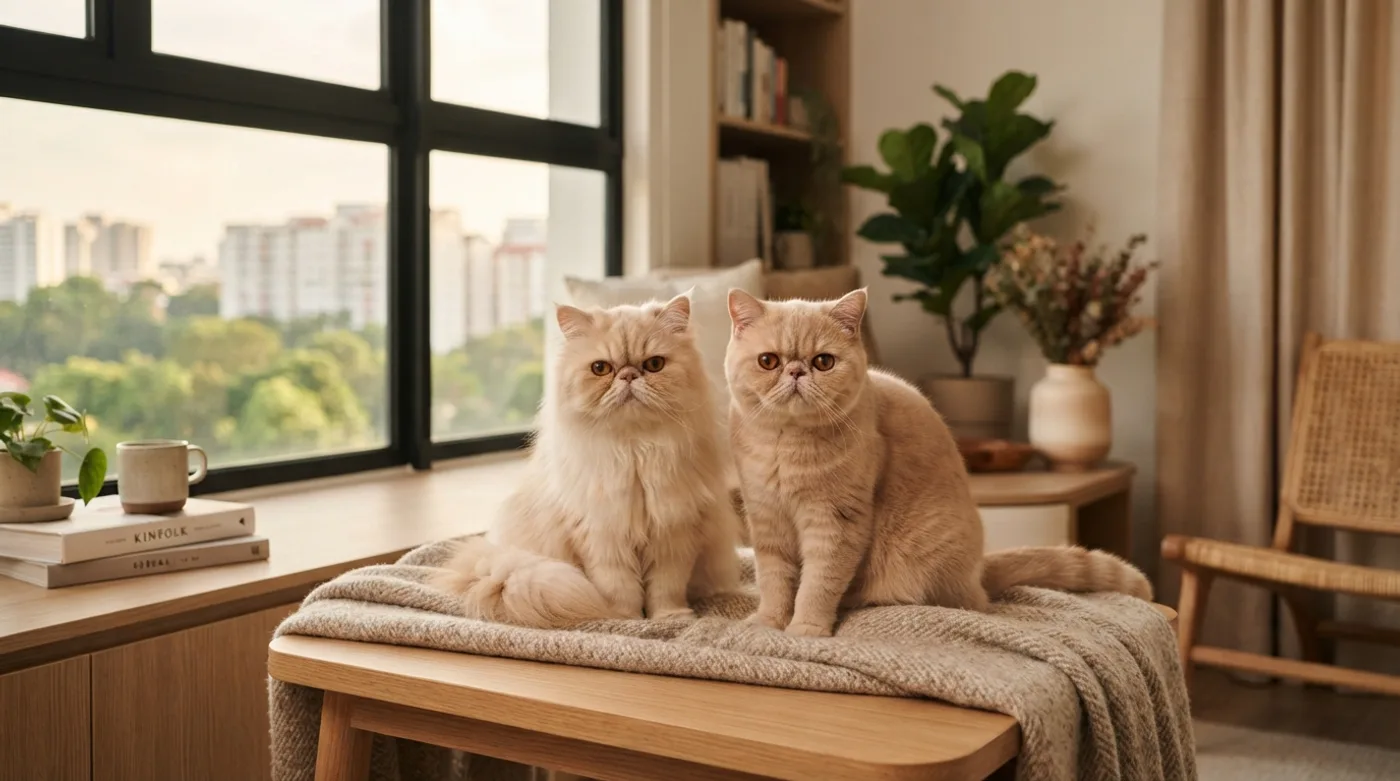
The same cat, wearing a different coat
The Exotic Shorthair exists because someone wanted a Persian that did not need daily brushing. That is genuinely the whole origin story, and it explains almost everything about the comparison.
Temperament is essentially identical: calm, quiet, affectionate homebodies that prefer a lap to a cat tree and will spend most of a day asleep somewhere warm. Face shape is the same, which means the same brachycephalic considerations. Health predispositions are shared. Price bands overlap heavily.
What differs is one variable — coat length — and it changes the daily reality of ownership more than any other single difference on this site. A Persian is a fifteen-minute-a-day commitment for fifteen years. An Exotic Shorthair is fifteen minutes a week.
The honest question
Will you brush a cat every single day, including the days you get home at eleven? If not, the Exotic Shorthair is not a compromise — it is the correct answer.
Side by side
Nearly identical on everything except the row that governs your week.
| Persian | Exotic Shorthair | |
|---|---|---|
| Size | Medium | Medium |
| Coat | Long, dense — mats quickly | Short, plush |
| Grooming | Daily brushing plus periodic bathing | Weekly brushing |
| Temperament | Calm, quiet, gentle homebody | Calm, quiet, sweet — the same Persian nature |
| HDB fit | Good indoors, if you can commit to grooming | Good indoors, far lower grooming |
| Energy | Low; prefers laps to acrobatics | Low; prefers laps to acrobatics |
| Daily eye care | Required | Required |
| Health watch | Brachycephalic breathing and tear-duct issues, PKD, heat sensitivity | The same flat-face breathing and tear-duct issues, PKD, heat sensitivity |
| Indicative price | S$1,800–S$4,500 | S$2,000–S$5,000 |
The flat face: what it means in practice
Both breeds are brachycephalic — the skull is shortened, which produces the characteristic round face and also compresses the airway and distorts the tear ducts. This is not a defect in a small number of cats; it is a feature of the breed group, present to varying degrees.
Breathing. A shortened airway is less efficient, both at moving air and at cooling. In Singapore that matters: cats cool themselves largely through respiration, and a flat-faced cat in a warm room struggles more than a Siamese would. Consistent air conditioning is not a luxury for these two breeds.
Tear ducts. Distorted ducts mean tears overflow onto the face rather than draining. Left alone, that produces the brown staining and skin irritation you see on neglected flat-faced cats. Cleaned daily, it is a non-issue.
Degree matters. Not all flat faces are equally flat. Breeders vary in how extreme a face they select for, and a moderately typed cat generally has an easier life than an extremely typed one. It is a fair question to ask a breeder, and their answer tells you what they are optimising for.
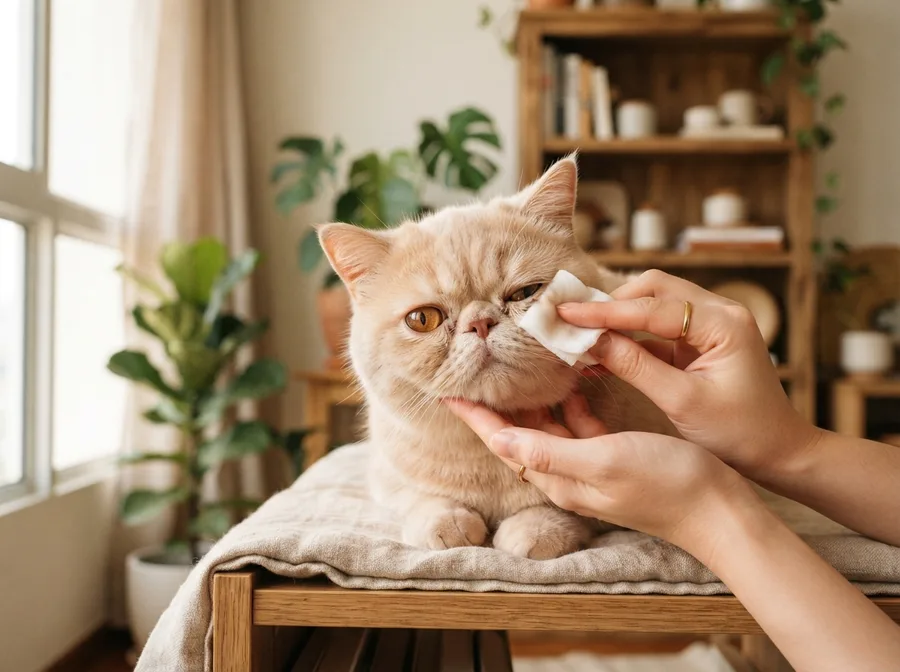
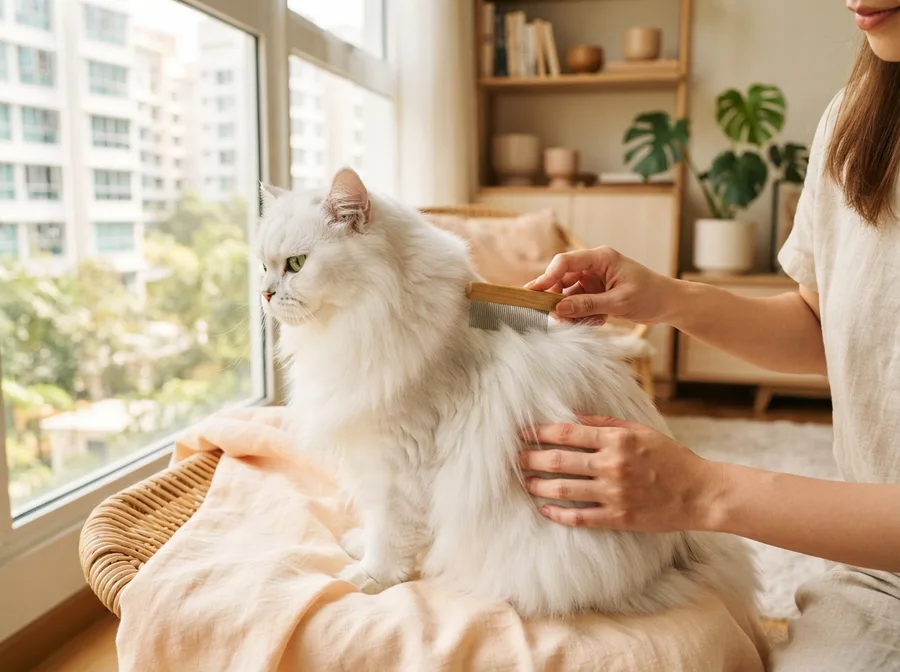
The grooming reality in Singapore humidity
What a Persian actually requires, honestly, in this climate.
- 1Daily: full brush-throughNot a surface stroke — a comb reaching the skin, especially armpits, behind the ears, the ruff and the trousers. Ten to fifteen minutes.
- 2Daily: eyesA clean damp wipe once or twice a day to clear tear overflow before it stains.
- 3Weekly: check the hotspotsRun fingers through the matting zones. A mat found early combs out; a mat found late gets cut out.
- 4Periodically: bathPersians need bathing in a way most cats do not, to manage coat oil in a humid climate. Start young so it is routine rather than a battle.
- 5As needed: sanitary trimMany Persian owners keep the rear trimmed. It is not cosmetic — it is hygiene in a long-coated cat.
- 6If it goes wrong: the lion cutA neglected coat that has matted to the skin usually means clipping under sedation. Avoidable, expensive and uncomfortable for the cat.
The Exotic Shorthair version of this list is: brush weekly, wipe the eyes daily. That is the whole difference, and it is why the Exotic is the more realistic choice for most Singapore households.
Which one for your household?
The decision comes down to time and climate control, not to preference.
Checklist
- Choose the Persian if you genuinely want the coat and will do fifteen minutes daily, every day
- Choose the Exotic Shorthair if you love the face and the temperament but not the brushing
- Choose either only if your home is reliably air-conditioned — this is not optional for a flat-faced cat here
- Choose neither if daily eye care sounds like something you would forget — a British Shorthair gives you a round face with none of this
- Ask about PKD screening either way, and ask to see the result
- Ask about facial typing — a moderately typed cat generally has an easier life
Read the full guides
Each breed has its own Singapore buyer's guide with price, health, HDB verdict and FAQs.
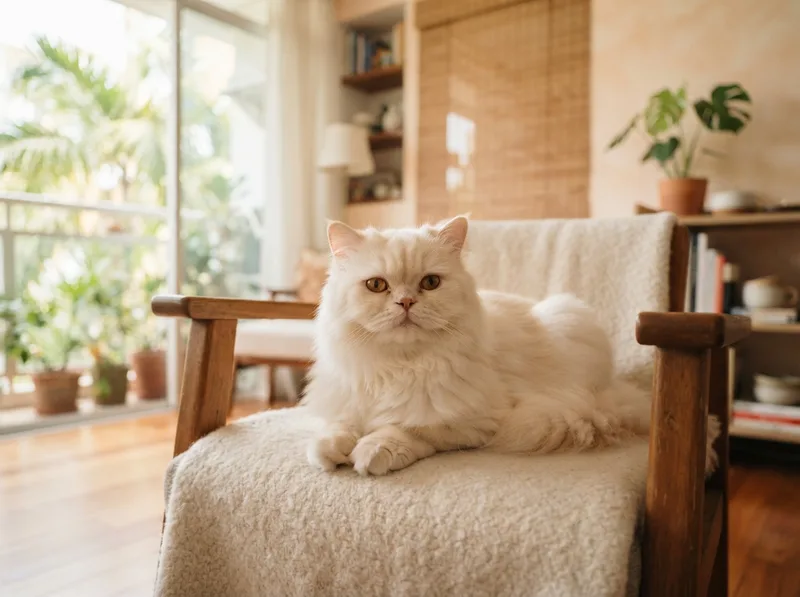
Persian in Singapore
The full coat commitment, health considerations and honest price ranges.
Read more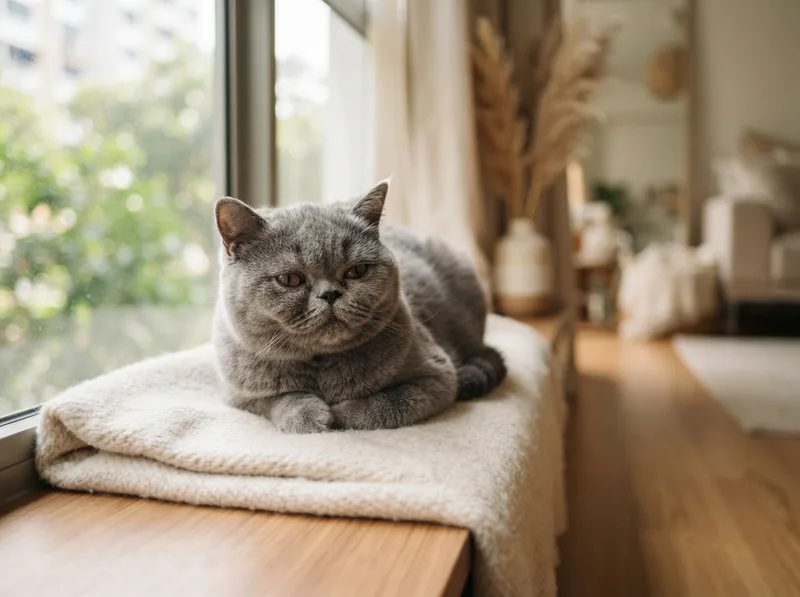
Exotic Shorthair in Singapore
Persian temperament, short-coat practicality, and what still applies.
Read more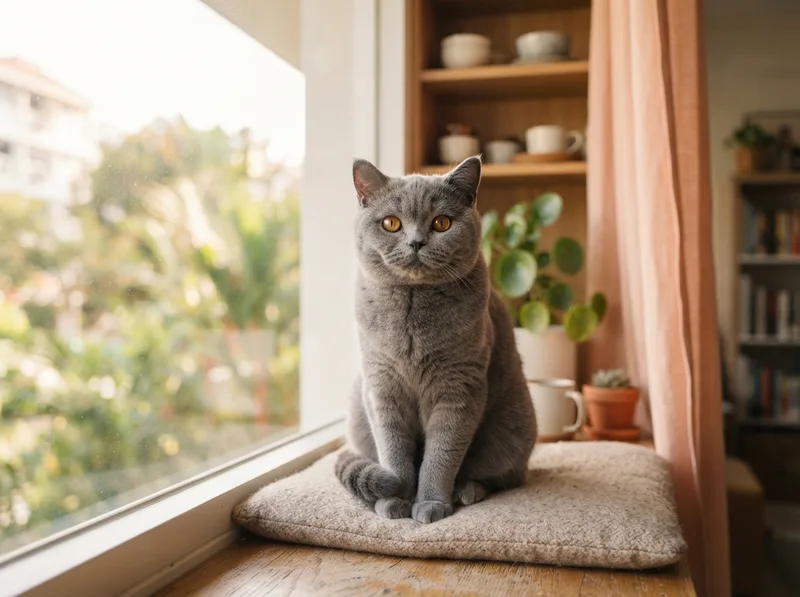
British Shorthair in Singapore
The round-faced alternative without the brachycephalic trade-offs.
Read more