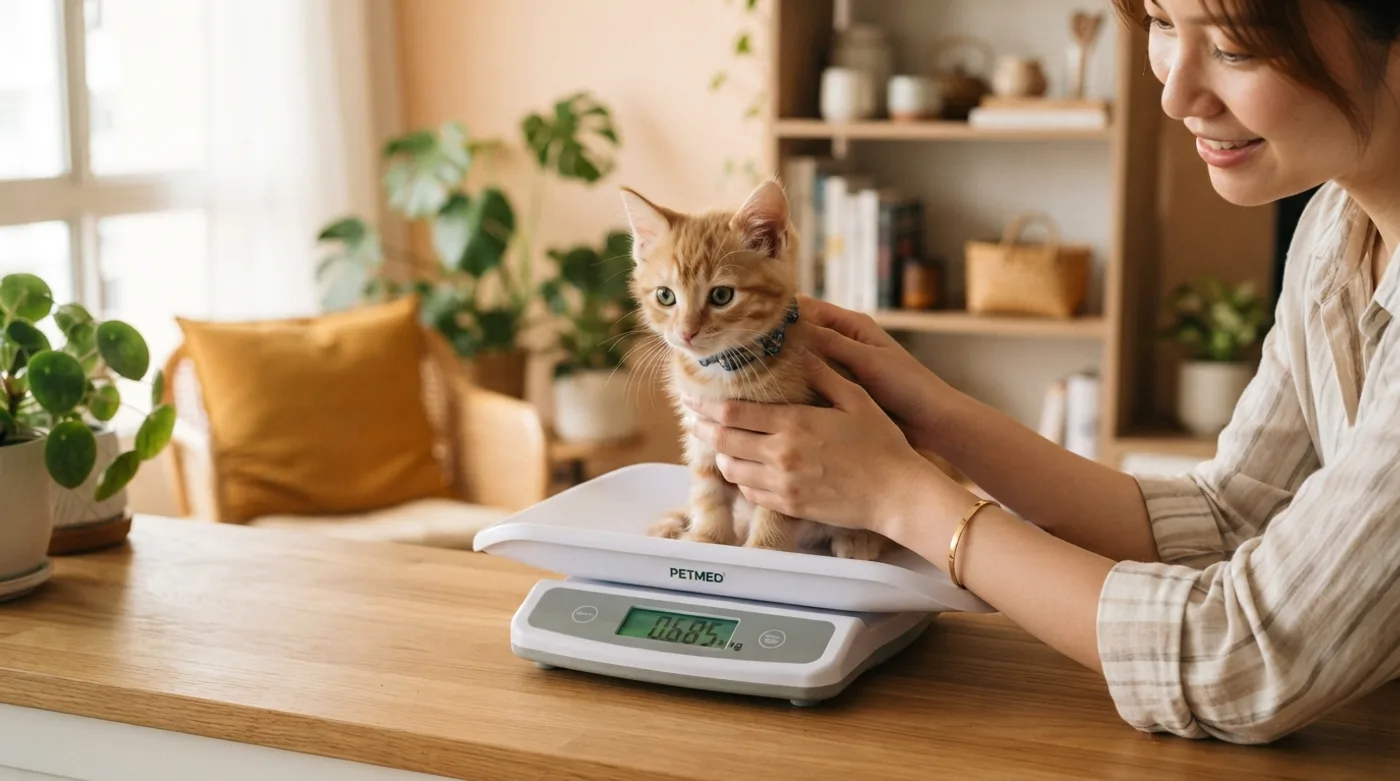
Why the first visit matters more than it looks
A kitten from a licensed breeder usually arrives having had its first vaccination, a deworming or two and a health check. So the obvious question is what a vet visit in week one adds when the kitten is visibly bouncing off the furniture.
Three things. First, a baseline. Your vet now has a weight, a body condition score and a normal-for-this-cat physical examination recorded on a day the kitten was well. Every future consultation is measured against that, and the value compounds over fifteen years.
Second, the handover of a schedule. The vaccination course is a sequence whose timing matters, and the breeder completed part of it. Someone has to pick it up at the right point, and that only happens if a vet sees the card early rather than in month three.
Third, a relationship. The clinic you choose calmly, at a convenient hour, with a healthy kitten, is the clinic you will call in a real emergency. Choosing one in a panic is a considerably worse process.
And a fourth, less comfortable one: cats are exceptionally good at concealing illness — it is a survival trait — and several things worth catching in a young kitten produce no signs an owner would spot.
Book it before the kitten arrives
Slots at good clinics are not always available on demand. Book the appointment for the week after homecoming while you are still arranging collection.
What to bring
Most of this comes from the breeder at collection. Ask for it then, not later.
The paperwork is the part people underestimate. A vet who can see exactly which vaccine was given on which date picks the course up correctly; a vet working from "I think they said it had a jab" has to make conservative assumptions, and conservative assumptions cost you an extra visit.
If you were not given records at collection, that is worth noting in itself. A licensed Singapore breeder hands over a vaccination card and a microchip number as a matter of course — our guide to what a good breeder actually does covers the rest of that handover.
Checklist
- The vaccination card — dates and products, not a verbal summary
- The microchip number or chip certificate, so it can be scanned and verified
- Any breeder health records, screening results, or a written health assurance
- A sample of the current food, and the brand written down
- A fresh stool sample if you can manage it — it saves a second trip
- Notes on the litter tray — frequency, consistency, anything odd
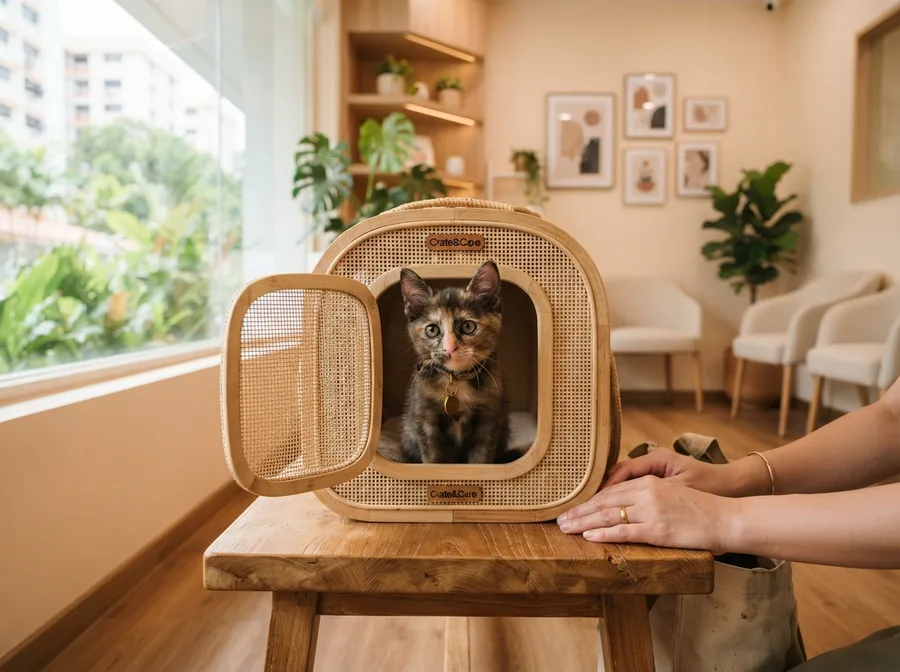
- A hard-sided, top-opening carrier with a familiar blanket inside
- Your written list of questions, because you will forget two of them
What happens in the room
Fifteen to thirty minutes, in roughly this order.
- 1Weight and body conditionThe number that anchors every future visit, and the one that tells you whether feeding is on track. Ask what the target trajectory looks like.
- 2Microchip scanConfirms the chip is present, readable and matches the paperwork. Far better to find a mismatch here than after the cat has gone missing.
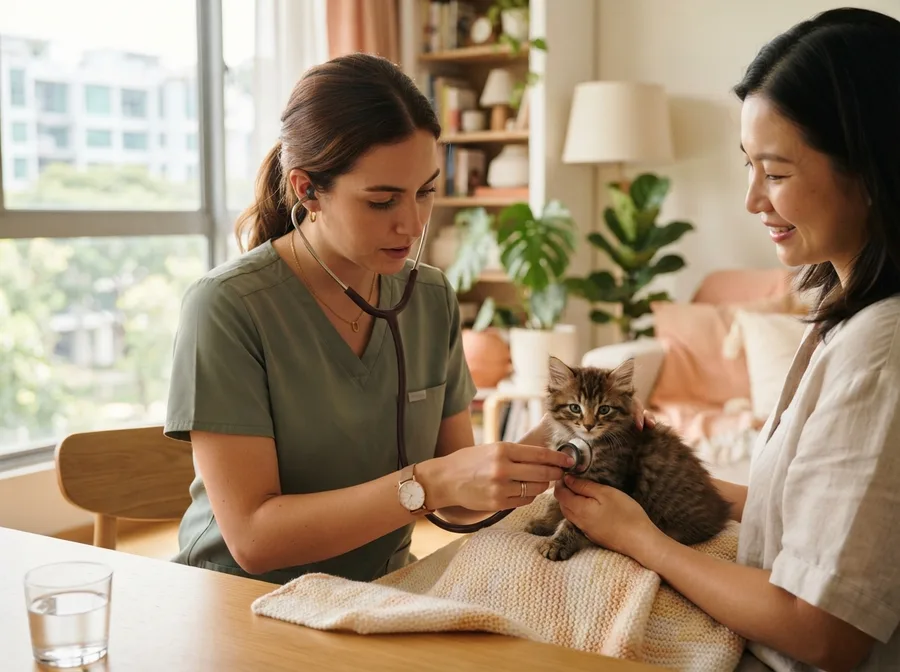
- 3Nose-to-tail examinationEyes, ears, nose, mouth and teeth, skin and coat, abdomen palpated, heart and lungs listened to, joints and gait watched. A heart murmur in a kitten is one of the things this catches.
- 4Parasite checkFleas, ear mites and evidence of worms. Ear mites are common in kittens and produce a very characteristic dark discharge.
- 5Vaccination, if dueThe next dose of the feline core course — commonly described as an F3 or F4 here — picked up from wherever the breeder's record ends.
- 6DewormingOn a repeating schedule at this age. The product and interval are a vet decision, not a shelf decision.
- 7The planWhat is due next and when, when sterilisation should happen, and which preventatives the vet recommends. Get it written down before you leave.
Questions worth asking while you are there
You have a professional's attention for twenty minutes. Spend it on what is hard to look up reliably.
Is the growth on track?
And what should the weight be at three months, six months, a year? A number to check against beats a general reassurance.
What is left in the course?
Dates, not "a few weeks". Ask for the next due date to be written on the card.
When should we sterilise?
Ask now even though it is months away. It also lowers the cat licence fee once fees begin in September 2026.
Which preventatives, how often?
Parasite prevention in this climate is a year-round question rather than a seasonal one.
Am I feeding the right amount?
Bring the packaging. A vet looking at the actual food gives a better answer than one hearing a brand name.
What counts as an emergency?
The single most valuable answer in the appointment. Get the after-hours number and save it before you need it.
The carrier, and the journey
More first-visit stress comes from the twenty minutes before the appointment than from anything that happens at the clinic. A kitten chased around a flat and pushed into a plastic box learns that the box means being chased — and that lesson holds for years.
The fix costs nothing and starts days early. Leave the carrier out as furniture. Door off, blanket inside, treats dropped in occasionally, in a room the kitten already likes. By appointment day it should be somewhere the kitten sleeps rather than somewhere it is put.
Choose a hard-sided carrier that opens from the top as well as the front. Lowering a kitten in from above is far easier than posting it through a door it is bracing against, and at the clinic the top lifts off so a nervous kitten can be examined sitting in the familiar base rather than dragged out of it.
On the journey: a towel over the carrier reduces visual stimulation, the carrier travels on a footwell or belted seat rather than loose in a boot, and the air-conditioning matters — a covered carrier in a hot car heats quickly. If you are taking a taxi or private hire, mention the carrier when you book rather than at the kerb.
What the first year looks like from here
The appointments worth having in the diary from day one.
The two pages that go with this one: what the feline core course covers and when, and what sterilisation involves and why it lowers the licence fee. Both are written for Singapore specifically, which matters — a great deal of vaccination advice online assumes a country that has rabies.
This is also the natural moment to price insurance. Cover is cheapest and least restricted on a young, healthy cat, and anything that has already appeared is excluded from the start. See how cat insurance works here.
Key numbers
- Week 1 at home
- First vet visit, baseline recorded
- Following weeks
- Remaining core vaccinations
- Ongoing
- Deworming on the vet's schedule
- Around 5–6 months
- Sterilisation, per vet advice
- Around 12 months
- First booster, move to adult food
- Every year after
- Health check plus boosters
- Rabies
- Not routine — Singapore is rabies-free
When not to wait for the appointment
A scheduled first visit is for a well kitten. Some things do not wait for it, and kittens deteriorate considerably faster than adult cats — a young animal that is a little off in the morning can be seriously unwell by evening.
Call a vet the same day for: not eating for more than about a day, repeated vomiting or persistent diarrhoea, laboured or open-mouthed breathing, straining in the tray without producing urine, sudden lethargy or hiding, a fall from any height, pale gums, or a suspected poisoning. If something has been eaten, take the plant, packet or label with you — identification changes the treatment.
This is exactly why the "who do I call after hours" question belongs in the first appointment. Knowing which clinic near you takes emergencies at 2am, and having the number already in your phone, is the difference between acting immediately and spending forty minutes searching while a kitten gets worse.
For the wider first fortnight — the one-room settling method, the food transition, and what normal adjustment looks like — see bringing a kitten home.
General information only
Nothing here replaces a licensed Singapore vet who has examined your kitten. Schedules, products and intervals are clinical decisions.