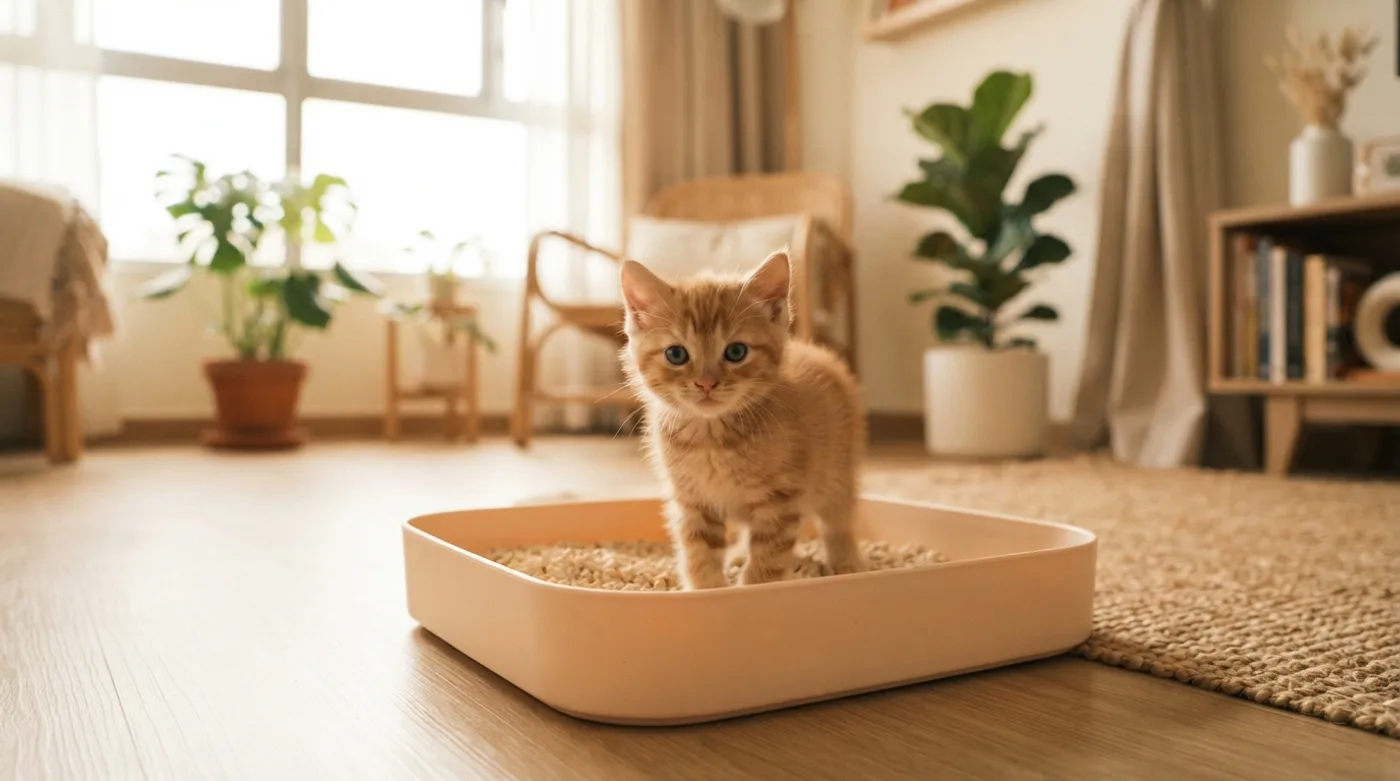
Most kittens do not need training
This is the part that surprises first-time owners. Litter training a kitten is rarely an act of teaching. The instinct to dig, deposit and bury is already there, reinforced by watching its mother in the first weeks, and a kitten from a licensed breeder or a shelter has almost always been using a tray for some time before it comes home.
What you are actually doing is removing obstacles. A kitten will use the tray if the tray is findable, reachable, sized for its legs, filled with something that feels right underfoot, and clean enough not to be unpleasant. Get those five things right and there is no training phase to speak of.
Which reframes the whole problem usefully. When litter training "fails", the cat has not misunderstood the instruction. Something about the tray, the location or the cat's health has made the tray the worse option — and the cat, being extremely rational about this, chose the better one.
That is also why punishment is not just unkind but counterproductive: it adds a reason to avoid the area without removing the original one.
The first fortnight rule
Keep the same litter the breeder or shelter used, at least at first. A kitten changing homes is already changing everything. Do not also change what its toilet feels like.
The setup that works first time
Do this before the carrier is opened, not on the evening of the first accident.
- 1Choose a low-sided trayA kitten needs to walk in, not climb in. A high-sided adult tray is a genuine barrier for a two-kilogram animal, and you can size up in a couple of months.
- 2Make it big enoughThe usable rule is roughly one and a half times the length of the cat, nose to base of tail. Most trays sold as "cat trays" are smaller than a full-grown cat actually wants.
- 3Fill to about 5cmDeep enough to dig and bury properly. Too shallow and clumps stick to the base; too deep and it spills over the sides every time.
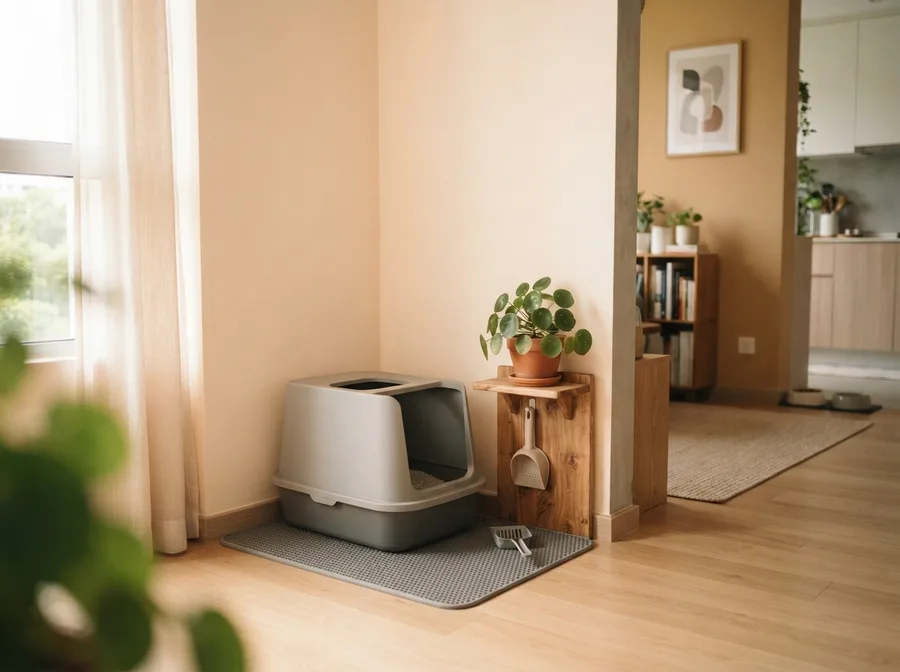
- 4Place it correctlyQuiet, always accessible, no dead ends, and well away from food and water. Cats do not eat next to a toilet any more than we do.
- 5Start in one roomA new kitten confined to a single prepared room for the first days will never be more than a few steps from the tray while it learns the flat.
- 6Show, do not place-and-leavePut the kitten in the tray after meals and after naps — the two moments it is most likely to go. Let it step out on its own; do not hold it there.
- 7Say nothing when it worksNo fuss, no applause. Being watched and celebrated in a litter tray is not the association you want to build.
What cats actually care about
Rank-ordered by how often each one is the real cause of a problem.
Cleanliness outranks everything else by a wide margin. A cat's tolerance for a soiled tray is far lower than a human's estimate of the same tray, and in a warm, humid flat the gap between "looks fine" and "the cat has decided otherwise" closes fast.
Scent is the one people get backwards. Heavily perfumed litters are marketed at the owner's nose and often actively repel the cat. Unscented litter, scooped twice daily, controls odour better than any fragrance does — our comparison of the litter types available here goes through the trade-offs by type.
Key numbers
- Cleanliness
- The number one factor
- Location
- Quiet, safe, always reachable
- Size
- 1.5× the cat, nose to tail
- Litter texture
- Fine and soft beats coarse
- Depth
- Around 5cm
- Scent
- Unscented — perfume repels cats
- Number of trays
- One per cat, plus one
The daily routine
Ten minutes a week of actual work, spread across the week.
In a small flat the tray is never far from where you live, so the routine is doing double duty: it keeps the cat using the tray, and it keeps the flat from announcing that a cat lives there. Both fail the same way — by skipping days.
The routine also gives you something clinically valuable. Scooping daily means you see what the cat is producing, and changes in urine volume, frequency or stool consistency are among the earliest signals that something is wrong. Cats conceal illness well; the tray does not.
Checklist
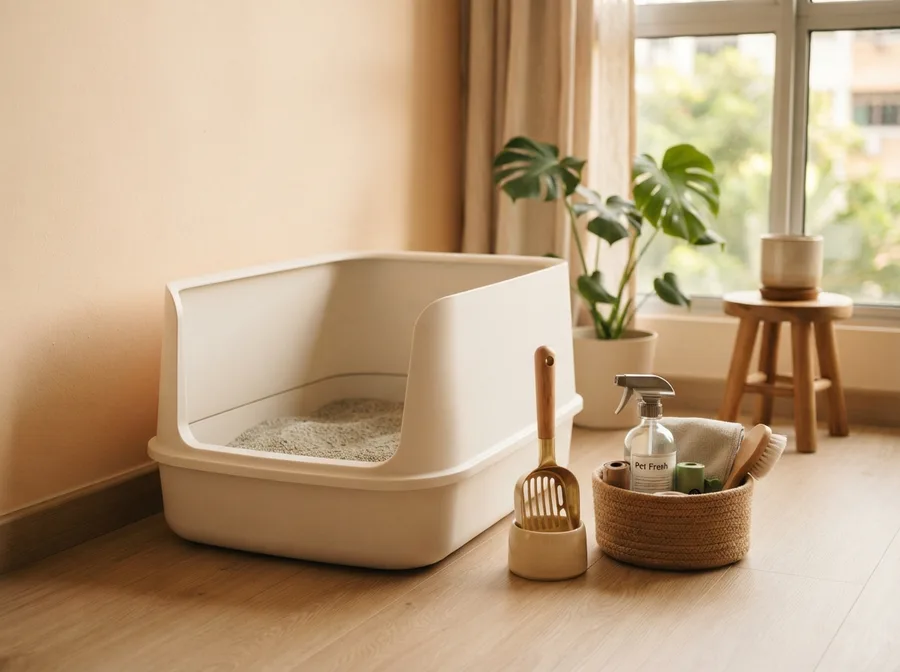
- Scoop twice a day — morning and evening, every day, no exceptions
- Top up litter to keep the depth at about 5cm after scooping
- Bag waste and bin it immediately; never leave it outside the front door
- Full change and wash on a fixed schedule, with unscented soap and warm water
- Never use bleach or strong disinfectant on a tray — rinse thoroughly and dry it
- Watch what you scoop — volume, frequency, blood, straining, diarrhoea
- Replace the tray itself when the plastic is scratched and holds smell
When accidents start
A kitten that was reliable and has stopped being reliable is telling you something, and the order in which you investigate matters enormously.
Rule out medical first. Urinary tract problems, crystals and blockages are common in cats, painful, and in male cats can become a life-threatening emergency within a day. A cat straining in the tray, going repeatedly with little result, crying while urinating, or urinating in cool smooth places like a sink or bathtub needs a vet the same day rather than a behavioural theory. Diarrhoea and constipation cause tray avoidance too, for the obvious reason that the cat associates the tray with feeling terrible.
Then work the variables. Once the vet has cleared the cat, change one thing at a time: scoop more often, move the tray somewhere quieter, add a second tray in another room, switch to a finer unscented litter, take the hood off, or swap to a bigger tray. Changing five things at once fixes the problem without teaching you which one it was.
Clean properly. Ordinary household cleaner removes the stain and leaves the scent marker, which reads to a cat as a signed instruction to go there again. Use an enzymatic pet cleaner, and never an ammonia-based product — ammonia is a component of urine, so you are effectively re-marking the spot yourself.
The situations that cause most problems
Litter-tray trouble in Singapore flats clusters around a small number of recognisable scenarios.
The tray by the washing machine
Fine for six days and then the spin cycle starts while the cat is in it. One event is enough to make a location permanently unusable.
One tray, two cats
Cats resource-guard toilets. If the second cat gets ambushed on the way, it stops going and finds somewhere the first cat is not.
The sudden litter switch
A brand change or a promotion-driven bulk buy. Transition over a week by mixing old into new, rather than overnight.
The closed door
A tray in a bathroom or bomb shelter is only a tray while the door is open. Cats are not able to argue with a closed door — they simply go elsewhere.
A move or renovation
New flat, new smells, contractors. Confine the cat to one prepared room with its tray until the flat settles, rather than giving it the run of chaos.
An unsterilised adult
Spraying is not a litter problem and will not be fixed by a better tray. Sterilisation is the answer — see our guide to sterilising a cat.
Where this sits in the first month
Litter training is one part of a first fortnight that mostly consists of doing less than you want to. A new kitten in one quiet room, with its tray, its familiar food, a hiding place and short calm visits, will settle faster than one given the whole flat on day one — and it will find the tray reliably because the tray is always three steps away.
Widen its access as it settles, and add the second tray in the new territory rather than expecting the kitten to walk back across the flat. Our guide to bringing your kitten home covers the wider settling-in sequence.
Two other things belong in the same month: the flat needs to be safe before the kitten explores it — mesh and the room-by-room walkthrough — and the first vet appointment should already be booked. What happens at that visit covers what to bring, including, usefully, a note of what the tray has been producing.
Straining is an emergency
A cat repeatedly going to the tray and producing little or nothing — particularly a male cat — needs a licensed Singapore vet the same day. Blockages become life-threatening quickly.