The short verdict
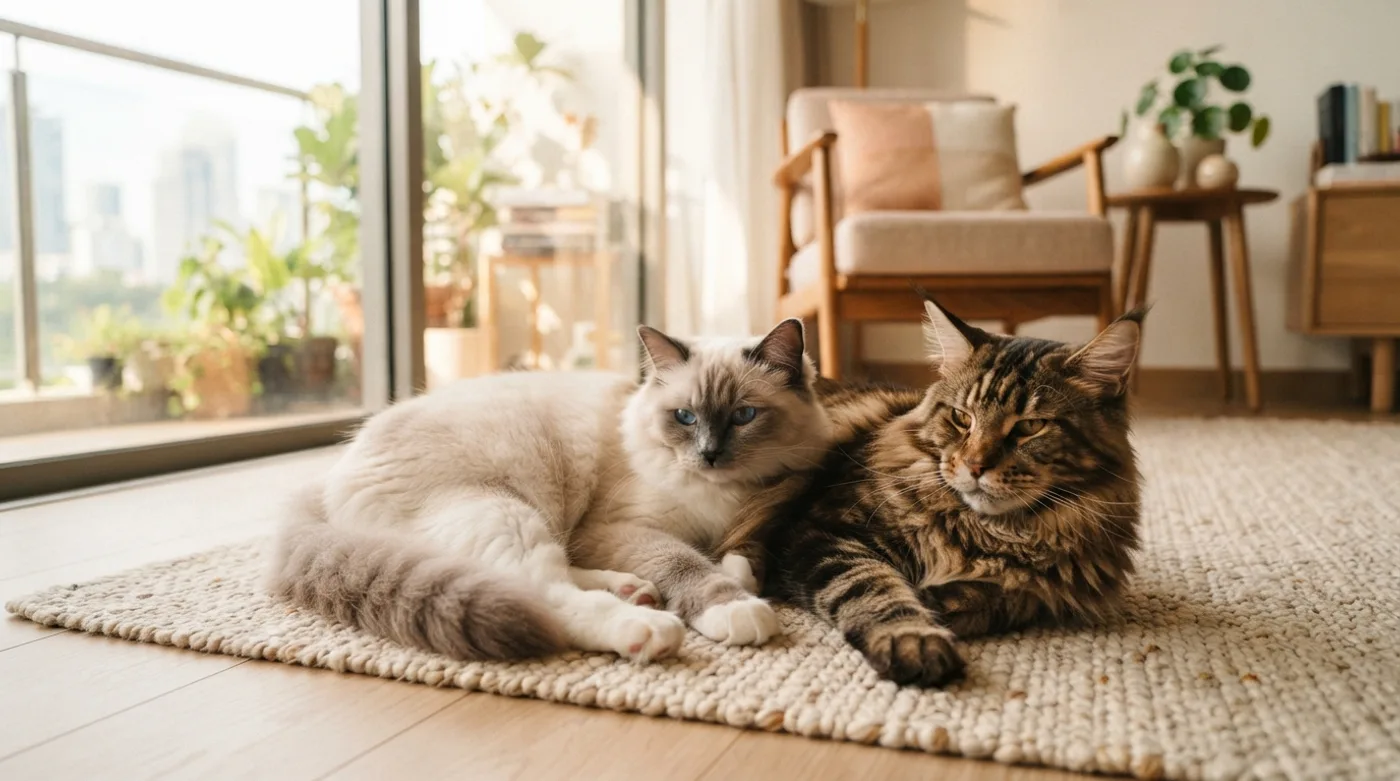
Both are big, longhaired, famously gentle cats, and people routinely shortlist them together on looks. In a Singapore flat they behave quite differently, and the decision comes down to two questions: how much cat do you want moving around, and how much brushing will you actually do.
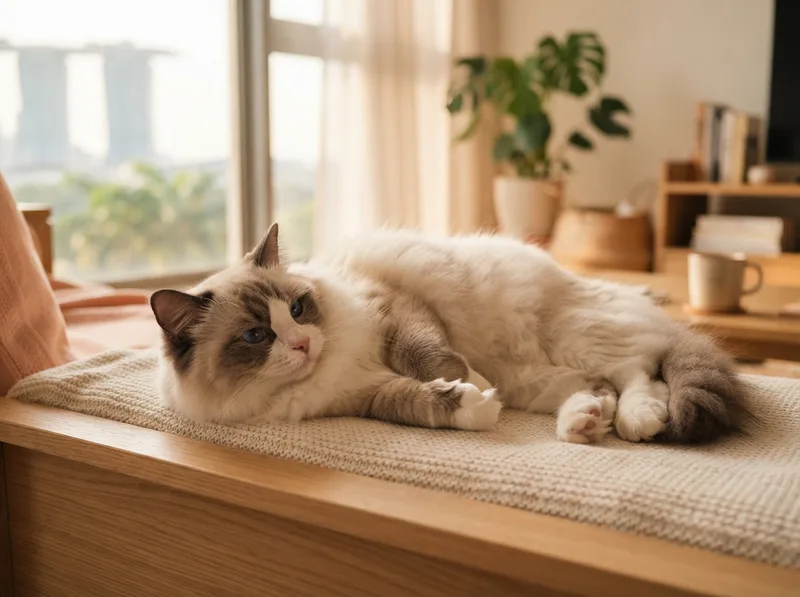
Choose the Ragdoll if you want a lap cat. It is calmer, lighter on its feet, easier on the coat, and content to spend a working day asleep and an evening on you. It is the more forgiving choice for a smaller flat and a first-time owner.
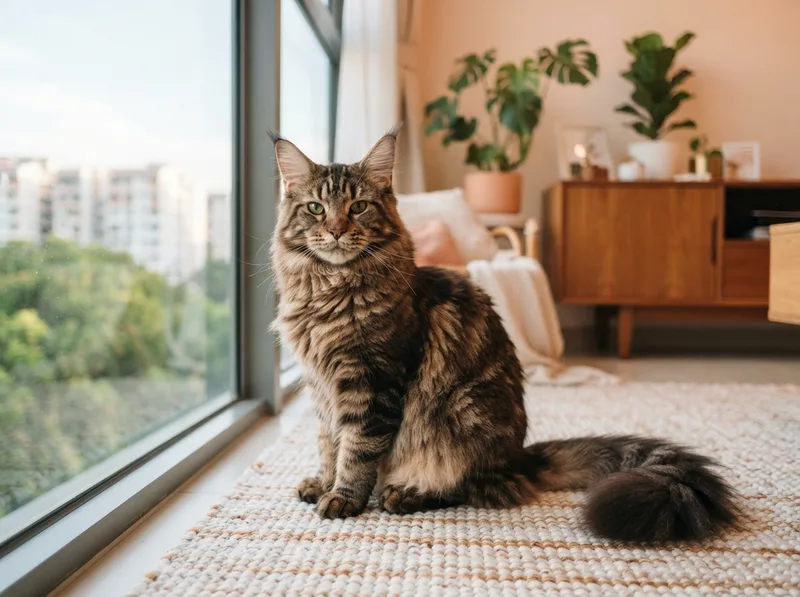
Choose the Maine Coon if you want a cat that participates. It follows you around, chirps at you, plays well into adulthood and climbs anything you provide. It is also a genuinely large animal with a genuinely large coat, and both facts are permanent.
The tiebreaker
If you are undecided, be honest about brushing. Two to three sessions a week, every week, for fifteen years. If that sounds optimistic, the Ragdoll is the safer answer — and a short-coated breed may be a better one still.
Side by side
The differences that matter once the cat is living in your flat, not the ones that matter in a photograph.
| Ragdoll | Maine Coon | |
|---|---|---|
| Size | Large | Very large (males 6–9kg) |
| Coat | Semi-long, silky, little undercoat | Long, shaggy, water-resistant |
| Grooming | 2–3× weekly; mats less | 2–3× weekly; mats more easily |
| Temperament | Docile, floppy, deeply affectionate lap cat | Gentle, sociable, playful and dog-like |
| HDB fit | Excellent — calm and content indoors | Good, with space and vertical enrichment |
| Energy | Low; not especially athletic | Moderate; stays playful for years, loves to climb |
| Noise | Quiet; soft voice | Chirps and trills rather than meows |
| Health watch | HCM (ask for the genetic test), weight and joint load, bladder stones in some lines | HCM, hip dysplasia and spinal muscular atrophy in some lines, weight from size |
| Indicative price | S$2,500–S$6,000 | S$2,500–S$6,000+ |
Coat and climate: the honest version
Both breeds are entirely keepable in Singapore, and the people who tell you longhaired cats "cannot cope with the humidity" are overstating it. Almost all cats here live in air-conditioned homes, and both breeds do fine in that environment.
What humidity genuinely changes is matting. A coat that is slightly damp and slightly oily tangles faster than the same coat in a dry climate, and mats are not a cosmetic problem — they pull at skin, hide sores and eventually need cutting out under sedation. The Maine Coon feels this more than the Ragdoll because its coat is denser and its ruff and hindquarters are matting hotspots.
The practical requirement for either breed: a proper brush two to three times a week, more during a shed, with particular attention behind the ears, under the armpits and around the trousers. Fifteen minutes, three times a week. That is the actual commitment, and it is the single most useful thing to be honest with yourself about before choosing either of these breeds.
Living space and the size question
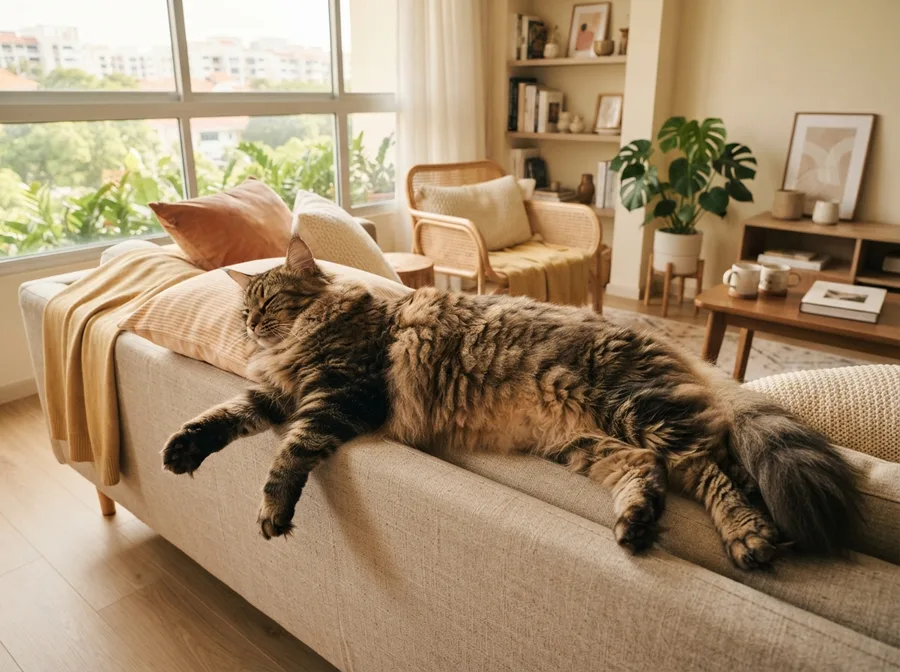
A Maine Coon is not a Ragdoll with more fur. It is meaningfully bigger, and the flat has to accommodate that.
Male Maine Coons commonly reach 6–9kg and keep growing for three to four years. That changes the specification of nearly every piece of equipment you buy, and people who bought for a kitten end up buying twice.
Checklist
- Litter tray — a full-grown Maine Coon needs a genuinely large tray, not a standard one
- Carrier — buy for the adult cat, or you will buy a second one at eighteen months
- Cat tree — sturdy enough for a 8kg cat to launch off, not a wobbly tower
- Vertical space — the Maine Coon will use height; the Ragdoll largely will not
- Floor space to stretch out — both are long cats and both sleep like they are being paid for it
- Mesh strong enough — a large cat leaning on a screen is a different load to a 3kg one
Health screening to ask about
Both breeds carry documented predispositions, and both have screening available. Ask about it by name.
A breeder who cannot discuss these by name has not screened for them. Our how to judge a cattery covers the rest of what to verify before paying anything.
HCM — both breeds
Hypertrophic cardiomyopathy is the significant one in both. Genetic testing exists for known mutations. Ask specifically whether the parents were tested and ask to see the result, not a verbal assurance.
Hip dysplasia — Maine Coon
Documented in some lines and unsurprising in a cat this size. Ask what screening the cattery does on breeding stock.
Spinal muscular atrophy — Maine Coon
A recessive condition with a genetic test available. A responsible breeder will know exactly what you are asking about.
Weight and joints — both
Large indoor cats gain weight easily, and weight is what turns a mild joint predisposition into a clinical problem. Measured feeding matters more in these two breeds than in most.
Bladder stones — some Ragdoll lines
Worth asking about, and worth knowing the early signs: straining, frequent tray visits, blood. Straining with no output in a male cat is an emergency the same day.
Which one for your household?
The decision matrix, based on the constraint that actually binds.
| If this is you | The better fit | |
|---|---|---|
| Small flat, out all day | Wants a low-demand cat | Ragdoll |
| Want a cat that follows you around | Wants interaction | Maine Coon |
| Young children | Needs tolerance of handling | Ragdoll |
| Older children who want to play | Needs robustness and stamina | Maine Coon |
| Minimal grooming appetite | Needs the easier coat | Ragdoll — or reconsider both |
| Plenty of vertical space at home | Can use height | Maine Coon |
| First cat ever | Wants forgiving | Ragdoll |
Read the full guides
Each breed has its own Singapore buyer's guide with price, health, HDB verdict and FAQs.