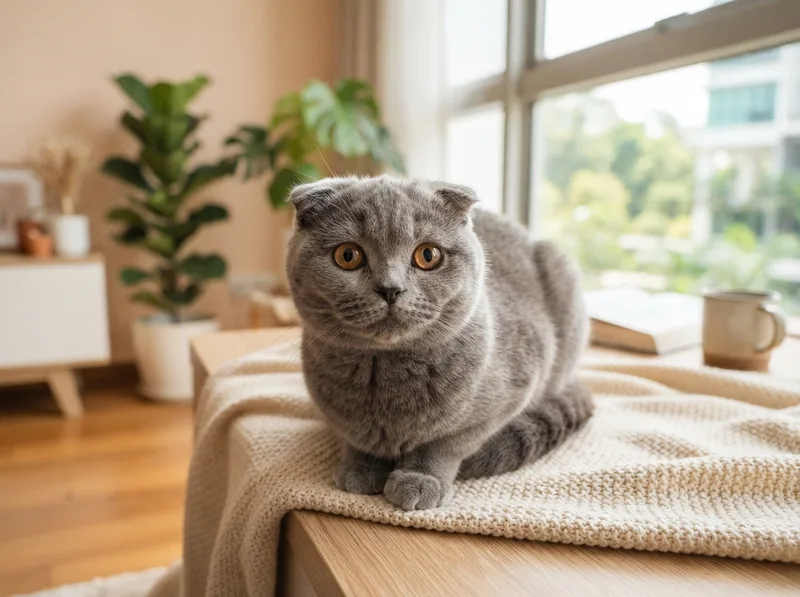
The one difference that decides this
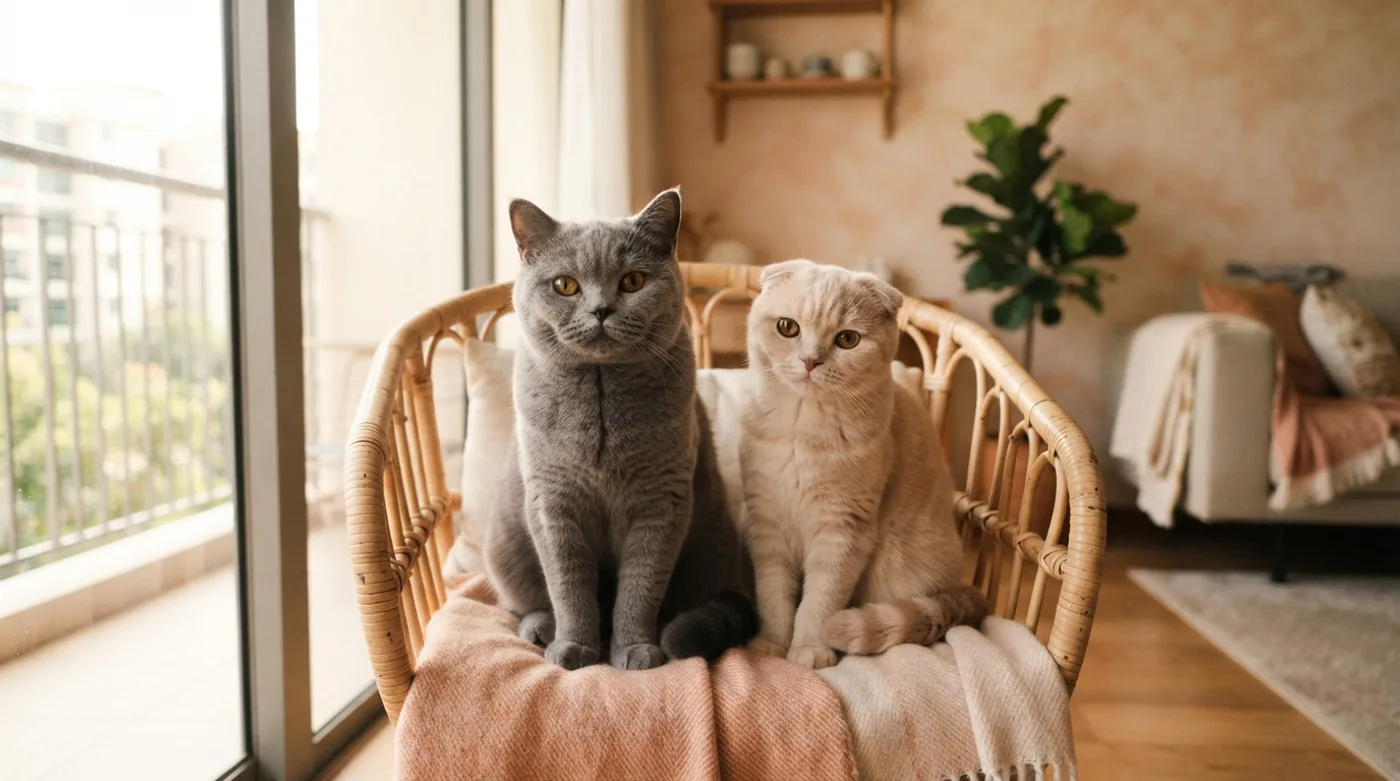
Almost everything about these two breeds is comparable. Both are round-faced, plush, calm, quiet cats that suit flat living and cost roughly the same. Buyers shortlist them together because they genuinely do look alike.
There is one difference, and it is not cosmetic. The folded ear that defines the Scottish Fold is produced by a dominant mutation affecting cartilage — and cartilage is not only in the ears. The same gene affects joints throughout the body and causes osteochondrodysplasia, a progressive and painful condition. Every cat with folded ears carries it to some degree.
That is why breeding Scottish Folds is restricted or discouraged in several countries and by some registries, and why this comparison cannot be written as a neutral list of preferences. If what you love is the round face and the teddy-bear build, the British Shorthair gives you that without asking a cat to live with a joint condition for it.
Said plainly
We are not telling you what to buy. We are telling you what the folded ear is, because a great deal of the marketing around this breed does not.
Side by side
Where the two breeds actually differ once you look past the ears.
| British Shorthair | Scottish Fold | |
|---|---|---|
| Size | Medium–large, stocky | Medium, rounded |
| Coat | Short, very dense and plush | Short or long |
| Grooming | Weekly brush | Weekly brush |
| Temperament | Calm, independent, quiet | Sweet, calm, affectionate |
| HDB fit | Excellent | Good on temperament — but read the health row |
| Energy | Low; happy indoors | Low to moderate |
| Ears | Normal, upright | Folded forward — caused by a cartilage mutation |
| Health watch | HCM and PKD in some lines — ask for parental screening. No breed-defining defect. | Osteochondrodysplasia — the same cartilage gene that folds the ears causes a painful, progressive joint disease. Ethically debated and restricted in several countries. |
| Indicative price | S$2,000–S$5,000 | S$2,000–S$5,000 (read the welfare section first) |
What osteochondrodysplasia looks like day to day
The condition varies in severity, and this is one reason it stays under-discussed: a mildly affected cat can look entirely normal as a kitten and develop signs over years. Buyers see healthy kittens and reasonably conclude the problem is theoretical.
What owners of affected cats report is a gradual narrowing of the cat's world. A reluctance to jump onto surfaces it used to reach. A stiff, short-strided walk, particularly after rest. A tail that becomes thick and inflexible. Reduced play, more sleeping, and eventually pain that needs ongoing management.
It is manageable — with veterinary care, weight control, joint support and pain relief — and management is lifelong rather than curative. Anyone considering the breed should price that in honestly alongside the purchase price, and should ask a breeder directly what they do about it.
If you love the look, look here
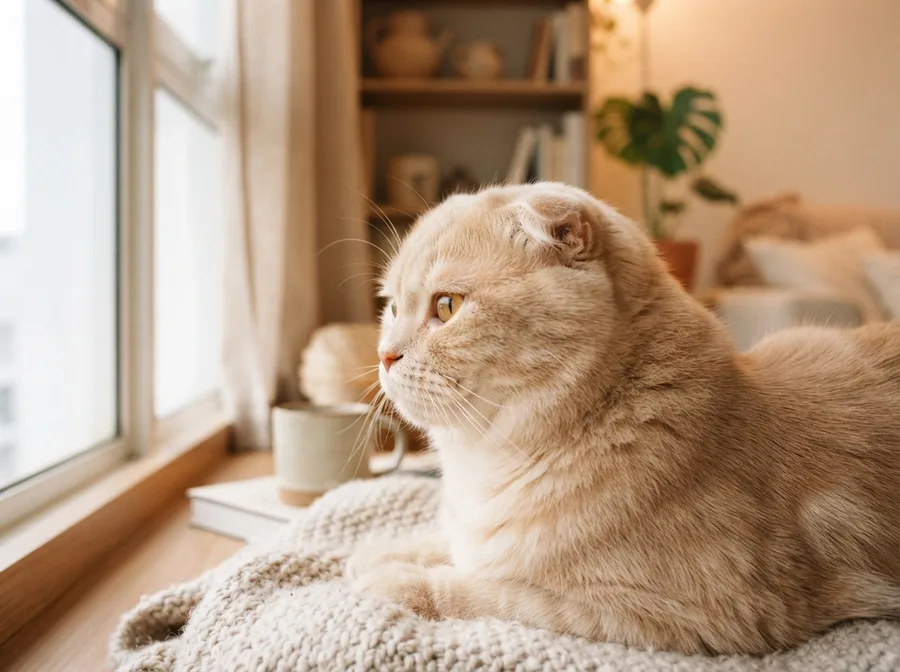
Three breeds that deliver the round-faced, plush, calm aesthetic without a breed-defining joint condition.
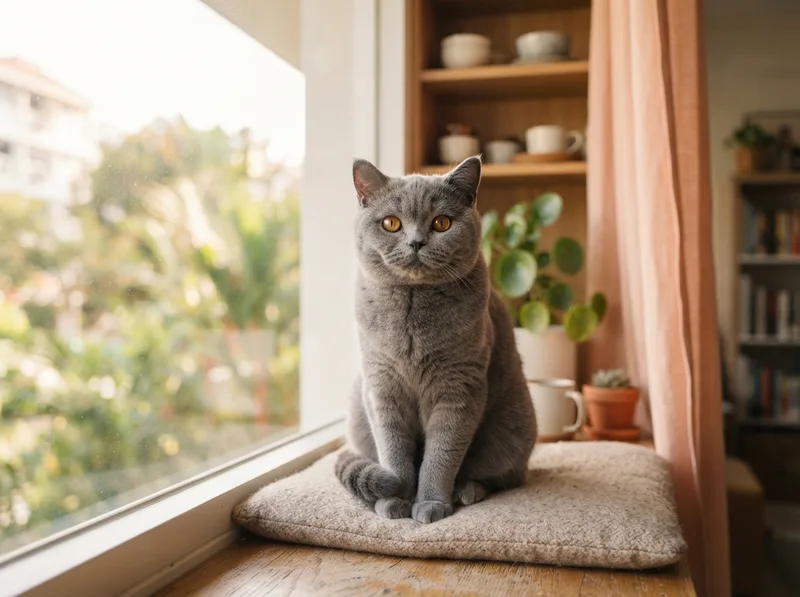
British Shorthair
The closest match: same round face, denser coat, calm and quiet, and no breed-defining defect. Singapore's most-searched cat for good reason.
Read more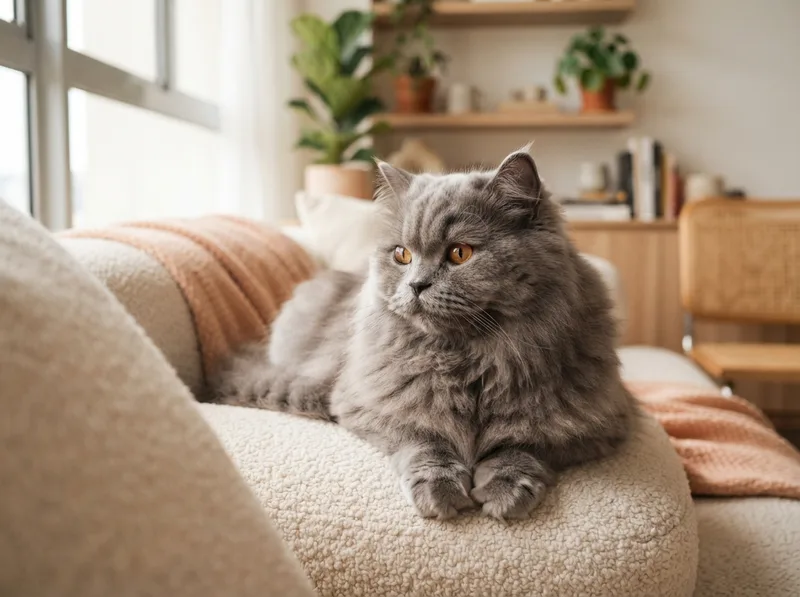
British Longhair
The same cat with a semi-long plush coat, if you want more floof and can handle a little more brushing.
Read more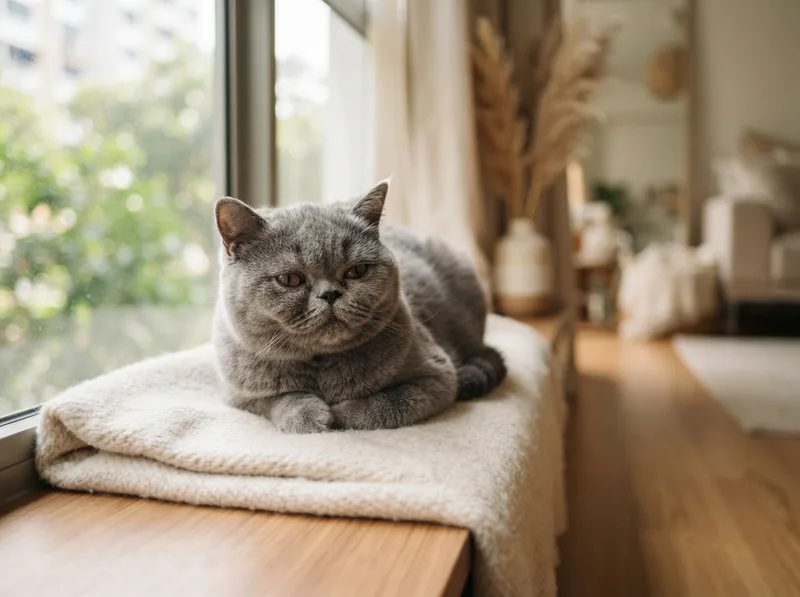
Exotic Shorthair
Rounder and flatter-faced, with the Persian temperament in a short coat. Note the brachycephalic trade-offs before choosing.
Read moreWhat to ask a breeder about either breed
The questions that separate a cattery managing health from one selling a look.
For the British Shorthair the conversation is straightforward screening. For the Scottish Fold it is a conversation about a known condition, and the quality of the answer is itself the most useful information you will get.
Checklist
- British Shorthair: have the parents been screened for HCM and PKD, and may I see the results?
- Scottish Fold: what do you do about osteochondrodysplasia, and how do you pair breeding cats?
- Scottish Fold: what do you tell buyers about the condition before they commit?
- Both: may I meet the mother, in the place the kittens were raised?
- Both: what vaccinations and deworming has the kitten had, and what is due?
- Both: is the kitten microchipped, and does the number match the certificate?
Read the full guides
Each breed has its own Singapore buyer's guide with price, health, HDB verdict and FAQs.