How long you will wait for a British Longhair kitten
Less common here than the British Shorthair and often produced by the same catteries, which means the practical route is to ask a British Shorthair breeder what longhaired kittens they have coming rather than to search for the breed by name.
The British Longhair carries the same genetics as its shorthaired sibling with a long-coat gene added, so litters frequently contain both — and because demand concentrates on the shorthair, the longhaired kittens are the smaller half of a smaller pool.
The biggest time-saver: Approach it through British Shorthair catteries and stay open on colour. Naming the coat rather than the breed is the fastest way to be offered one.
Nothing above is an offer: we hold no British Longhair kittens and publish no stock list. For the same picture across every breed, see waiting times, breed by breed.
What a British Longhair kitten is actually like
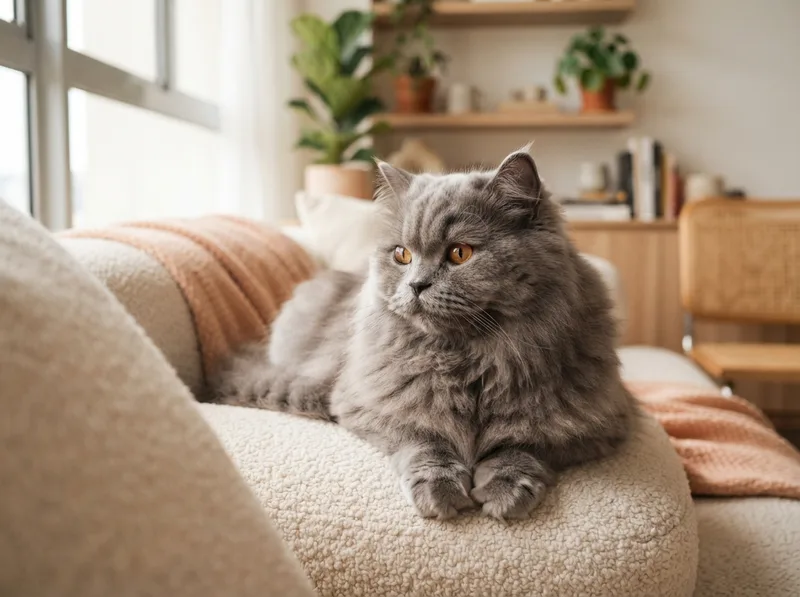
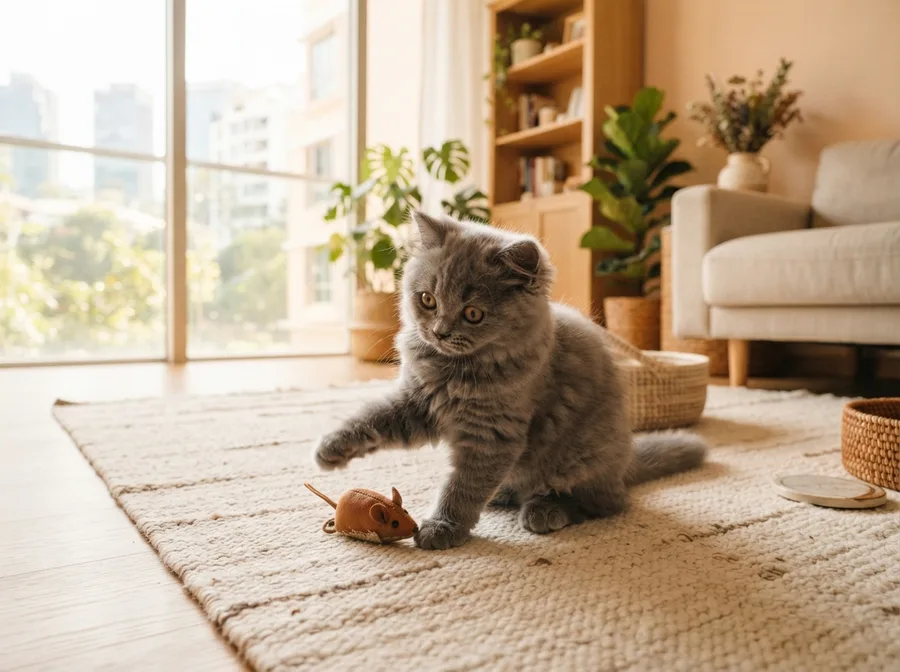
Fluffy from the start, and unlike the shorthair the coat is not a surprise later — what changes is length and the development of the ruff and britches over the first year or two. Otherwise the development pattern follows the British Shorthair closely: a slow finisher that fills out over roughly three years, eye colour deepening across the first several months, and a placid, undramatic kitten temperament from the beginning. One practical point at the viewing: check the coat is genuinely semi-long and dense rather than merely fluffy, and ask to see both parents, because a longhaired kitten in a British Shorthair litter is sometimes a longhaired kitten and sometimes an outcross.
Those three are British Longhair-specific. For the checks that apply to any cattery, see the breeder questions worth writing down.
Checklist
- A fluffy grey kitten described as a “British Longhair mix”. As with the shorthair, that is a moggie with a breed name attached.
- A seller who cannot show both parents, or explain whether the long coat came from within the line or from an outcross.
- No HCM or PKD testing named, on the basis that the breed is “just a longhaired British”. The health list comes along with the genetics.
Grooming and daily life with a British Longhair in Singapore
Two or three sessions a week — the middle ground between the British Shorthair’s weekly comb and the Persian’s daily one. The coat is semi-long with the same dense undercoat as the shorthair, which is what makes it mat-capable behind the ears, in the armpits and around the britches. A wide-tooth comb through to the skin is the tool. In this climate expect continuous low-level shedding rather than defined moults, and expect an air-conditioned cat to carry more coat than the breed’s European reputation suggests. Sanitary trims are common; full clips are not needed.
Effectively the British Shorthair temperament in a longer coat: calm, independent, quiet, tolerant of a working day, not a climber, and affectionate without being needy. That makes it one of the better-suited cats on this site for an HDB flat, with the one caveat that you are signing up for real grooming rather than nominal grooming. The same weight-gain warning applies with more force, because a heavy coat hides a widening cat until it is obvious — run your hands along the ribs monthly rather than judging by eye.
What a British Longhair costs to keep
A British Shorthair budget with a grooming line added: tools, time, and for many owners a professional session every couple of months. Food discipline is the other recurring theme, for the same reason as the shorthair. On health, this breed inherits the same watch-list — hypertrophic cardiomyopathy and, in some lines, polycystic kidney disease — so parental testing at purchase and periodic monitoring later are the sensible plan, and insurance exclusions are worth reading before you commit rather than after.
For British Longhair figures set against other breeds, with every source named and dated, see the money side, in detail; for the month-by-month picture, the real cost of a cat here.
Also worth reading: the British Shorthair
The British Shorthair is the direct comparison and the decision is almost entirely about grooming: identical temperament, identical body, one coat you comb weekly and one you comb three times a week. Buyers who want the look of a Persian with a British temperament should read both pages and then be honest about how much brushing they will actually do.