Where free kittens actually come from
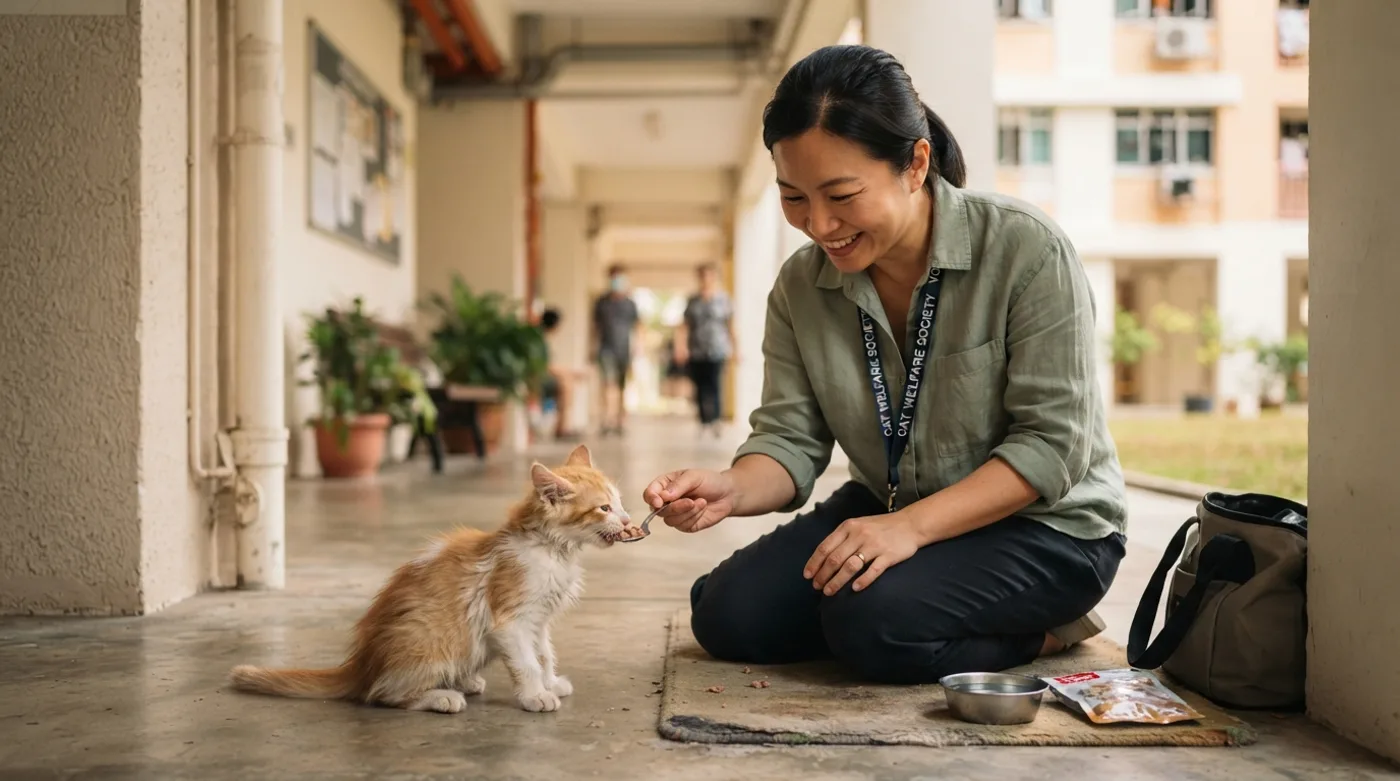
"Free kittens Singapore" is a real search with a real answer, and the answer is not a scam. Singapore has a large community-cat population and an extensive informal network of feeders, fosterers and independent rescuers who take in unplanned litters and rehome them at no cost or for a nominal fee.
That network is where most free kittens come from, and there is nothing second-rate about the cats. A community-bred kitten raised in a foster home is frequently robust, sociable and completely unremarkable in the best sense — a healthy moggie with a normal life ahead of it.
What matters is understanding what "free" is describing. It describes the acquisition, not the cat. The vaccination course still has to be completed. Sterilisation still has to happen. The microchip and the licence are still required. And food, litter, annual vet visits, a dental extraction somewhere around year eight and a possible emergency are all identical whether the kitten arrived free or cost four figures.
Which is genuinely worth saying out loud, because the households that struggle are almost never the ones that paid too much for a cat. They are the ones that budgeted for the acquisition and not for the fifteen years.
Free is a price, not a discount
The lifetime cost of a free kitten and a pedigree kitten differs by the purchase price alone. Everything after that is the same cat-shaped budget.
The routes, and what each one gives you
Four ways cats change hands here, with very different amounts of work already done.
Established shelters
Screening, a home conversation, an adoption fee, and a cat usually already vaccinated, sterilised where age allows and microchipped. SPCA is the best-known.
Independent rescuers and fosterers
Often the source of free or nominal-fee kittens, frequently coordinated through community networks such as Cat Welfare Society. Fostered cats come with a real behavioural description.
Rehoming from an owner
A move, a new baby, an allergy. Usually an adult cat with a known history — often the most informative option of all, if you ask the right questions.
A neighbour's unplanned litter
The classic free kitten. Fine, provided you take responsibility for the full vet workup afterwards — and provided the mother gets sterilised so it does not happen again.
Licensed catteries
The route for a specific breed. Regulated, verifiable, and the kitten arrives chipped and vaccinated with records.
Unlicensed online sellers
Multiple kittens, cash, a car park handover, no address. Not a rescue and not a breeder. This is the one category to avoid outright.
What adoption actually involves
The process is more thorough than people expect, and that is the point.
- 1Enquire and describe your householdFlat type, who lives there, hours the flat is empty, whether you rent, whether there are other animals. Answer honestly — a mismatch helps nobody.
- 2Meet the cat, more than once if you canA cat in a shelter is not showing you its real personality. A cat in a foster home mostly is, which is why fostered cats come with far better descriptions.
- 3The window and safety conversationExpect to be asked about mesh, and expect it to be non-negotiable. Every rescuer in Singapore has seen the outcome of an unmeshed window.
- 4Screening, and sometimes a home visitNot an insult. A shelter placing a cat is trying to place it once, and the friction exists to prevent a return in six weeks.
- 5Adoption fee and paperworkUsually covering sterilisation, vaccination and microchipping already done. Get the records, including the chip number.
- 6A trial or settling periodMany shelters build one in. Use it properly: an adult cat hiding for a fortnight is normal, not a failed match.
- 7Transfer the chip and license the catRegister the microchip to your name and apply through PALS — free until 31 August 2026.
The first-week vet bill nobody mentions
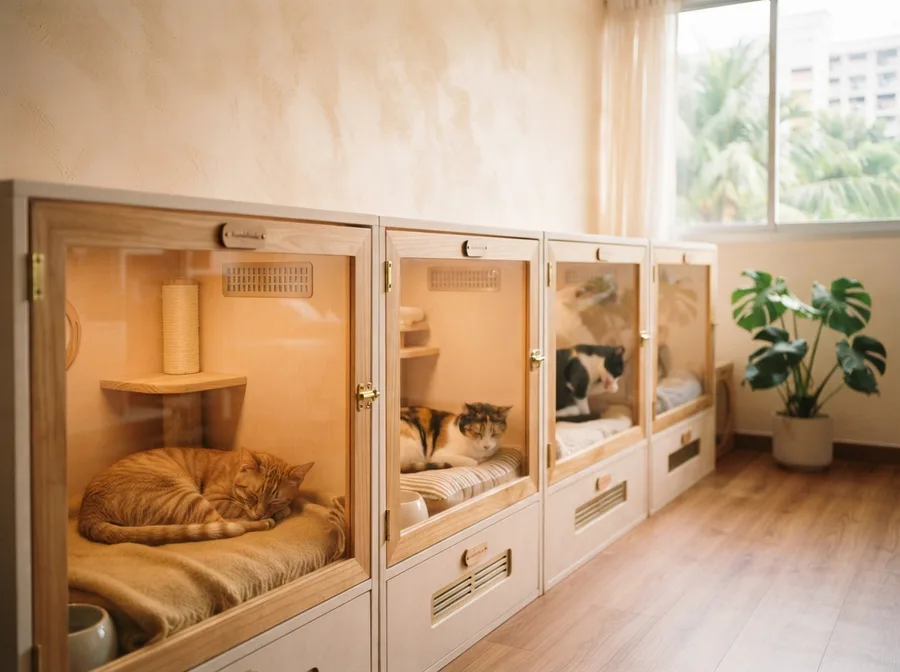
What a free kitten typically still needs, and what a shelter cat usually already has.
This is the honest arithmetic. A free community kitten usually needs a full first-year workup, which is a real and worthwhile cost. A shelter cat has typically had most of it done already, which is precisely why an adoption fee often works out cheaper than a free kitten by the end of month three.
Neither is a reason to choose differently. It is a reason to book the vet in week one either way — what happens at that appointment covers what to bring and what to ask, and the feline core course covers what is due when.
Key numbers
- Core vaccinations
- Free kitten: to do
- Deworming
- Free kitten: to do
- Fleas and ear mites
- Common, easily treated
- Microchip
- Required for the licence
- Sterilisation
- Around 5–6 months, per vet
- Shelter cat
- Often all of the above done
- Either way
- Licence free to 31 Aug 2026
Telling a rescuer from an unlicensed seller
The distinction that matters most, and it is usually visible in the first two messages.
Only AVS-licensed sellers may legally sell pets in Singapore. Genuine rehoming — a rescuer placing a fostered kitten, an owner rehoming a cat they can no longer keep — is a different activity from running an unlicensed sales operation, and the two are easy to tell apart once you know what to look for.
The tell is almost always direction of scrutiny. A rescuer asks you questions: your flat, your windows, your hours, your plan if it does not work out. A seller asks how soon you can pay. Someone who has fostered a kitten for eight weeks is emotionally invested in where it goes; someone moving stock is not.
If a listing is a sale rather than a rehoming, the licence question is fair and simple to ask. An evasive answer is the answer.
Checklist
- They ask you more questions than you ask them — the single clearest signal
- You can see where the kitten is being kept, or at least meet it somewhere sensible
- The mother is mentioned, and ideally can be seen
- Health status is described honestly, including the things not yet done
- They want to stay in touch after the kitten leaves
- No pressure, no deposit-to-hold urgency, no "three other people are interested"
- A sale is backed by an AVS licence — ask, and expect a straight answer
- Not a car park handover from someone with several kittens and no address
What you give up, and what you gain
Adoption gets discussed as though it were purely a moral choice. It is also a straightforwardly practical one, with real advantages and real limits, and it is worth being clear-eyed about both.
What you gain is information and cost. An adult cat from a foster home comes with a description of how it behaves around children, other cats, strangers and vacuum cleaners — the things you genuinely cannot learn about a nine-week-old kitten. And much of the expensive early work is already done.
What you give up is choice of breed and, often, choice of age. If you specifically need a British Shorthair for its temperament, or a low-shedding coat for a household reason, adoption is unlikely to deliver it — though it is always worth asking, since pedigrees do turn up and retired breeding cats are sometimes rehomed.
There is also a middle position people forget: adopting an adult and buying a kitten are not the only two options. Fostering is a genuine way to find out whether a cat suits your flat before committing, and several Singapore groups are permanently short of fosterers. Adopting a cat here covers the channels in full, and the adopt-versus-buy comparison takes the decision apart properly.
Before you bring any cat home
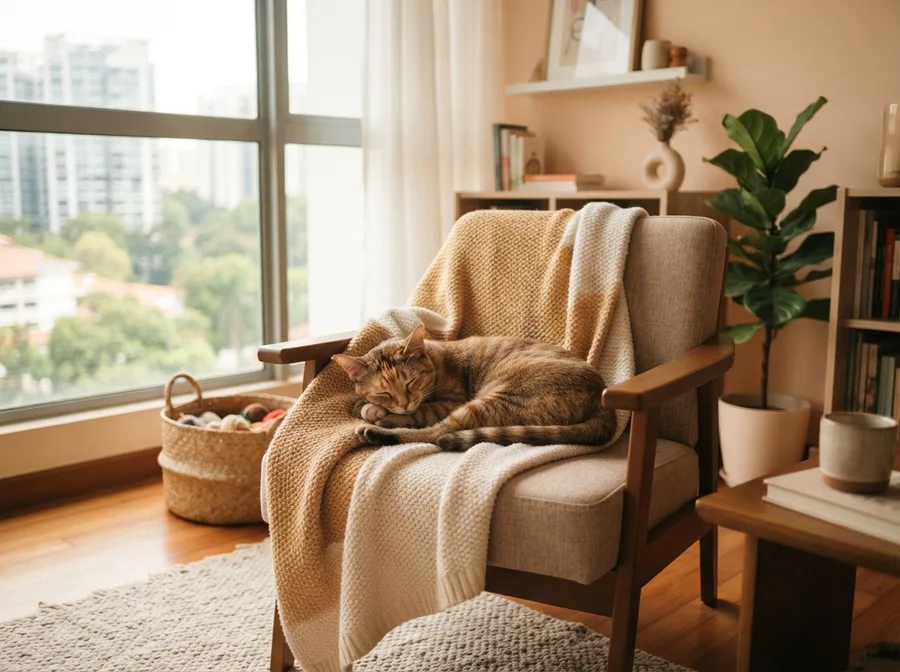
The preparation does not vary by where the cat came from. A free community kitten and a four-figure pedigree need exactly the same flat.
Mesh every openable window and the balcony — this is the one thing that is not negotiable in a high-rise, and most rescuers will ask about it before they ask about anything else. Cat-proofing an HDB flat is the full walkthrough.
Set up before arrival: litter trays, a carrier, scratching posts, vertical space, and the food the cat is currently eating so you are not changing diet in the same week as changing homes.
Do the paperwork in week one, while it is free. Microchip registered to you, and the licence applied for through PALS — the licensing walkthrough covers it, and the HDB rules for cat owners covers the two-cat cap and the rest.
And then do less than you want to for a fortnight. One quiet room, short calm visits, no visitors, no expectation that the cat you meet in week one is the cat you will have in month three. The first days at home covers the settling method for both kittens and adults.
One more cat, one fewer litter
If the kitten came from an unplanned community litter, the single most useful thing you can do afterwards is help get the mother sterilised. See sterilisation in Singapore.
What a free kitten actually comes with
Free is a real offer in Singapore, and it is not the same as no strings and no costs.
There are two different routes here and it helps to keep them apart. A registered animal welfare group charges an adoption fee, and that fee is cost recovery — an offset against veterinary work already done on the cat rather than a price for the animal. An independent rescuer or fosterer rehoming a litter they raised themselves frequently charges nothing at all, or asks only for the vaccination cost. Both are legitimate; they differ in how much has already been done and how much falls to you.
Either way, expect vetting. Independent fosterers screen as hard as any welfare group and sometimes harder, because the cat has been in their living room for eight weeks. Questions about your hours, your flat and whether you rent are standard, a home visit is common, and meshing your windows is very often a condition of adoption rather than a suggestion — so it is work to do before the visit, not after it. Some rehomers also ask for a trial period, and most ask you to agree to return the cat to them rather than pass it on if it does not work out.
Where you find these cats is worth knowing too. Formal listings sit on welfare group websites; the volume moves through Facebook and Instagram adoption boards, which turn over daily during kitten season and where most independent fosterers post. Treat an adoption board the way you would any listing site: a genuine rehomer will happily answer questions and let you visit, and anyone pressing you to collect quickly is worth walking away from.
And then the costs that arrive regardless of what you paid. A free kitten still needs its remaining vaccinations, deworming, sterilisation if it is not already done, a microchip if it has none, and a cat licence — free until 31 August 2026 and required once the cat reaches three months of age. Then fifteen years of food, litter and veterinary care, which are identical to any other cat’s. The acquisition is the only line adoption changes.
Checklist
- Welfare group fee = cost recovery, not a price
- Independent fosterers often ask nothing, or the vaccination cost only
- Vetting, a home visit and a trial period are all normal
- Meshed windows are frequently an adoption condition
- Usually already done: vaccination, sterilisation, microchip — ask which
- Still yours to do: the cat licence, and the next fifteen years