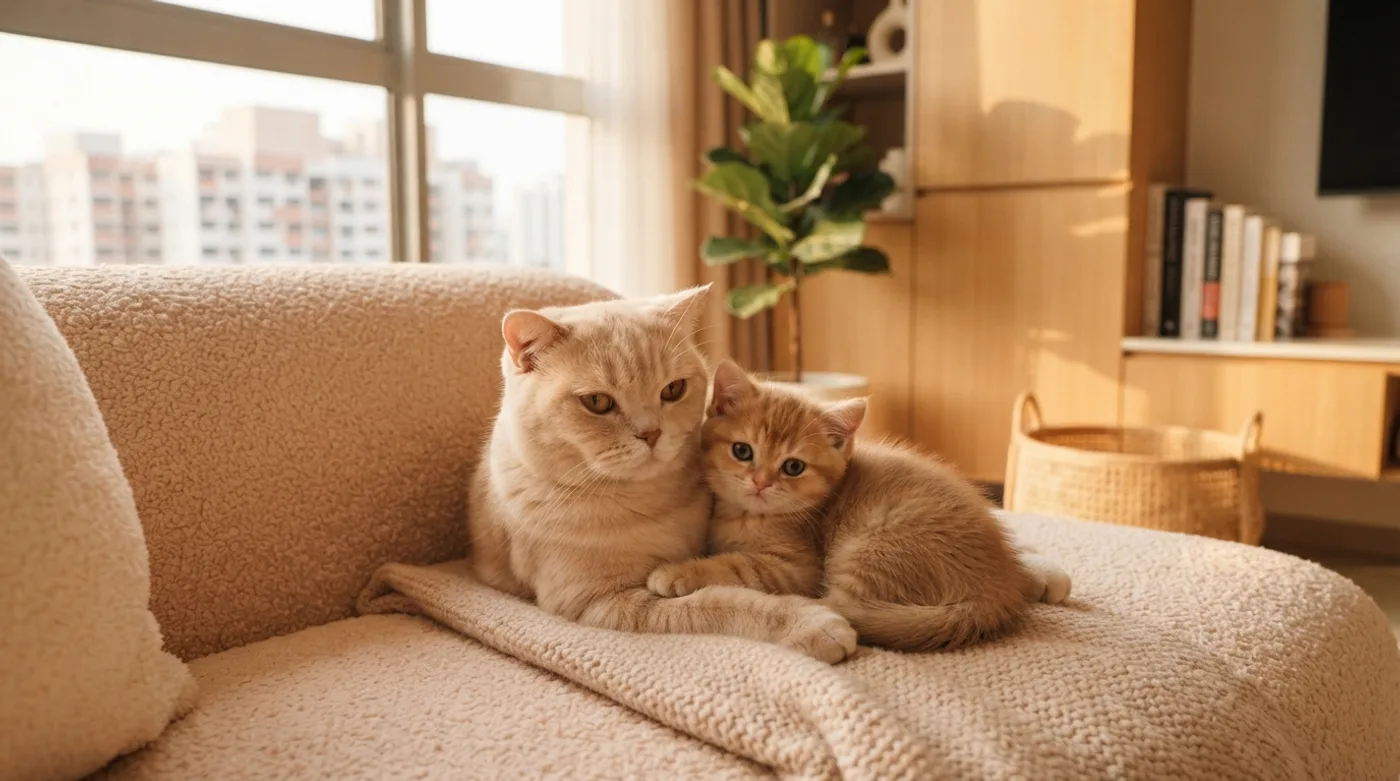
The real question underneath
Almost everyone frames this as kitten versus adult, and then decides on the basis of which one is cuter — a comparison the kitten wins every time and which predicts nothing about the next fifteen years.
The more useful framing is this: how much uncertainty are you willing to take on, and how much work are you willing to do in the first year? A kitten is high work and high uncertainty in exchange for shaping a cat from the beginning. An adult cat is low work and low uncertainty in exchange for accepting a cat that is already formed.
Neither is the responsible answer. What is irresponsible is choosing a kitten because it is a kitten, discovering in month four that it is a highly active, highly vocal animal in a flat that is empty eleven hours a day, and treating that as the cat's failing.
It is also worth saying plainly: the difference between a good and a bad outcome here has far more to do with matching the animal to the household than with the age of the animal. A well-matched kitten and a well-matched adult both work. A badly matched one of either is the same problem.
The single most predictive thing
Not age or breed — how many hours a day the flat is empty. Answer that honestly first and half of this decision makes itself.
Side by side
The honest comparison, without the photographs doing the arguing.
| Kitten | Adult cat | |
|---|---|---|
| Personality | Emerges over the first year | Visible in one or two meetings |
| Work in year one | High — play, supervision, training | Low once settled |
| Settling in | Fast, usually days | Slower, often weeks |
| Destructive phase | Yes — roughly months 3–12 | Already over |
| Night activity | Considerable, especially solo | Usually sleeps when you do |
| Cost in year one | Higher — course, sterilisation, damage | Lower, often already done |
| Suits young children | Poorly — fragile and scratchy | Often, if temperament is known |
| Suits an empty flat | Only as a pair | Frequently, yes |
| Years with you | The full fifteen or more | Fewer, depending on age |
Read down the "settling in" row twice, because it is the one that reverses people's expectations. Kittens settle fast and then become hard work. Adult cats are hard work for a fortnight — hiding, not eating much, refusing to be charming — and then become easy. A lot of adult-cat adoptions are judged in the exact window where they look worst.
What a kitten actually involves
The first year, roughly as it happens.
- 1Weeks 1–2: settling and paperworkOne quiet room, the breeder's food, litter tray a few steps away. The first vet visit, and the licence application while it is free.
- 2Months 1–3: the vaccination course and the chaosRemaining core vaccinations and deworming, alongside a kitten discovering vertical space, cables and your ankles at speed.
- 3Months 3–6: the destructive stretchThe phase that tests people. Scratching, climbing, teething, night zoomies. Redirect rather than punish, and give it somewhere legitimate to put the energy.
- 4Around months 5–6: sterilisationOn your vet's advice. It also settles a good deal of the behaviour people find hardest, and lowers the licence fee later.
- 5Months 6–12: the cat emergesEnergy starts to level off and the adult temperament becomes visible. This is when you find out what you have.
- 6Year 1 onward: an adult catSleeping fourteen hours a day, two good play sessions, an annual vet visit. The easy part, and it lasts a decade and a half.
The stretch worth planning for is months three to six. It is when most "we did not expect this" conversations happen, and it is entirely survivable with vertical space, twice-daily interactive play and realistic expectations. Enrichment in a small flat is written largely for this phase.
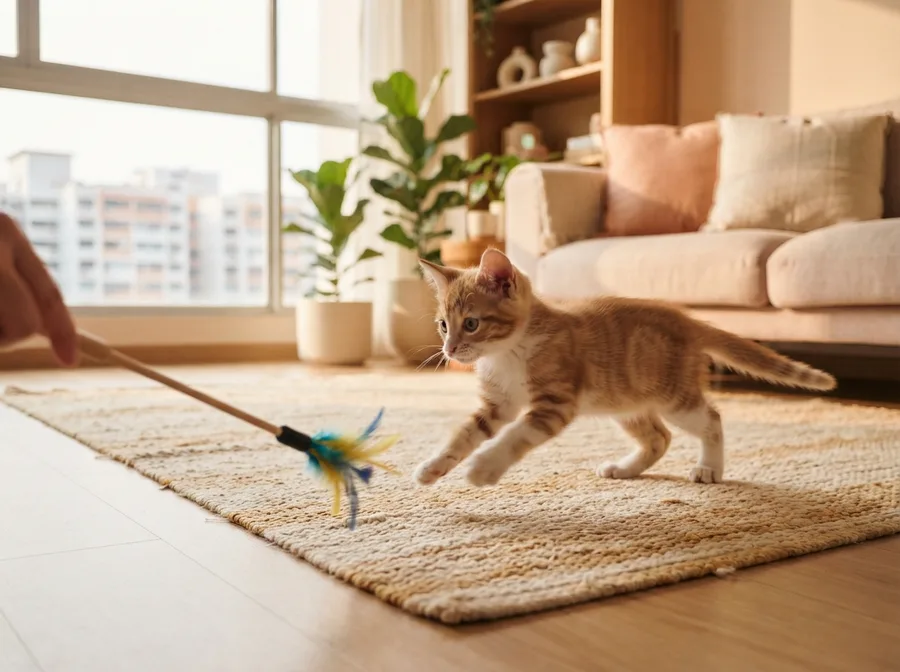
The case for an adult cat
The strongest argument for an adult cat is not ethical. It is informational.
When you meet a three-year-old cat, you are meeting the finished animal. You can see whether it is confident or shy, whether it seeks out laps or tolerates them, how it reacts to a stranger walking in, whether it is a talker, whether it hates being picked up. A shelter or foster carer who has lived with it can tell you how it behaves around children, around other cats, and at 3am. None of that is knowable about a nine-week-old kitten, no matter how carefully you choose.
For a specific household — a quiet flat, a family with a young child, a first-time owner, someone out for long days — that information is worth more than the ability to shape a cat from scratch. You are matching to a requirement rather than gambling on one.
The trade-offs are real and worth stating. Adult cats take longer to settle: expect a fortnight or more of hiding, a suppressed appetite and a cat that seems to have no personality at all, before the animal you actually adopted appears. Some carry history that shows up as specific fears. And you get fewer years. Adopting a cat in Singapore covers the channels and what the process looks like, and adopting versus buying covers the wider decision.
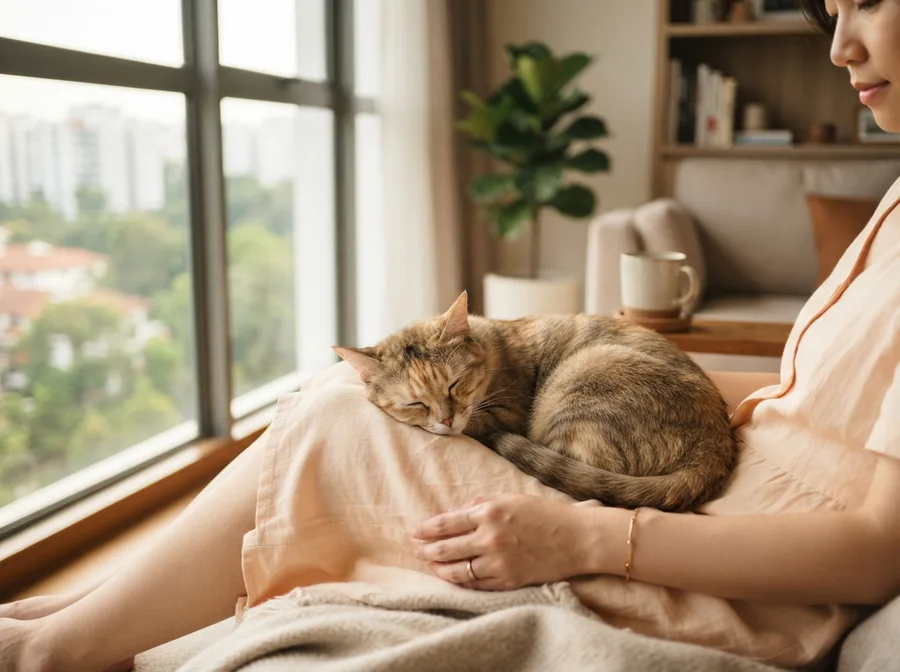
Matching the cat to the household
The honest recommendation by situation, rather than in general.
Empty flat, 8am–7pm
Two kittens together, or a settled adult cat. A single kitten alone all day is the combination that generates the most behaviour problems.
First-time owner
An adult cat, unless you actively want the project. Less uncertainty, less damage, and a personality you chose deliberately.
Young children at home
An adult cat with a tested tolerance of noise and handling. Kittens are fragile and scratch when overwhelmed.
Quiet household, someone home
Either works. This is the situation where a kitten is genuinely easy, and also where a senior cat thrives.
You want a specific breed
Usually a kitten, since adult pedigrees rarely come up — though retired breeding cats are occasionally rehomed and are worth asking about.
You travel often
An adult, self-sufficient cat, plus a plan for boarding or a sitter. Kittens do not tolerate a rotating cast of carers well.
What each one costs in the first year
Directionally, before the individual animal changes the picture.
Over fifteen years the gap narrows sharply, because food, litter and veterinary care dwarf the entry cost either way — that is the argument of our full cost breakdown. In year one specifically, though, a kitten is meaningfully more expensive, and the destructive-phase replacements are the line nobody budgets for.
If you are buying rather than adopting, what kittens actually cost here gives the ranges by breed, and the cheap-kitten warning in it is worth reading before you compare listings.
Key numbers
- Kitten — purchase
- Highest single line
- Kitten — vaccinations
- Course to complete
- Kitten — sterilisation
- Still to come
- Kitten — replacements
- Furniture, cables, screens
- Adult — adoption fee
- Modest by comparison
- Adult — often included
- Sterilised, vaccinated, chipped
- Both
- Mesh, trays, carrier, cat tree
- Both
- Licence — free to 31 Aug 2026
How to decide, in three questions
One: how many hours a day is the flat empty? Over about nine, a single kitten is the hardest option and either a pair or a settled adult is the better one.
Two: how much uncertainty can you accept? If a highly active, vocal, people-demanding cat would be a genuine problem in your home, do not gamble on it. Meet an adult whose temperament you can see.
Three: what do you actually want from the relationship? Some people want to raise an animal from the beginning, and that is a legitimate reason to take on the work. Some want a companion who is already themselves. Both are fine; they are just different projects.
Whichever way it goes, the preparation is identical: mesh the windows, set up the trays, book the vet, and do the licensing while it is free. Cat-proofing the flat and the first days at home apply equally to a nine-week kitten and a nine-year-old cat — the second one just needs a slower version of it.