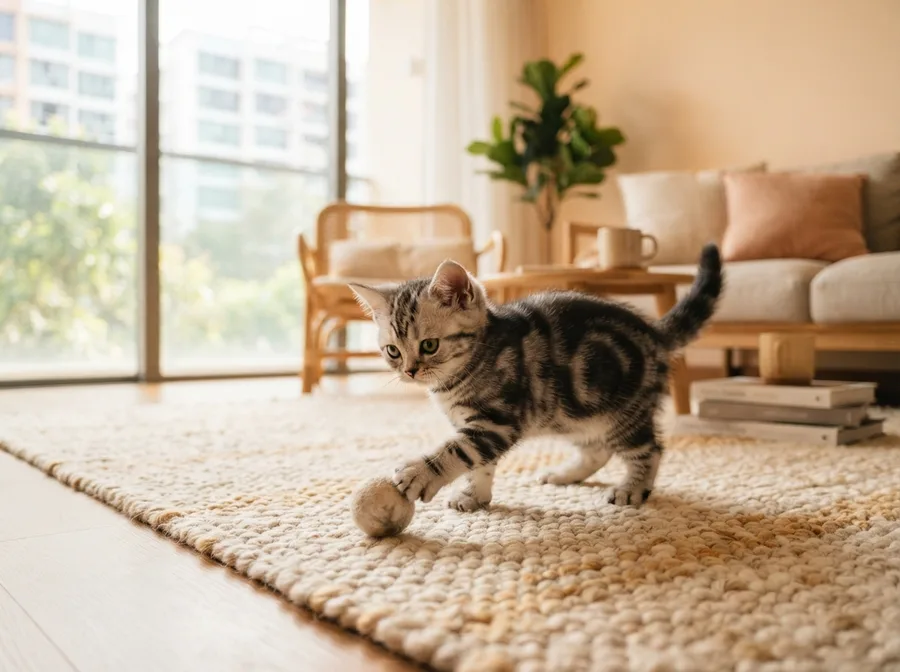
How long you will wait for a American Shorthair kitten
Uncommon here, and mostly by accident rather than by scarcity of the cat itself. Few catteries in the region bother breeding a cat that most buyers cannot distinguish from a well-bred moggie, so an American Shorthair search is usually a wait for a specific cattery rather than a browse.
The breed is popular in North America and thin on the ground in Southeast Asia, so most of what appears here traces to import. There is no genetic bottleneck — the constraint is simply commercial demand, which sits low.
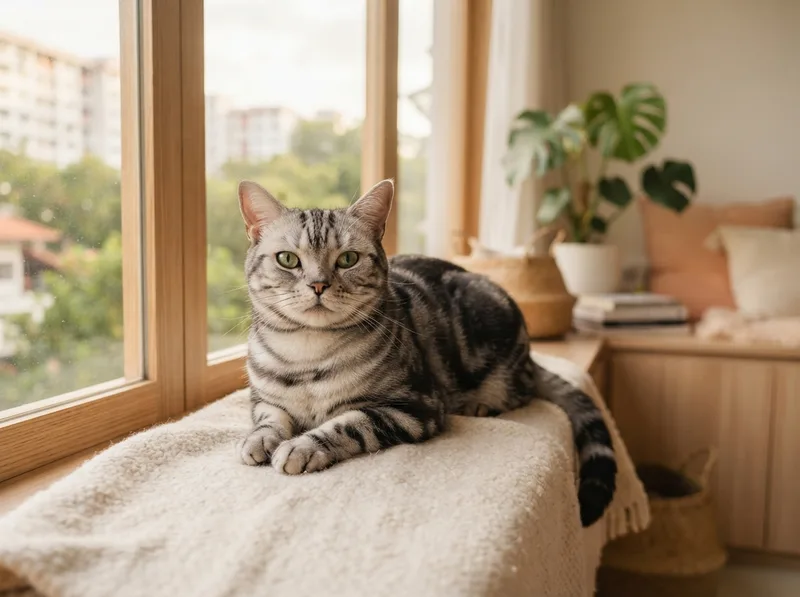
The biggest time-saver: Be honest with yourself about why you want this breed rather than a domestic shorthair, because the answer changes the search entirely. If it is the silver tabby look, say so and be flexible on everything else.
Nothing above is an offer: we hold no American Shorthair kittens and publish no stock list. For the same picture across every breed, see the availability picture by breed.
What a American Shorthair kitten is actually like
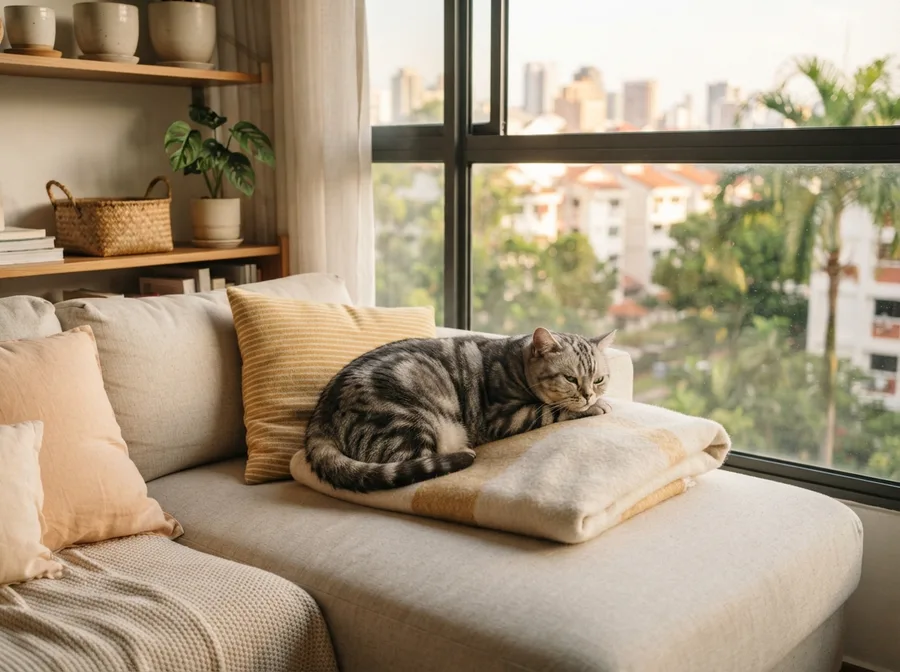
A robust, straightforward, physically unremarkable kitten — which is precisely the breed’s selling point. American Shorthair kittens are typically hardy, well-proportioned and free of the developmental oddities that come with extreme type, and the classic silver tabby pattern is visible and stable from early on rather than shifting for months. Expect an ordinary, confident, playful kitten that goes home at ten to twelve weeks and grows steadily to a medium-large adult. The thing worth checking is paperwork rather than physiology: this is a breed whose entire premium rests on documented pedigree, because the cat itself looks like a very good ordinary cat.
Those three are American Shorthair-specific. For the checks that apply to any cattery, see how to tell a careful cattery from a quick one.
Checklist
- A silver tabby domestic shorthair sold as an American Shorthair. This is the easiest breed on the site to fake because the cat looks like a good ordinary cat — pedigree paperwork is the only real evidence.
- A seller who cannot explain what distinguishes the breed from a moggie. If they cannot, the premium has nothing behind it.
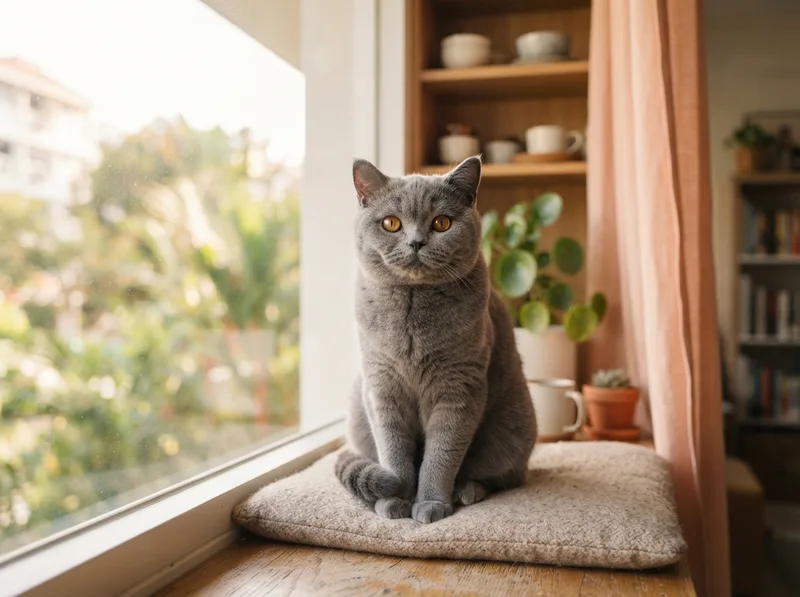
- Any confusion with the British Shorthair, which is a different breed with a different coat and a different head — sometimes genuine, sometimes convenient.
Grooming and daily life with a American Shorthair in Singapore
A weekly comb and nothing else. The coat is short, hard-textured and dense — designed for weather rather than for looks — and it is about as low-maintenance as a coated cat gets. Shedding is moderate and, in this climate, steady rather than seasonal. No professional grooming, no mat risk, no daily commitment. Dental care and nail trims are the whole of the rest of the routine. If low grooming input is high on your list, this breed and the Russian Blue are the two shortest answers on the site.
Even-tempered, adaptable, moderately active and famously undramatic. American Shorthairs get on with children, other cats and changing households better than most pedigrees, tolerate being alone during a working day, and are neither loud nor destructive. In a flat they want a window, a decent scratching post and a play session. The one thing to watch is the same as for the British Shorthair: a placid indoor cat with a good appetite gains weight, and this breed was built solid to begin with, so the line between sturdy and overweight is easy to cross without noticing.
What a American Shorthair costs to keep
Among the lowest running costs of any pedigree here. Ordinary food volume, no grooming spend, no signature hereditary condition driving monitoring — although hypertrophic cardiomyopathy is documented in the breed and worth asking about at purchase. Realistically the budget looks like a well-cared-for domestic shorthair: quality food, litter, annual vaccination and dental care, insurance for the unexpected. Weight management is the only breed-specific line, and it costs attention rather than money.
For American Shorthair figures set against other breeds, with every source named and dated, see what the figures actually support; for the month-by-month picture, what you spend after the purchase.
Also worth reading: the British Shorthair
The British Shorthair is the comparison buyers actually make, usually because the names sound similar. They are different cats: the British Shorthair is rounder, denser-coated and more sedentary, the American Shorthair leaner, harder-coated and more active. If you want the teddy-bear look, it is the British; if you want an easy, robust, unfussy cat, this page is the right one.